
The Benefits of Evergreen Interval Funds
Structure provides the liquidity that private vehicles lack.


Public SEC-approved interval funds offer advantages over private vehicles, making them attractive to investors seeking exposure to illiquid alternative investments with unique risk and return characteristics (such as private credit and private equity). The benefits include:
- Enhanced Liquidity. While not as liquid as traditional daily liquid mutual funds, interval funds provide a guaranteed degree of liquidity through periodic, scheduled repurchase offers (for example, a minimum of 5% quarterly/20% yearly). This is a significant benefit compared with private vehicles, which often have long lockup periods and limited liquidity options, allowing investors to have greater control over their asset allocation. The liquidity benefit is the greatest when investing in private vehicles requires investors to hold excess cash to manage capital calls. It is also greater when interest rates are higher. The improvement in liquidity could allow the investor to have a larger allocation to the illiquid asset, allowing them greater access to the illiquidity and unique risk premium of the asset.
- No Capital Calls. One of the significant advantages of interval funds over private vehicles is the elimination of the J-curve effect—the tendency of private equity funds to post negative returns in the initial years and then post increasing returns in later years when investments mature. The negative returns at the onset of investments may result from investment costs, management fees, an investment portfolio that has yet to mature, and underperforming portfolios that are written off in their early days. Another benefit is that investors can choose when to increase and decrease exposure, as opposed to the fund manager doing so through the capital call process. That enables more-effective rebalancing.
- Regulatory Oversight. As SEC-registered funds, interval funds are subject to rigorous oversight and disclosure requirements, providing investors with a higher level of protection and transparency compared with unregulated private vehicles.
To manage the liquidity risks (having to meet regularly scheduled redemption requests) of investing in illiquid assets, interval funds use publicly available, highly liquid investments, credit lines, and cash flows, thus minimizing if not eliminating the need for forced selling of assets into distressed markets.
Evaluating the Benefits
The value of these benefits depends on:
- The investor’s need to hold cash to meet capital calls and control their asset allocation.
- The interest rate of cash reserves held to meet capital calls.
- The expected risk-adjusted return to the fund.
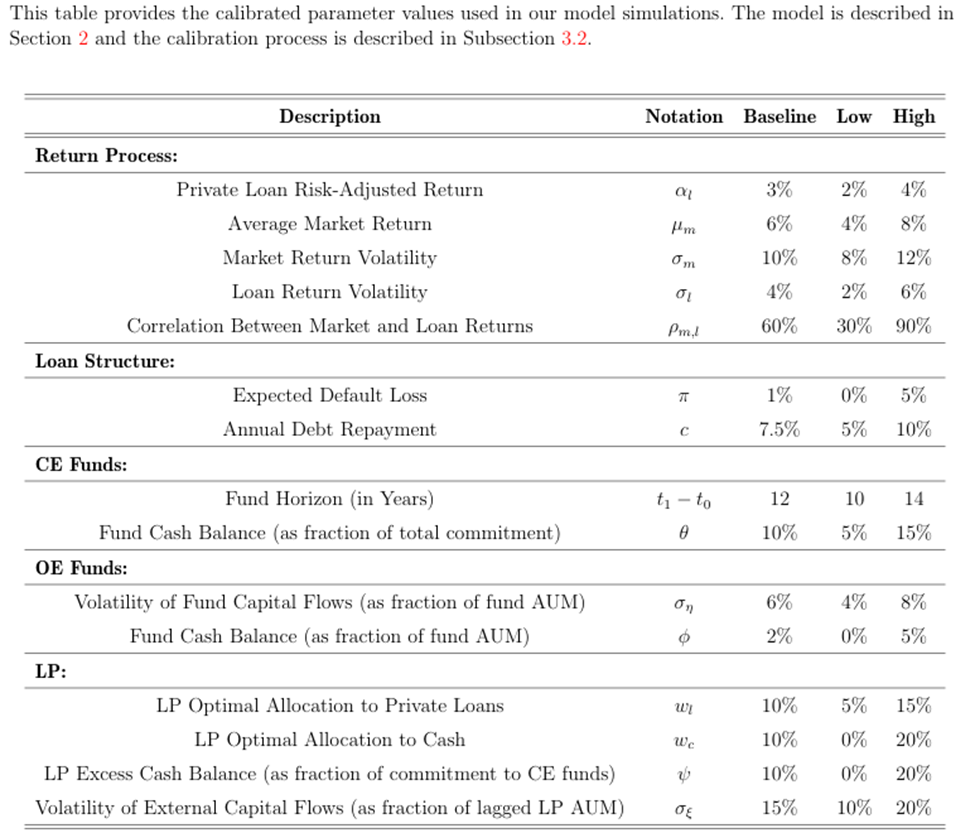
In their May 2024 study, “The Liquidity Benefit of Open-Ended Funds in the Private Loan Market,” Spencer Couts and Andrei Goncalves built a model to estimate the liquidity benefit of the evergreen interval fund structure for private credit. Making various assumptions, they estimated that, given an expected 2%, 3% (their base case), or 4% risk-adjusted return, an investor should be willing to pay 1%, 1.4%, and 1.8%, respectively, for the improvement in liquidity.
They found that the liquidity benefit declined to 0.9% per year under their baseline case of a 3% risk-adjusted return if an investor did not need to hold extra cash to manage capital calls (they can satisfy capital calls by liquidating part of their market portfolio position). They also found that the liquidity benefit would decrease from 1.4% to 0.6% per year if the investor can manage capital calls without excess cash and the investment provided a 2% risk-adjusted return relative to the market portfolio (compared with the baseline 3% risk-adjusted return).
Parameters Calibrated for the Simulations
Investor Takeaways
The evergreen interval fund structure provides significant benefits over traditional private funds that use a capital call structure. Couts and Goncalves provided a quantitative methodology that allows investors to evaluate those benefits, which includes allowing investors to keep their portfolio allocation closer to their target allocation. While their analysis focused on private credit, logically the same benefits should also apply to private equity, venture capital, real estate funds, and infrastructure funds.
The author or authors do not own shares in any securities mentioned in this article. Find out about Morningstar’s editorial policies.
Larry Swedroe is a freelance writer. The opinions expressed here are the author’s. Morningstar values diversity of thought and publishes a broad range of viewpoints.

 United States