
How to Customize Portfolio Allocation Models
Custom model portfolios are growing in popularity. Here are some do’s and don’ts for advisors.


Model investment portfolios have become a staple for many financial advisors. Their simplicity allows advisors to scale their practices while spending more time managing client relationships.
While models can be great solutions, there is no one-size-fits-all portfolio, and some advisors might want to tweak off-the-shelf models to better fit their clients’ preferences.
However, what constitutes a custom model can be a gray area. Too many customizations can change a portfolio’s composition and risk profile while eating into the time and resources saved by using a model in the first place.
Here’s what you need to know about creating and offering custom model portfolios for your clients.
What Are Custom Model Portfolios?
Model portfolios are prebuilt collections of investments that advisors can access through model marketplaces or broker/dealers. Models help advisors save time by outsourcing portfolio management tasks like asset allocation and fund selection.
However, off-the-shelf models don’t always meet every client’s unique objectives. For instance, a prebuilt portfolio might use a stock/bond split that doesn’t match a specific investor’s situation. A recent Morningstar survey of advisors showed that 73% of respondents offered model portfolios, but just over a fourth weren’t prepared to give up complete control of investment decisions.
That’s why a growing cohort of advisors is starting to work with asset managers to use their model portfolios as a starting point for customization. This provides a middle ground between fully bespoke investment management and off-the-shelf solutions, allowing advisors to make targeted adjustments while still leveraging the structure of established models.
Common customizations include adjustments to strategic asset allocation, fund substitutions, additional asset classes, and trading frequency.
Types of Asset-Allocation Adjustments
When customizing a portfolio allocation model, advisors can focus on:
- Adjusting stock/bond splits. Modifying the portfolio’s stock and bond balance can address client-specific goals. For example, an advisor might tweak the split between equities and fixed income if a client sits between two risk tolerance categories.
- Tweaking underlying exposures. Advisors might make strategic changes to underlying exposures, such as tilting toward international equity or emerging markets, to take advantage of market opportunities.
- Adding asset classes. To diversify returns, advisors might introduce asset classes such as private equity, cryptocurrency, or real estate investments.
Do’s and Don’ts of Customizing Asset-Allocation Models
While customization can offer benefits, advisors should approach it with a disciplined strategy. The following do’s and don’ts can help guide effective modifications.
Do: Define Investment Objectives and Risk Tolerance
Do this before making any changes. This foundational step ensures that modifications align with the investor’s long-term financial plan.
Do: Keep Allocation Adjustments Within Reasonable Bands
Strategic asset-allocation tweaks should be limited to 5 or 10 percentage points around the original portfolio structure. Drastic shifts can unintentionally increase risk and deviate from the portfolio’s intended purpose.
Do: Evaluate Portfolio Impact Before Implementing Changes
Advisors should assess every adjustment—whether a fund substitution or a strategic reallocation—for its impact on total costs, risk, liquidity, and overall portfolio exposure. Changes might have unintended consequences.
Take the hypothetical example of a client who prefers actively managed mutual funds for some asset classes—such as large-cap growth and small-cap equities—and passive management for others, such as large-cap core equity and core bond funds. How would changes to passive exposure affect a portfolio?
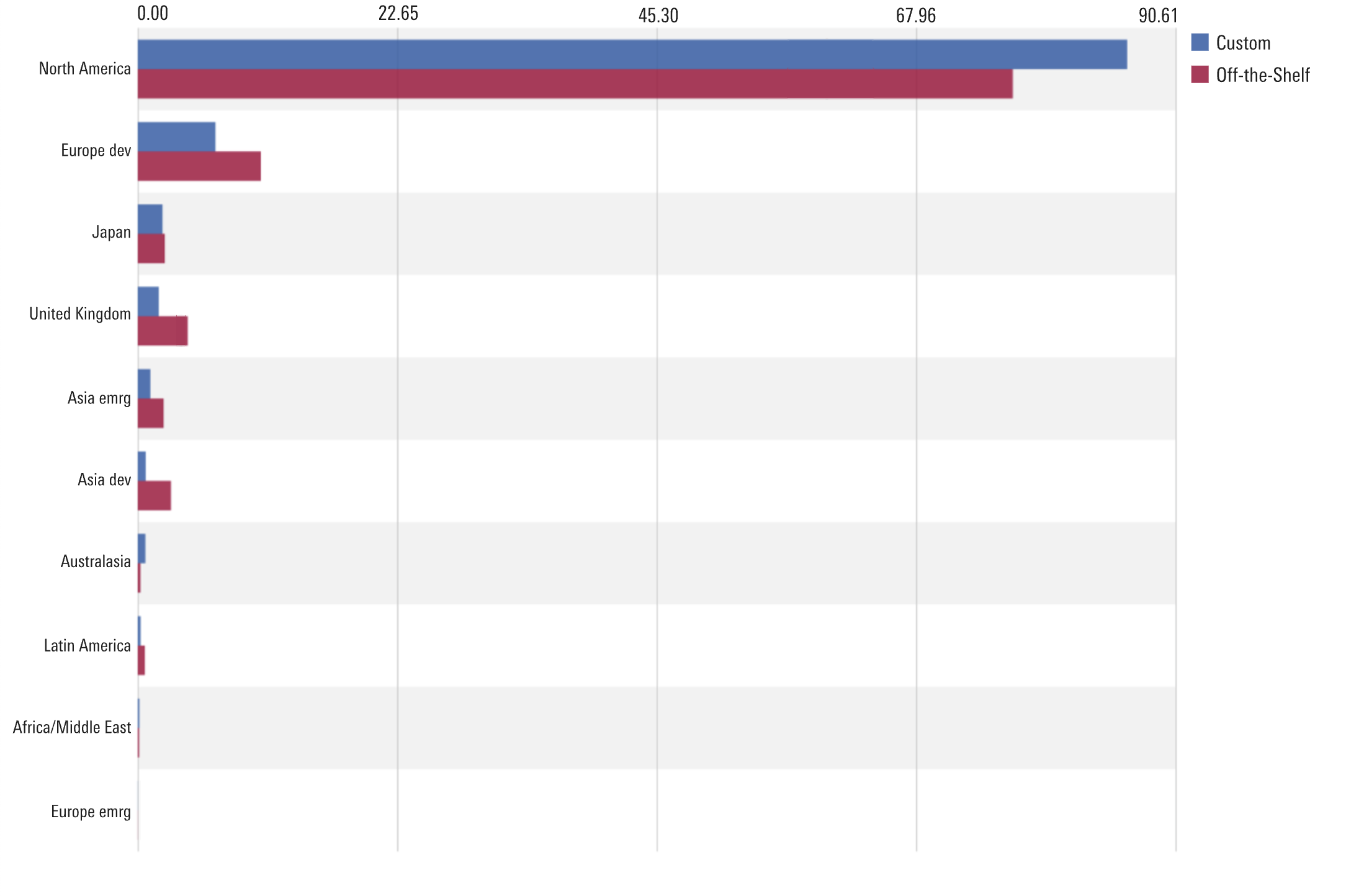
In one of the six case studies in the Morningstar guide, researchers swapped out active large-cap equity funds from one model in favor of index-tracking exchange-traded funds. The team used Morningstar Direct to assess the impact of this change.
This data showed that the change reduced the portfolio’s average expense ratio without dramatically altering its risk profile. But while cheaper and slimmer, the new portfolio had more rigid geographic exposures. Unlike the previous active fund, where managers had the flexibility to invest beyond their benchmark, the new fund—a global stock index ETF—tilted heavily toward US stocks.
While US stocks have dominated for much of the past decade, this new custom portfolio may miss out if international stock markets take the lead.
Equity Super Regions: Custom vs. Off-the-Shelf
Asset Allocation: Custom vs. Off-the-Shelf
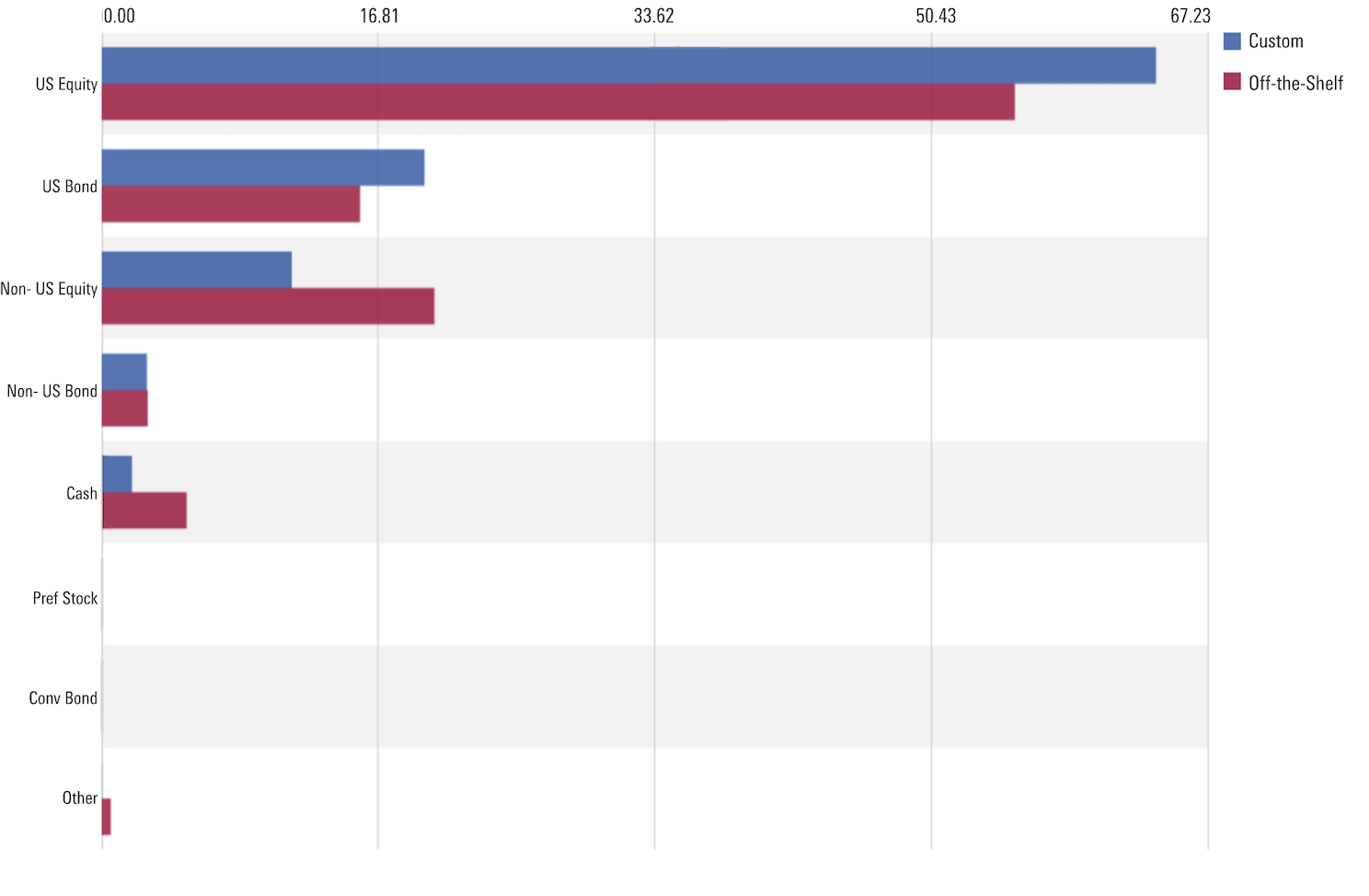
This change reduced expense ratios without dramatically shifting the portfolio’s composition. Strategic alignment with the client’s moderate risk preferences made this customization impactful and successful, exemplifying smart portfolio tuning.
Don’t: Customize Model Portfolios for the Sake of It
Advisors should resist the temptation to tweak portfolios purely to feel in control over investment decisions. Unnecessary modifications can lead to increased complexity and unintended risk exposure that negate the benefits of using a model portfolio.
Advisors should aim for simplicity, ensuring that modifications enhance rather than undermine the portfolio’s strategic intent.
Don’t: Shift Allocations Beyond the Investor’s Risk Capacity
Adjustments shouldn’t push the portfolio so far from the original model that the portfolio’s risk profile no longer fits the investor’s objectives and risk tolerance. Overweighting volatile sectors subject to major market fluctuations can lead to misalignment with the investor’s financial goals.
Don’t: Add Volatile Assets Solely Based on Performance
Tempting as it may be to add cryptocurrencies like bitcoin after they outperform the market, such assets come with extreme volatility. Even a small allocation to an asset class like crypto can have outsize effects on a portfolio’s risk profile.
In the case study, researchers examined the effect of allocating 10% of their traditional 60/40 portfolio to bitcoin and ethereum ETFs. The move significantly increased the Morningstar Portfolio Risk Score, which measures a portfolio’s level of absolute risk compared with an index family of target allocation funds. A 30-point shift like this one requires nerves of steel.
Rolling One-Year Volatility
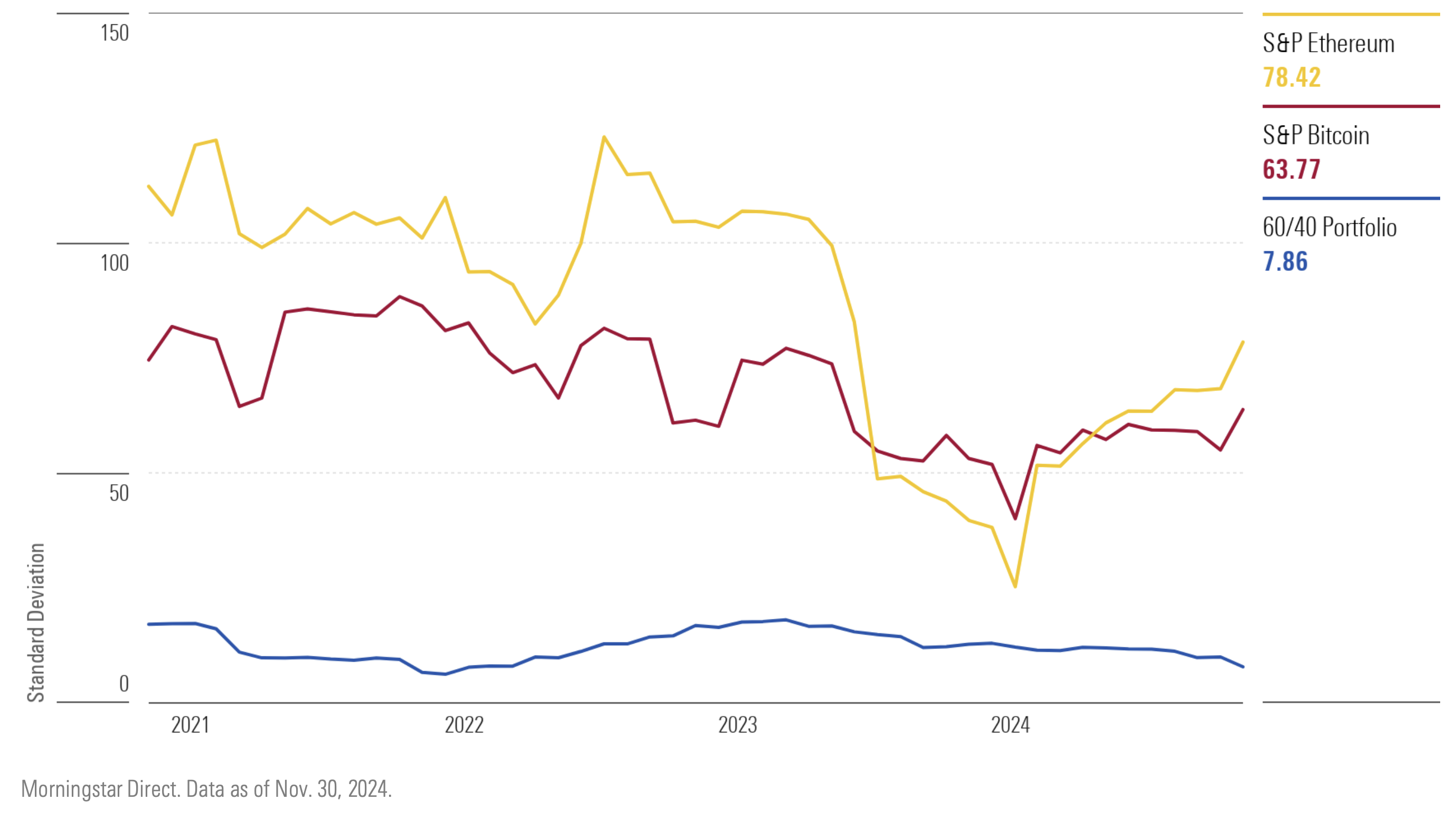
Before adding crypto or another emerging asset class, advisors should review any trade-offs with clients. Risk profiling and risk scoring tools can show clients how potential changes line up with their risk tolerance.
Our Top Picks for Allocation Model Portfolios
Advisors seeking robust model portfolios can consider these highly rated options as starting points to customize. The Morningstar Medalist Rating offers a forward-looking, qualitative rating assigned by Morningstar analysts. The highest ratings go to strategies that analysts conclude will outperform their Morningstar Category benchmarks over a full market cycle on a risk-adjusted basis net of fees.
Morningstar analysts have awarded eight model portfolio series with a Morningstar Medalist Rating of Gold. Here are a few of the highest-rated. For the full list, download the custom model portfolios guide.
- American Funds Growth and Income Portfolio Series
- BlackRock Target Allocation ETF Series
- BlackRock Target Allocation Tax Aware Portfolio Series
The portfolios in Morningstar’s Guide to Customizing a Model Portfolio use off-the-shelf models reported to Morningstar as a starting point and are for illustrative, educational, or informational purposes only. This information should not be relied upon as investment advice, research, or a recommendation by Morningstar. Only an investor and their financial professional know enough about their circumstances to make an investment decision.
The author or authors do not own shares in any securities mentioned in this article. Find out about Morningstar’s editorial policies.

 United States