
Small-Cap Managers' Big Dilemma With Super Micro Computer
This stock caused a conundrum for many small-cap managers.


A Roller-Coaster Ride
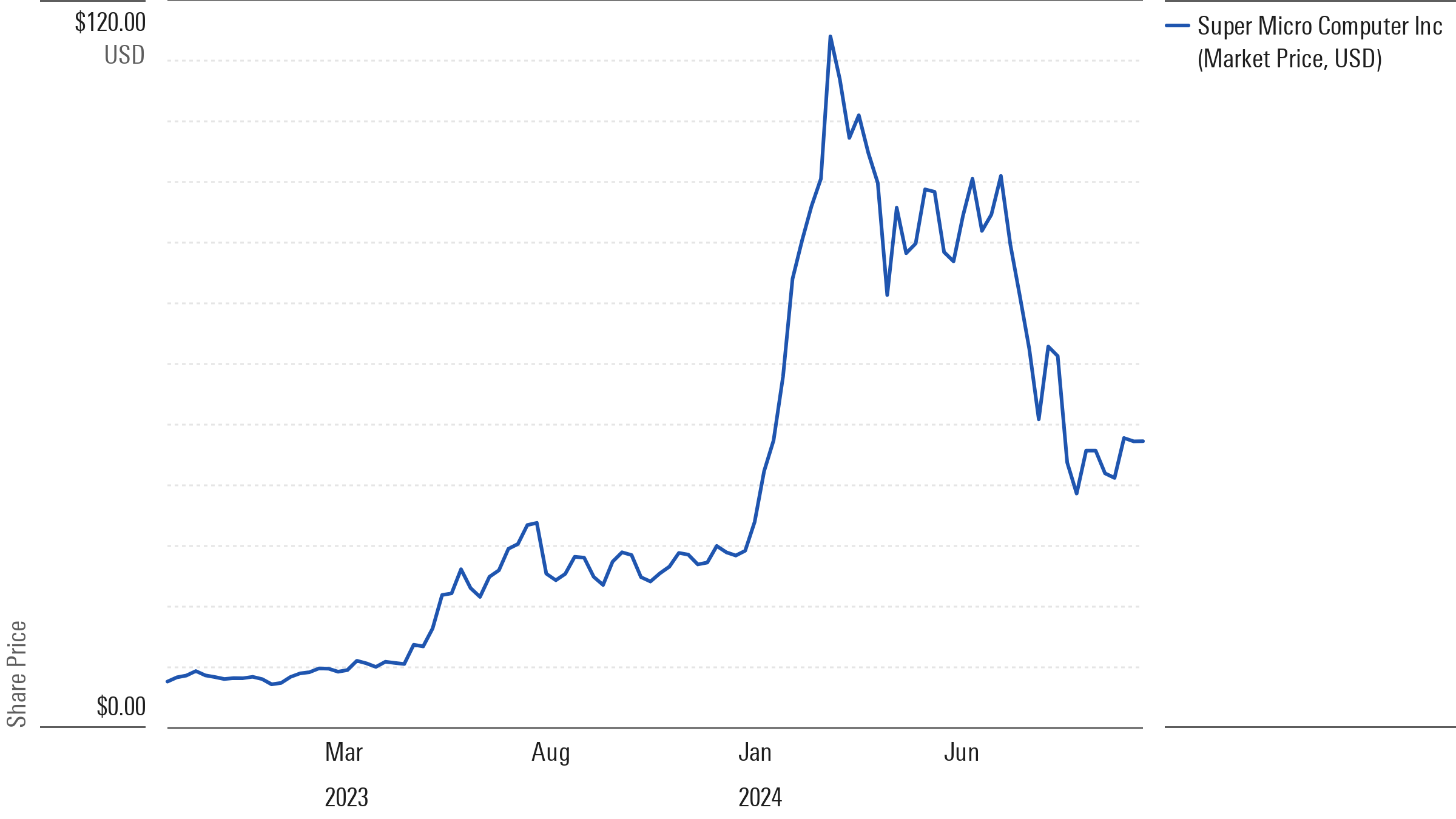
Few stocks have ridden the coattails of the artificial intelligence boom like Super Micro Computer. It has been a wild ride for the company and small- and mid-cap stock funds, though, whether or not they owned it. In July 2022, the stock traded for less than USD 5, a volatile and speculative “penny stock.” The server and data storage software company, however, quickly became synonymous with AI, and its shares gained 1,300% between the end of 2022 and its March 2024 peak. Since then, the company’s earnings have been mixed, and the stock has spiraled down 75% from its apex.
Super Micro Computer Stock Price
A Pain in the Benchmark
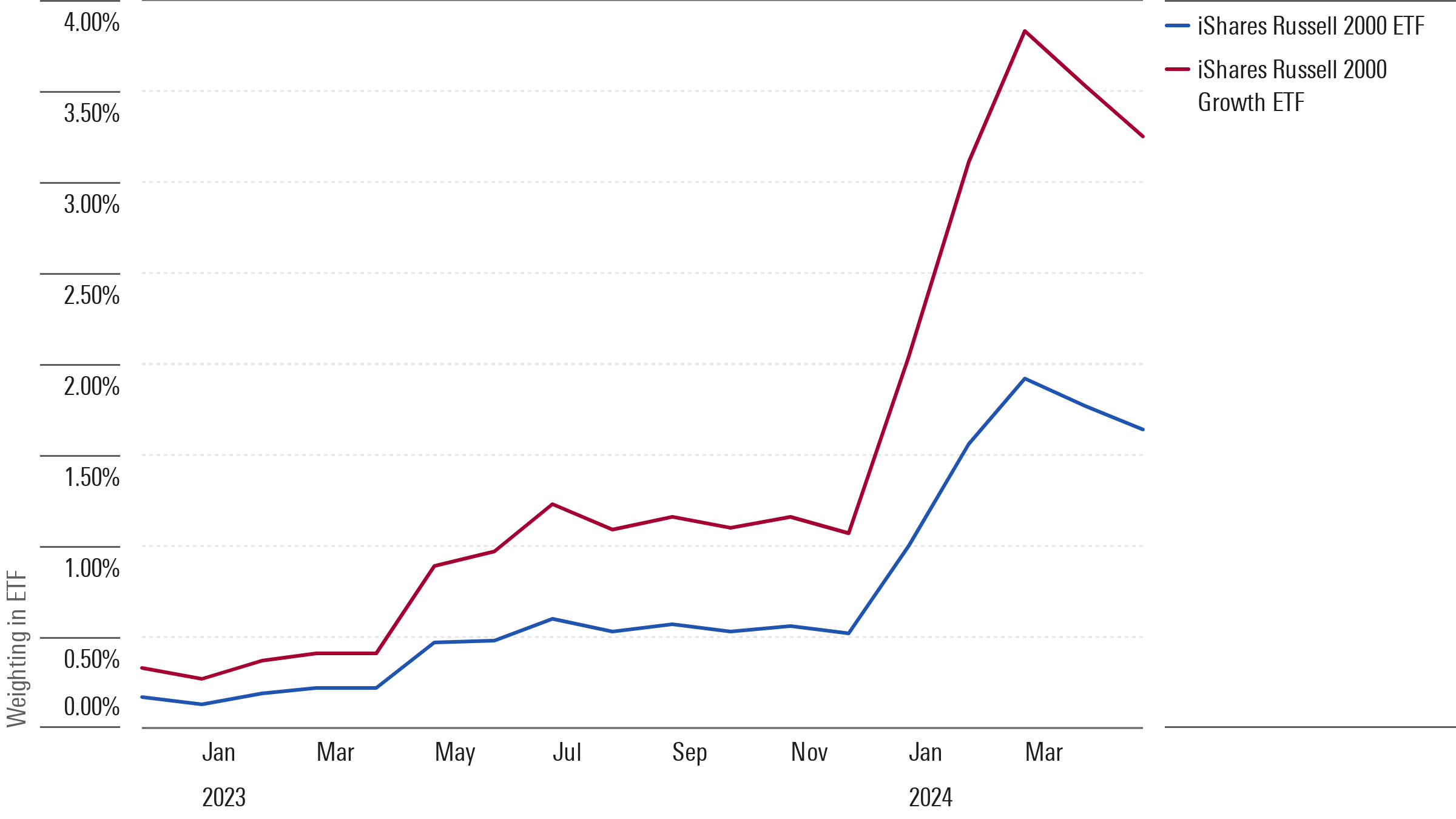
The stock’s rise and fall has proved to be a big problem for active small-cap blend and growth managers. Most of them use the Russell 2000 or Russell 2000 Growth indexes as their benchmarks. As Super Micro vaulted to the top of those bogies’ constituents—more than doubling its weightings in them from the end of 2022 to June 2023—stock-pickers had to decide whether the firm that had a checkered past was a legitimate candidate for their portfolios or a speculative flash in the pan. Meanwhile, the stock exerted more and more influence on the benchmarks against which the managers were measured, increasing pressure on them to add a stock that may or may not have been on their radars before its phenomenal run. The pressure lasted long after Super Micro’s market cap grew beyond that of a typical small-cap company because the market-cap-weighted Russell indexes rebalance their holdings once every June. So, it remained in Russell’s small-cap benchmarks even after it joined large-cap-focused S&P 500, which is maintained by another index provider, in March 2024.
So, small-cap managers faced a conundrum: buy a richly valued stock whose market cap had grown to more than USD 60 billion by March 2024, much bigger than the typical small cap, or shun a company that was then 1.9% of the blend and 3.8% of the growth benchmark and risk missing another rally?
SMCI's Weighting in Small-Blend and Growth Benchmarks
Contributor to Detractor in a Microsecond
On average, small-cap managers underweighted the stock throughout the period. At the end of 2022, 28% of small-blend managers owned the stock and the typical manager allocated 0.4% to it. Of the 74 funds that owned it, 38 were index funds, so most active managers missed its rally.
After the stock’s initial rise between January and June 2023, more managers bought in. Roughly 34% of small-blend funds owned the stock while their average allocation grew to 0.7%. As the stock continued to climb, several managers took some gains and by the stock’s peak in March 2024, just 27% of managers owned the stock.
Small-Blend Funds' Stake in SMCI
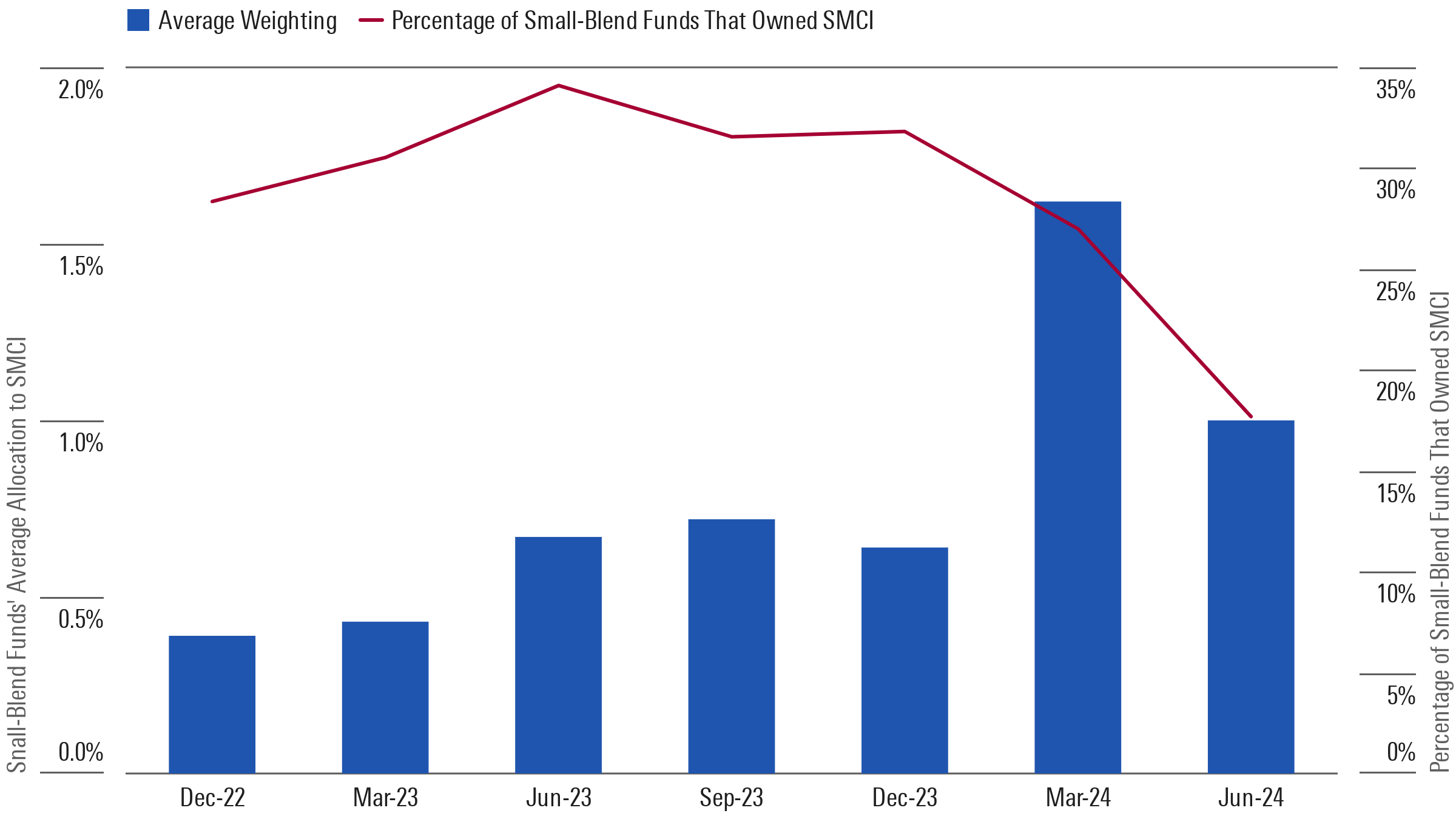
By the time the stock left Russell’s small-cap indexes in June 2024, 18% of small-blend managers still owned the stock. Of those, Yorktown Small-Cap Value YOVIX had the largest helping at 5.2% of assets. The fund bought the stock at the end of 2023 and still owned it as of October 2024, albeit at a much smaller weighting. While the holding was among the fund’s top performers early, it has quickly become a top detractor, and the fund trailed 89% of its small-blend peers through the first 11 months of 2024.
Small-Growth Grief
Super Micro Computer arguably caused more grief for small-growth managers. By the end of March 2024, the stock had a 3.8% weighting in the index, double the blend benchmark’s. But compared with small-blend funds, fewer funds owned the stock during its rally and more owned it during its decline.
At the end of 2022, just 14% of small-growth funds owned the stock. By September 2023 that had risen to 29% and leveled off through March 2024. Many growth managers dumped the stock when it exited the index in June 2024. By the end of the month, just 19% of small-growth funds owned the stock.
Small-Growth Funds' Stake in SMCI
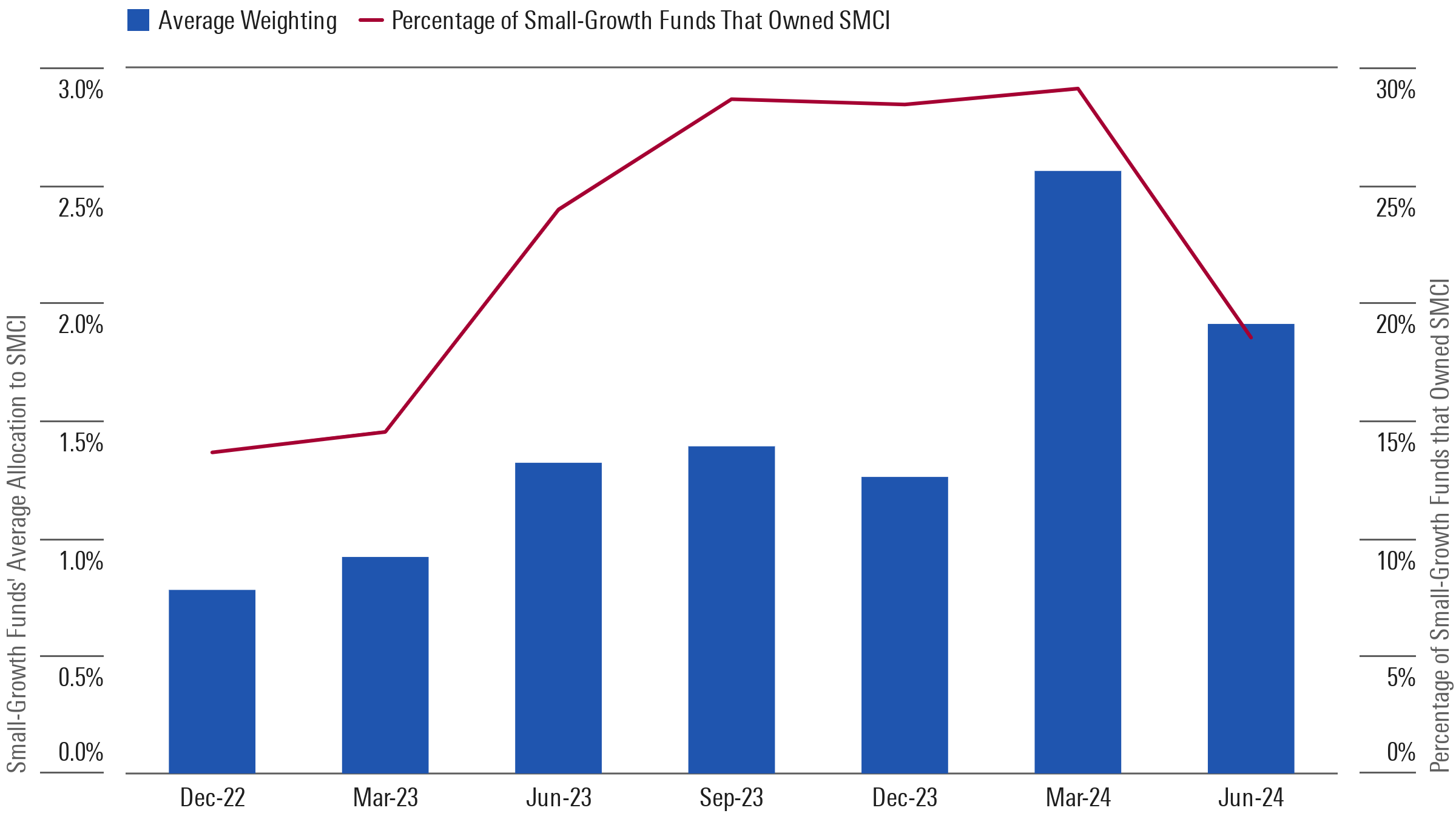
Among those with the largest allocation to the stock was Needham Aggressive Growth NEAGX. The managers have owned the stock since 2009. The concentrated portfolio had 10.2% of assets in the stock in March 2024 and held it through its downturn. Between January 2022 and March 2024—when the stock rose more than 1,000%—the 7.8% annualized gain of the fund’s retail shares trounced the Russell 2000 Growth’s 2.7% loss. The fund’s fortunes reversed with the stock’s, though; from April through November, the fund’s 0.6% return severely lagged the benchmark’s 16.6% gain.
Super Micro was not the only way to play the AI rally, though, and owning it didn’t guarantee strong performance either.
Some managers who didn’t own the stock did just fine. Morgan Stanley Institutional Inception’s MSSGX 109% gain between January 2023 and November 2024 was top among small-growth funds without the stock. Holdings such as Affirm Holdings AFRM and Aurora Innovation AUR were among the top contributors over the period. Wasatch Core Growth WGROX also didn’t succumb to the pressure to buy Super Micro but still posted top-decile performance over the period. Q2 Holdings QTWO, Goosehead Insurance GSHD, and Guidewire Software GWRE were among its largest contributors.
Meanwhile, WCM Small Cap Growth WCMLX was among the worst-performing funds over the period despite owning the stock from mid-2023 to mid-2024. The stock was among the fund’s top-performing holdings, but it didn’t compensate for weak stock-picks in technology and industrials. BILL Holdings BILL, Five9 FIVN, and CryoPort CYRX were among the fund’s largest detractors over the period.
Chase at Your own Risk
Super Micro Computer’s wild saga continues. After the stock’s historic runup, it graduated from small-cap to mid-cap indexes in June 2024. It soaked up 1.5% of the iShares Russell Mid-Cap Growth ETF’s IWP assets at the end of that month. By September 2024, 12% of mid-growth funds owned the stock.
Controversy and volatility still dog the stock. In August 2024, Hindenburg Research, a firm that seeks companies with faulty or fraudulent financials and business models and wagers that their shares will decline, published a report alleging accounting irregularities at Super Micro; later that month, the company delayed its annual report. In October, Ernst & Young resigned as the company’s auditor, and the company has come close to getting delisted from Nasdaq.
Super Micro Computer offers an extreme example of the perils of performance-chasing for professional and do-it-yourself investors. While not owning the stock as it rallied and became a larger part of their indexes was painful for some small-cap managers, giving in and buying Super Micro just in time for its crash increased its agony. It pays to invest with managers with the wisdom and fortitude to discern speculative fool’s gold from legitimate investments.
The author or authors do not own shares in any securities mentioned in this article. Find out about Morningstar’s editorial policies.

 United States