
How to Improve Investment Returns? It All Comes Down to Facing Your Fear
Celebrity coach Denise Shull talks about surviving a hurricane with only a surfboard.

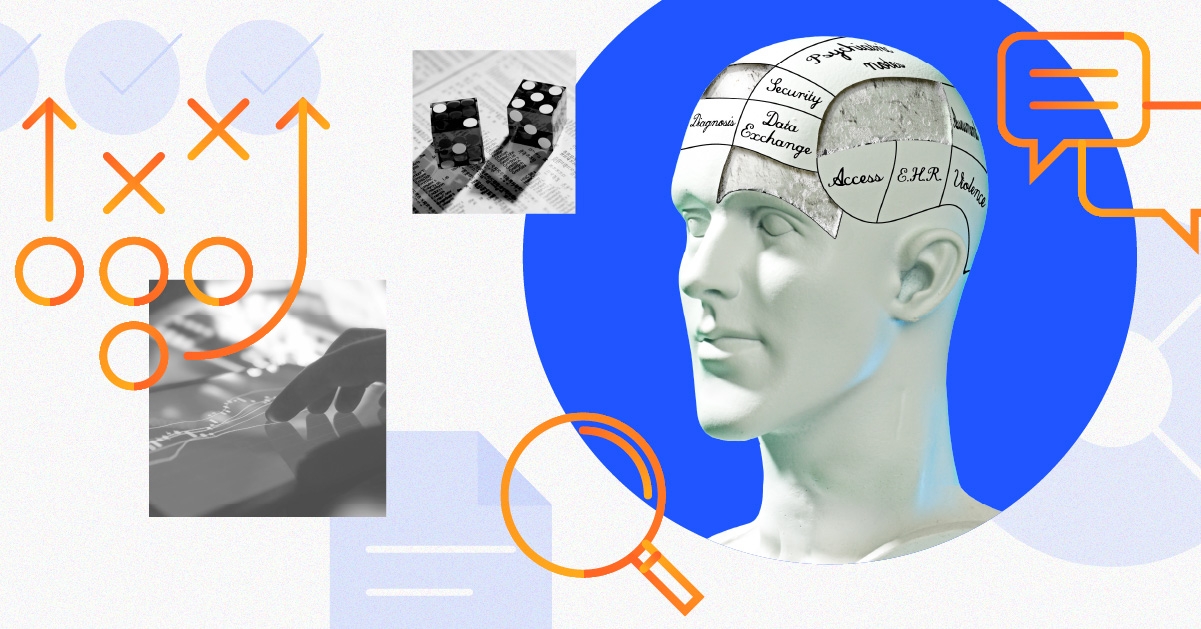
Though the final season of the Wall Street drama Billions aired in 2023, the character Wendy Rhoades lives on in investors’ imaginations. It’s understandable: Rhoades, a fictional psychiatrist and performance coach, helped traders and fund managers at Axe Capital enhance investment returns. Most investors covet that kind of advice, especially in rocky markets. Reportedly, the prototype for Rhoades is the real-life performance coach Denise Shull, who has a lively business helping hedge funds boost investment performance. Shull’s book begins with the words “What if the mystery of market crashes stems from a simple but total misunderstanding of our own minds?”
We caught up with Shull amid some of the most turbulent markets in many people’s experience, which Shull likens to navigating a hurricane with a surfboard. The key to improving investment returns, she says, is facing your fear. For more advice from Shull, read the following condensed, edited excerpts from our conversation.
Leslie Norton: Please tell us about your practice. Are you really the prototype for the character in Billions?
Denise Shull: You’ve probably heard of a lot of my clients, who are portfolio managers at hedge funds, and in some cases, analysts. I have three founders of hedge funds. I have one very large hedge fund that contacted me two years ago and asked me if I would work with two junior people. I now have the head of their desk.
I am definitely the prototype. Her first words are the first words in my book. My most recent claim to fame is that in 2016 I began working with Lindsey Jacobellis, an Olympic snowboarder who was infamous for snatching silver from gold. She had a mental block against the Olympics. And in 2022, she won two gold medals. In her book, she gives me a lot of credit for that.
Norton: What exactly do you do for your clientele?
Shull: I help them know what they truly think and tolerate the anxieties of taking risk.
Taking Risks to Boost Investment Returns
Norton: How is this market different from other markets you’ve experienced?
Shull: No one has any idea what’s going on. The market basically moves on Truth Social posts. A lot of [Shull’s clients] have a fundamental analysis of the business of the companies they’re trading in. The economic rules of the game have been changing on an almost daily basis. So without being able to [make those decisions], they couldn’t put positions on. People were losing money left and right. In the bond and currency markets, it was, will this create recession? Inflation? Will interest rates go up? What’s the yen going to be worth versus the US dollar? Every tweet/post colored one’s analysis. It’s a little like basketball, where the ball’s going all over the court.
Norton: Someone observed to me that this market felt like their childhood growing up with an alcoholic.
Shull: Probably. You never know what’s coming around the corner, and you have to tread very carefully and not be in the wrong place at the wrong time. Speaking of that child, from mid-March to early April, I was doing a lot of reminding people they had nothing to do with this. These people have been analyzing markets and making predictions for years, if not decades. They feel like it’s their fault, or they should be able to navigate it. I said, you’re trying to navigate this hurricane with a surfboard. You didn’t create the hurricane.
When people subconsciously take responsibility, it makes the situation more difficult because they subconsciously feel guilty or inadequate. Those feelings aren’t a reflection of the actual situation.
So I always say to my clients, look, my objective is to have the greatest degree of accuracy that we can create. So let me remind you, you didn’t do this. This is not your fault.
Norton: Let’s have an example.
Shull: I had a client in his 40s. He’s been investing since he got out of college. He’s successful. He’s a very responsible, very conservative guy. People don’t realize that they default to “What should I be doing differently? What am I doing wrong?” Well, maybe you’re not doing anything wrong, because there’s a hurricane and you have a surfboard. You just have to survive. He said, “This was a really good session.”
Norton: Is your advice simply behavioral and psychological? Do you talk through positions?
Shull: I do both. I have one long-only client I’ve worked with for six years. Almost all we ever do is talk about their positions. What I try to do is get all of the person’s thoughts and feelings out on the table. Frankly, the feelings are the more important part. One client has a big position in coffee. Coffee went up a lot last fall, and in December, he was trying to decide whether he should take the profit or go bigger. He has a tendency not to go bigger, and he hired me to help him lean into his conviction. I asked him, what are the reasons this will keep going, or that it won’t? What’s the worst that could happen if you were wrong? I ask those kinds of questions all the time to get all their thoughts and feelings out.
In this case, he says, it’s a weather question. Half the weather experts say that you need rain at the beginning of the season, or you won’t get a good coffee crop. The other half say it doesn’t matter. I said, well, which ones do you believe deep down inside? It might turn out to be wrong. But let’s figure that out, and trade on that.
We make decisions based on predictions. I’m always aiming to get all the predictions out on the table, so we can sort them out like a jigsaw puzzle. The client usually defaults to mathematical analysis or whatever version of fundamental analysis they follow. At the end of the day, you do something based on your confidence about what this data means, or your fear that it’s a risk. So I’m always trying to get those things out on the table: what they’re confident about, and what they’re afraid of, with an emphasis on the latter. In many cases, they have trouble telling me what they’re afraid of. I just keep asking questions: What if that happened? And then, what if that happened? And then they end up talking about it and saying, oh, that’s probably not going to happen.
Norton: Does your neuroscience background help?
Shull: Psychoanalysis and decision-making are similar. You need an emotion to make a decision, and that emotion is actually about some subconscious prediction you’re making. Once we get all that out on the table, what happens, ironically, is the irrelevant emotions lose some of their influence. The client may be trying to avoid certain feelings, so they don’t influence them, but it actually keeps influencing them even more. Gosh! Maybe it’s really just because I lost money on the last trade. Then they can say, oh well, that doesn’t have anything to do with anything, and they can be more accurate, which I suppose is a variation on objectivity.
Norton: How often do you talk to a typical client? And what do you charge? Is it more than a psychiatrist?
Shull: When I start with a new client, I talk to them twice a week because they make so many decisions. Then it goes to once a week. Most of my clients I talk to once a week. Some I talk to once every other week or once a month.
It’s more than people expect. My concept is any decision I help them with most likely makes or loses them millions of dollars. Having said that, it’s change in the sofa comparatively but probably similar to what a really good New York City lawyer charges, even though I do not do hourly for the most part.
Fear, Confidence, and Investment Returns
Norton: Do you find your advice differs based on the age of the client?
Shull: It’s possible that people under 30 were taught emotional intelligence and awareness in school. But I would say personality type is more important than age group. Some people are much more in their heads. To use psychoanalytic terminology, they’re intellectually defended. They want to rely on their analysis. Others really want to know how they feel and get to their intuition. Most of my clients are self-selecting. They called because they heard me say somewhere that the trick to better decision-making is to understand which feelings are about the decision, and which feelings are about your ego, or your P&L, or your ratty teenager, or whatever.
“Now neuroscience knows that we’re always predicting, based on our past experience, so you really don’t even need a psychoanalytic approach.”
Denise Shull
I have a client right now who’s extraordinarily attached to his analytics, so very intellectually defended. He has a wife and young children, and the wife has them seeing a family coach. This coach has a totally different approach to emotions than I do. So I have a hard time getting the client to really talk about how he feels, and when I do, he’s absolutely insistent about using the family approach. Which I know is literally the thing that is standing in his way.
He was at a big bank, and then a hedge fund, and performed spectacularly for a few years, and hasn’t done so well since. He needs to lean into how badly he wants to prove he wasn’t a one-trick pony. I say, “I want you to feel how badly you want this, because it’s skewing your trading, you’re making more trades or getting in too early, out too early.” He’s overdoing it because he’s trying too hard. But his response is, “Well, I need to change how I think about that.” So I try to speak to him in a way that will get through that defense mechanism, because that’s what it is.
Norton: You mentioned personality patterns. What do you mean?
Shull: They learned these growing up. Some clients delve very deeply into how they learned to navigate the world, how their parents treated them, and so on. What’s really getting in their way? Do they have this expectation of always having to be the good guy? So I’m able to use the psychoanalytic approach.
Now neuroscience knows that we’re always predicting, based on our past experience, so you really don’t even need a psychoanalytic approach.
Norton: The Trump administration’s first 100 days caused a lot of agita. What’s your advice for the year ahead?
Shull: Well, my global macro client yesterday said everybody thinks [the market] is going to fall apart, but when tariffs have calmed down, there’ll be some sort of tax cut, the economy will be off to the races, and the only problem is that interest rates aren’t coming down. How do we reduce the level of agitation? You have no control over the way [the president] behaves. So my first piece of advice would probably be to learn more about your own decision-making, the role in your head of fear. It’s common for people to have more anxiety than is really warranted, because they’re not retiring for 20 years. They’re afraid they will lose most of their 401(k). When you get truthful or accurate about what you’re really afraid of, lots of times it loses its agitation value.
Norton: Yes, but some people actually are retired or retiring.
Shull: I wish I didn’t have to say this, but every emotion at its core has some useful piece of information for you. So if you just retired and your 401(k) crashed, you’re anxious for a reason that’s not illogical. By the way, people have their own anxiety profiles. Some are OK with a couple of hundred thousand dollars, someone who has $18 million may still be still worried.
I’ll tell you what I told the Olympic athlete: When you’re able to say you’re afraid of X, it’s less disruptive. Your subconscious is trying to get your conscious, adult, problem-solving mind to figure out what to do about the situation. The athlete was very good tactically but not terribly good at pulling herself out of that gate. She always used to say, “Well, I’ll be fine. I don’t have anything to be afraid of.” But snowboardcross is a death-defying sport. You’re going an insane speed with people on top of you. She started to say, I’m afraid. You know what happened? She started getting out of the gate faster. Because it’s reasonable to be afraid.
Norton: Thanks, Denise.
The author or authors do not own shares in any securities mentioned in this article. Find out about Morningstar’s editorial policies.

 United States