
Investors First: Unlocking Opportunities in Private Markets
Morningstar CEO Kunal Kapoor and BlackRock COO Rob Goldstein explore how the shift toward private markets is reshaping modern portfolios.
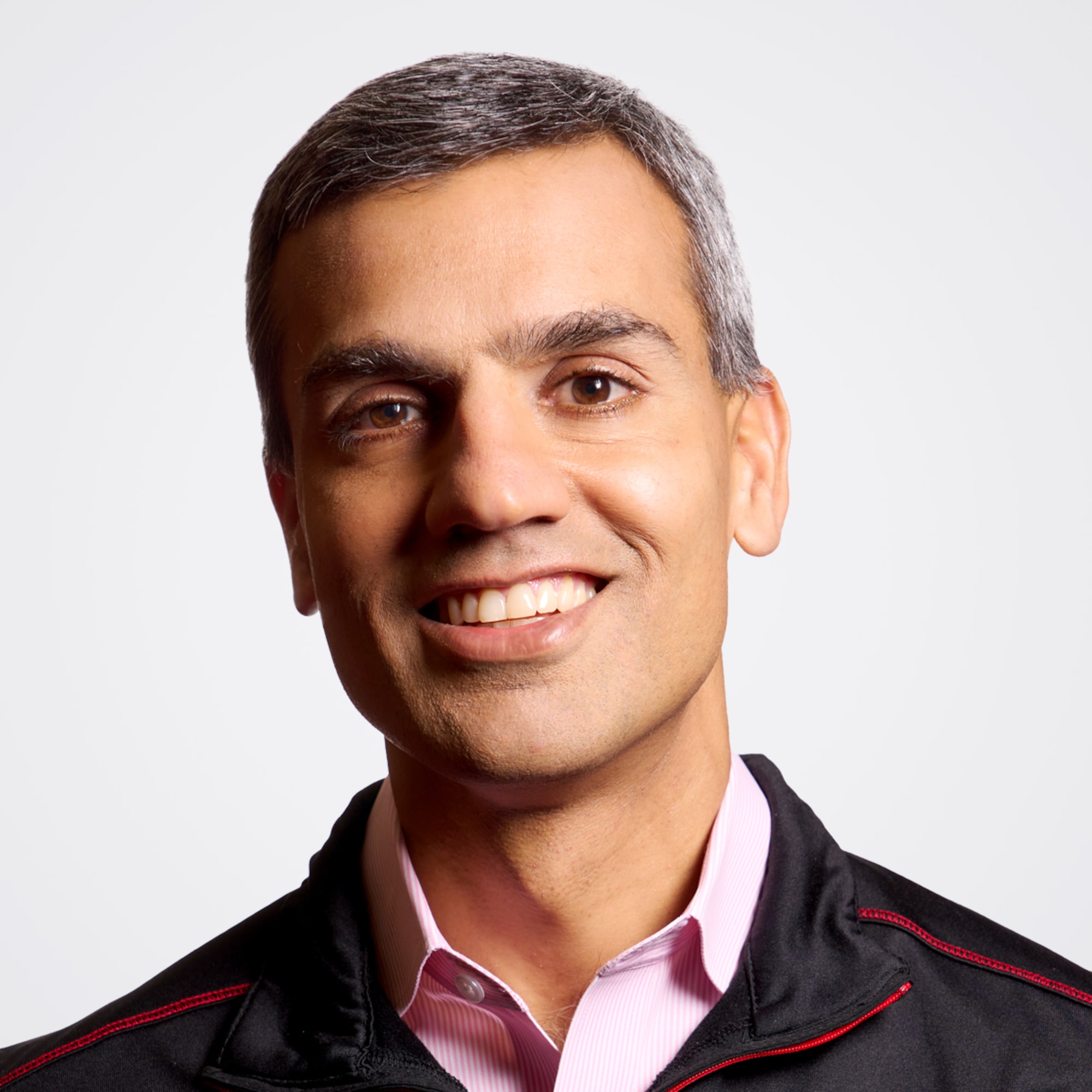
Kunal Kapoor: Good morning, everybody, and welcome to our latest in our LinkedIn Live Investors First series. I’m excited today to be joined by my friend Rob Goldstein, who’s the chief operating officer at BlackRock. And we’re going to talk today about private markets in particular, but Rob’s got a fantastic worldview on a lot of things. And so, I’m sure we’ll digress somewhere along the way. But great to have you here, and thanks for making the time.
Rob Goldstein: Great. Well, Kunal, thank you for having me.
Kapoor: Yes, absolutely. So, we’re living through an interesting time, one way or the other, and so I’d be remiss if I didn’t kind of start there. What have been your observations just about how markets have behaved, what it’s meant as we’ve kind of had some of the ups and downs here in 2025?
Goldstein: Right.
Kapoor: Or mostly down so far.
Goldstein: It’s certainly been a year of learning, but I think if you zoom out for a minute, it’s been an extraordinary year. But I think you have to look at it relative to some basic questions. Have the markets been orderly? The markets have been quite orderly. Have banks been in a strong position? Banks are in a very strong position. And then you look at the capital markets themselves, and you start to think about how have things changed since the last stress point, Silicon Valley Bank, covid, obviously going back to the financial crisis.
And if anything, what you see is that the fabric of the capital markets has moved a little bit. ETF volumes are much greater. The performance of ETFs continues to be incredibly not only orderly, but continuing to be quite efficient. So, I think that if you zoom out and just ignore asset levels for a minute, things have actually been pretty good for the year, recognizing the volatility that we’ve experienced.
And I think that’s a direct result of many factors, the evolution of the capital markets, the continued evolution of technology, a variety of regulations that have been put in place. But there’s no question that if you’re an average investor, if you’re one of the 62% of Americans, for example, who own US equities, and you’re checking your stock portfolio, there’s an element of, “What’s going on here?” And I think that relative to the start of the year, where there was just euphoria, I think we’re just in a different regime with regard to volatility and this rewiring of what’s happening in the world.
Kapoor: It’s interesting because some of the rewiring that was supposed to take place was sort of in the markets, and a big part of that was this continued interest and move toward bringing private capital markets to a broader swath of investors. They’ve sort of been the purview of institutions, largely. And much of that narrative has come from the fact that companies are staying private longer. It’s easier to raise capital. Banks have pulled back from debt financing, and so you have nonbanking lenders taking a larger share. And so what have you guys observed when you look at those kinds of shifts and, from a long-term perspective, what they’re going to mean?
Goldstein: Sure. And Kunal, you and I have spoken about this through the years, many, many times, and one of the things that I just cannot understand, I can’t get my head around this, but I know it’s true, is I, at this point, am about to have my 31st anniversary at BlackRock. So, I’ve been doing this 31 years, since I’m 20 years old. I cannot understand that there are fewer public companies today than when I started 30 years ago. And it’s not like a few fewer. It’s materially. The number is closer to half than it is to 100%. I just can’t understand that. So the fabric of capital, the fabric of what founders and CEOs are looking for, everything has been rewired over the past few decades.
And I think it’s increasingly important that investors be thinking about not only the public capital markets but the private capital markets at the same time. And the opportunity sets within the two are different. The opportunity sets within the two also have different degrees today of transparency, different conventions in terms of pricing. I don’t think anyone is getting a statement from their private-market providers on April 9 when the markets close today with the updated valuations. And I think it’s a, a different framework, both for the companies that are leveraging those private capital markets and for the investors that are increasingly leveraging those private capital markets. There’s a different framework.
What we’re seeing is the continued growth, for a variety of reasons, the continued growth in the private capital markets, companies staying private for longer, companies not choosing to go public, companies leveraging the private credit markets as the whole role of banks has changed over the past few years. So, in a world of needing to build diversified portfolios, what we’re seeing is asset owners increasingly want things that are less correlated. And the private markets, particularly private markets like infrastructure provide a lot of those attributes in a world where it’s harder and harder to actually access things that are uncorrelated.
And then lastly, I would just say, you know, my whole experience—and another thing you and I have spoken about a lot through the years—my whole experience, and I know your whole experience, has really been seeing technology transform investing. And technology has transformed investing in so many ways. and I think one of the features of technology, something BlackRock is very focused on, something Morningstar is very focused on, is making it easier, more accessible, more transparent to have allocations to the private markets. So, I think, historically, they’ve provided these attributes. They were just hard to access. And a lot of what’s happening now is making them easier to access. And a lot of what we’re doing as companies is not only making them easier to access but, importantly, making them easier to see into. To understand and, particularly important and critical, is to understand in a portfolio context.
Kapoor: Right. Now the interesting thing is that people who are skeptical that there’s a place for private markets in broad portfolios, for rank-and-file investors, would say that, first of all, generally speaking, public markets have had a fairly good record, despite the fact that maybe they’ve shrunk, in delivering some fairly good returns to investors. And secondly, while our PitchBook data shows that there is a higher return that investors are earning in private markets, they are giving up, obviously, some level of liquidity and transparency like you talked about. And so, how do you balance that reality of like things are generally pretty good in the public markets over longer-term periods? And is the benefit good enough to kind of go that extra mile to include a less-liquid asset class?
Goldstein: It’s a great question, and I think there is no one answer to that question. It depends on what the individual is looking for. I continue to believe for most individuals, an ETF model portfolio will solve the vast majority of their investing and long-term investing needs. And I think if anything, what’s happening there, again with technology, is the ability for those portfolios to become more and more personalized for the objectives that the individual is looking for.
That said, I think when you think about it in a portfolio context, in this concept of the whole portfolio, you’re trying to build a portfolio to actually achieve certain objectives. And one of the fundamental principles of how most people want to design their portfolios is to have embedded within the portfolio not having everything behave the same way. And I think increasingly what’s happening, going back to the public markets, there’s a lot more correlation between stocks and bonds. You know, one of my favorite clients through the years was the chief investment officer of Freddie Mac, this gentleman Nazir Dossani, this is many years ago, and he always used to call me and say, “Help me understand, this is like the fourth Eight Sigma event we’ve had this year. How is that possible? Like explain the math to me.” And I feel like we’ve been living more and more in that world. So importantly, many of the less correlated assets are only accessible through the private markets. And again, I would just, needless to say, we’re very big believers at BlackRock in the importance and the role that infrastructure could play in portfolios, and today the real access points to infrastructure are only in the private markets.
Kapoor: Right. And that’s behind your recent acquisition, right?
Goldstein: Of GIP. And I would almost encourage people to sort of look differently. What should the portfolio have exposure to? Where do you believe growth in the world is going to come from? Where do you believe stability or volatility and therefore opportunity in the world is going to come from? And then how do you build a portfolio that’s better, faster, cheaper to access that? And I think in many regards if you do that test, some of the only entry points, which again could be better, faster, cheaper still on a relative basis, are gonna be for the private markets.
Kapoor: I think you’re hitting on something really important because I think in the media and sort of the general conversation everyone wants to talk about unicorns and private equity. But I think where you’re starting to go and where I think we have alignment is some of the action initially for investors may be outside private equity itself and more so in infrastructure and private credit in particular, right?
Goldstein: Absolutely, and I think another important part of liquidity, you know, it’s quite interesting because, in the past few days just coincidentally I’ve had a lot of interactions with people who are outside of finance, and everyone wants to know, “What are you doing with your portfolio, Rob?” And I’m like, “I’m not doing anything.” I’m not doing anything because the reality is my portfolio is for the next few decades, and I think importantly—people get confused. We live in a world where you could argue, if anything, there’s too much information. And I think people get confused watching the ticks, thinking it impacts their portfolio. But if your investment objective is retirement, if your investment objective is wealth transfer, if your investment objective is college, if your investment objective is paying for your child’s wedding, chances are that objective- and one of the most valuable, one of the most valuable, valuable, valuable tools you have is time, is the fact that you’re putting money away today for 10, 20, 30, 40, 50 years. And I think that is the miracle of the capital markets.
So, I think that liquidity point is something that most investors are overanxious about. I think in many regards, if you look at a target-date fund, for example, the miracle of the target-date fund is it’s making clear often in the name that this is like a “2040 fund.” And I think if every fund was named that way, I think it would actually be a pretty good thing for society and the capital markets.
Kapoor: And your point about people having long time horizons for many of their goals is exactly right. Because actually with target-date funds, we see that sometimes you’ll have a target date, like a 2020, that has come and gone and people still have assets in them. And that’s sort of a sign of the longevity of it.
Now, obviously assuming that this movement does continue, one of the difficulties in accessing the private markets has been that the vehicles are not in place, the transparency is not in place, and the technology’s only starting to enable some of the difficulties that people have in accessing those markets. And so can you talk, particularly on the technology angle, what needs to happen?
Goldstein: Sure. And let me start out by saying, and I think, the two of us look incredibly young and dynamic, but at this point, we’re old. And it’s interesting sitting here at Morningstar, the founding principle of Morningstar was that there wasn’t transparency from mutual funds. One of the founding principles of BlackRock is there wasn’t actual transparency, particularly risk transparency, for bonds. So I think if you rewind back 20, 30, 40 years ago, things that today are so standard that the average employee at our respective companies wouldn’t believe that these were the opaque instruments. Right? They would not believe the average employee at our companies would not believe the degree of confusion, lack of transparency, amount of paper you needed to read to understand anything for what today are considered the most basic instruments in the capital markets.
So I, as a founding principle with regard to the private markets, believe they will get more transparent and more accessible year after year after year after year after year. I also believe, as a founding principle, everything in the world today is happening faster. That’s just one of the accelerants that technology creates. Everything is happening faster. So if you believe those two things, I don’t know if it’s 2028, 2030, 2035, but I have a pretty high conviction that in 2040, the average employee at Morningstar or BlackRock will not believe that there was a time that the private markets were so hard to access and there was a time when the private markets were so not transparent.
So we’re working on a variety of things. Morningstar’s working on a variety of things. Many people in the ecosystem are working on a variety of things. I think the most important element is that the direction of travel is clear. I don’t think anyone knows the exact number of years but I think it’s going to happen a lot faster than what we witnessed with regard to the mutual fund or with regard to fixed-income securities.
Kapoor: Just look at what happened with active ETFs, how fast that went from not possible to possible. Final question to wrap up. So if you’re an investor looking at private markets and thinking like, “How should I even think about this at this moment in time?” What piece of advice you’d leave them with?
Goldstein: As an individual investor
Kapoor: Or an advisor.
Goldstein: Or an adv—to me, it’s very simple. I think of it as part of a core allocation within a whole portfolio. It’s that simple. I know everyone’s-
Kapoor: Match it to your planning and kind of go from there.
Goldstein: Match it to your planning. Think of it within the whole portfolio context. I think infrastructure provides a unique opportunity, particularly in a world of things becoming much more correlated. I think private credit provides a unique opportunity to actually get excess returns. But to me, the most important thing is don’t think of it to like chase the next Facebook before it goes public. That would be great if you could do that. If you could do that, please call me. But think of it in the context of the whole portfolio. Think of it as a core allocation. And I think increasingly people are going to start to think of it just as how portfolios are built.
Kapoor: That’s great advice, and I think we would fully align with that. It starts with the financial planning and kind of goes from there. So thanks everybody for joining us. I hope you enjoyed this edition of our LinkedIn Live Investors First series, and we’ll see you back soon.
The author or authors do not own shares in any securities mentioned in this article. Find out about Morningstar’s editorial policies.

 United States