
2025 Apparel Industry Trends: What Advisors Need to Know
Despite uneven demand and rising competition, attractive opportunities persist.


Apparel firms’ valuations have increased over the past year, thanks to healthier inventory levels, less discounting, and lower inflation and interest rates. As of June 2025, the median apparel firm is trading at our median fair value estimate—a big reversal from two years prior.
When financial advisors have a better understanding of the industry, it can be easier to identify the right apparel stocks for clients’ investing strategies. Our latest research takes a closer look at the latest insights on market trends, industry drivers, supply and demand, and more.
Key Takeaways
- Same-store sales growth is likely to remain in the low single digits in the long run.
- A prolonged period of weak tourism could negatively affect apparel sales for some firms, especially those that are entirely or mostly dependent on domestic sales.
- Although some apparel stocks have rallied strongly, many remain cheap in relation to our fair value estimates.
High Same-Store Sales Growth Has Been Elusive
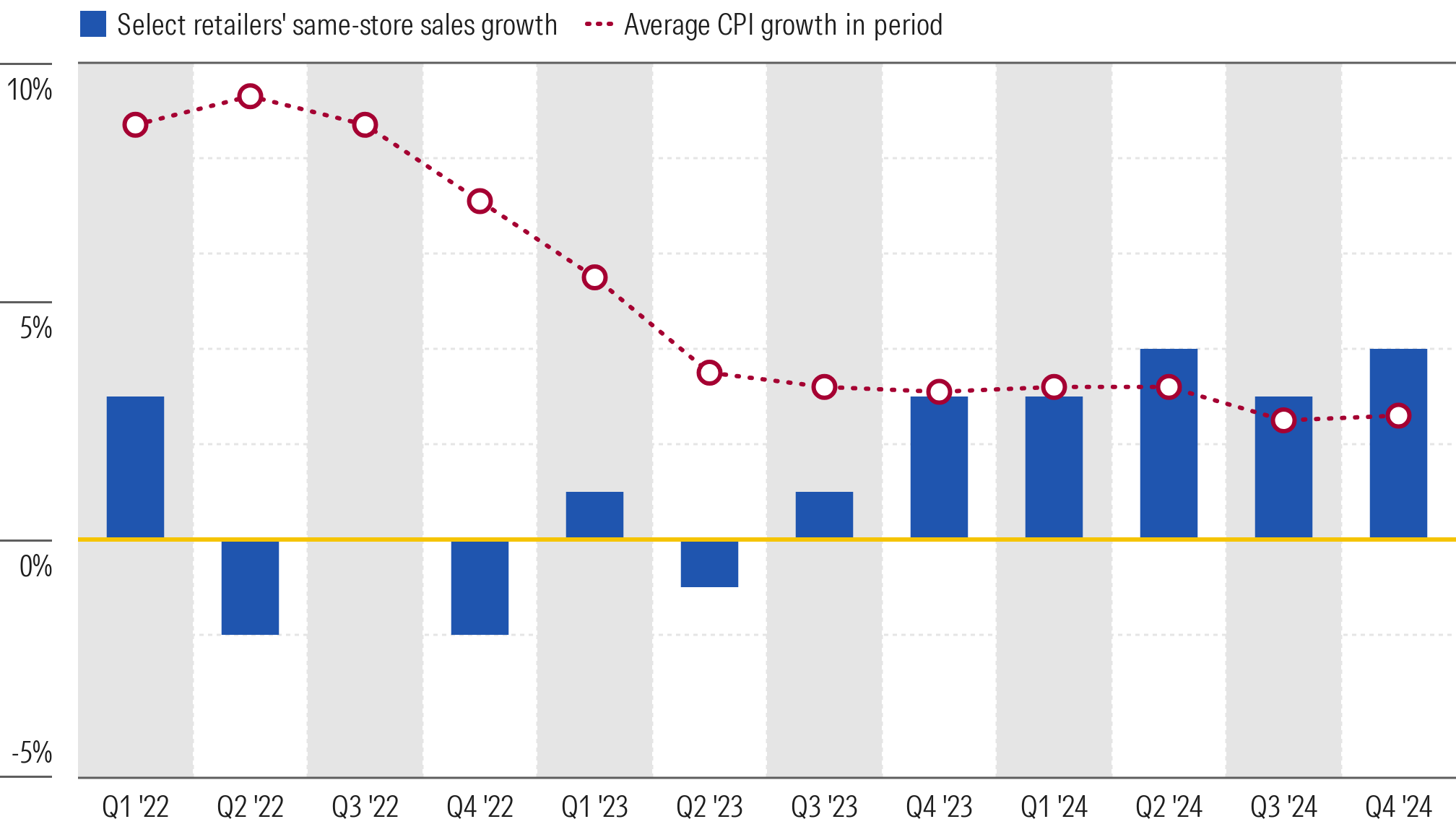
Over the past year, shipping and inventory problems have lessened, and average same-store sales growth has been close to the inflation rate. Yet the fact that the industry is struggling to outpace inflation suggests that retailers continue to struggle to draw shoppers.
For most retailers, same-store sales growth is likely to remain in the low single digits in the long run. However, outliers are those catering to wealthier consumers, such as Ralph Lauren RL.
Select Group of Retailers’ Sales Results Show Industry's Recent Struggles, but Stability Has Improved
The Trade War’s Impact on Apparel Retailers
The ongoing trade war makes the future for clothing retailers in 2025 highly unpredictable. US department stores like Kohl’s KSS and Macy’s M, which heavily rely on imported products, find themselves in a challenging position with limited ability to mitigate the impact of rising tariffs.
Conversely, discount retailers with substantial market advantages, such as TJX Companies TJX, stand to gain. These stores do not directly import their goods and are known for providing consumers with low prices.
The Trade War Poses a Threat to US Tourism Recovery, Affecting Apparel Firms
The apparel industry’s recovery from the covid pandemic has been slow as intermittent restrictions, economic conditions, and other factors have disrupted normal business and leisure travel patterns. This has affected several domestic apparel firms, including Macy’s and Nordstrom JWN.
How exactly does tourism affect apparel firms? Geography is a factor. If tourists aren’t coming, they aren’t spending domestically—a significant problem for apparel firms that are entirely or largely dependent on domestic sales.
Uncertainty about the pace of the recovery in international tourism was likely a factor in Nordstrom’s decision to close all its stores in Canada. Key shopping areas for international travelers include big-city flagships (such as Macy’s Herald Square) and outlet stores, some of which are located near airports and major tourist centers.
Overall, the rate of recovery in international travel depends on economic conditions in the US and abroad, currency movement, and consumers’ appetite for travel. It’s also possible that travel to the US from China may continue to be soft because of the hostilities between the two countries, weakness in China’s economy, and the rise of shopping opportunities within China.
Visits by Overseas Travelers Are Improving but Below Prepandemic Highs
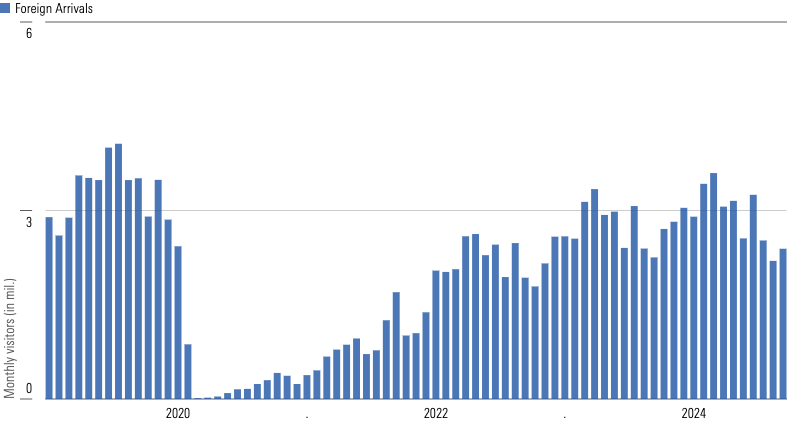
There are signs that international tourists are avoiding travel to the US in retaliation for the imposition of high tariffs. A prolonged period of weak tourism could negatively affect apparel sales for some firms, especially those that are entirely or mostly dependent on domestic sales.
Value Persists in the US Travel Services Industry
When it comes to US travel, our latest Travel Services Pulse shows value is still found in the industry despite faltering travel demand and a challenging consumer environment. Over the past year, consumers’ intent to take vacations has dropped 5% year over year versus a 7% increase in the preceding 12-month period. This trend reveals the increased strain consumers are under owing to dwindling savings rates amid high inflation, which could hinder leisure demand for hotel and online travel operators. As a result, while we still see revenue growth within our travel coverage during 2024, we expect it to moderate compared with 2023.
Apparel Stocks Remain Cheap in Relation to Our Fair Value Estimates
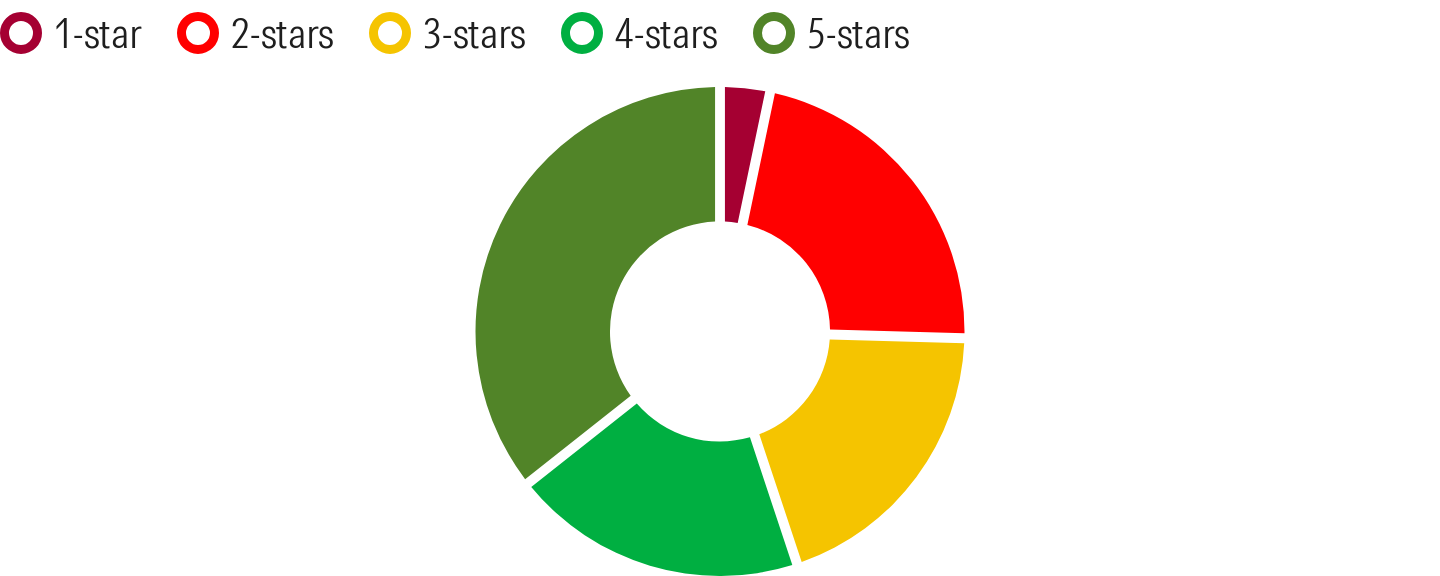
Although the share prices of most apparel companies under our coverage rallied in 2024, about 55% are still trading at 4 or 5 stars as the trade war intensifies in 2025. Apart from internal problems at some firms and trade uncertainty, this sizable percentage reflects investors’ concerns about the industry returning to typical patterns of excessive merchandise and discounting.
However, the percentage of apparel stocks in 4- or 5-star territory has dropped a bit over the past year. In our view, investors are overly focused on short-term risks. We do not think any of the apparel firms under our coverage are at risk of financial distress in the foreseeable future. Eventually, the trade war will end, and investors will return to a focus on long-term cash flow generation potential. Strong performers (shares up more than 50%) over the past year include Revolve RVLV and Dick’s Sporting Goods DKS.
Reflecting the Industry’s Struggles, Many Apparel Stocks Are Trading at 4 or 5 Stars
Deliver Better Advice to Clients
Investment strategies look different for every client. By knowing trends in major industries like apparel, you can initiate more meaningful conversations and guide your clients to make decisions that align with their goals.
The author or authors do not own shares in any securities mentioned in this article. Find out about Morningstar’s editorial policies.

 United States