
After Earnings, Is Home Depot Stock a Buy, a Sell, or Fairly Valued?
With strong brand loyalty amid rising home prices, here’s what we think of Home Depot’s stock.

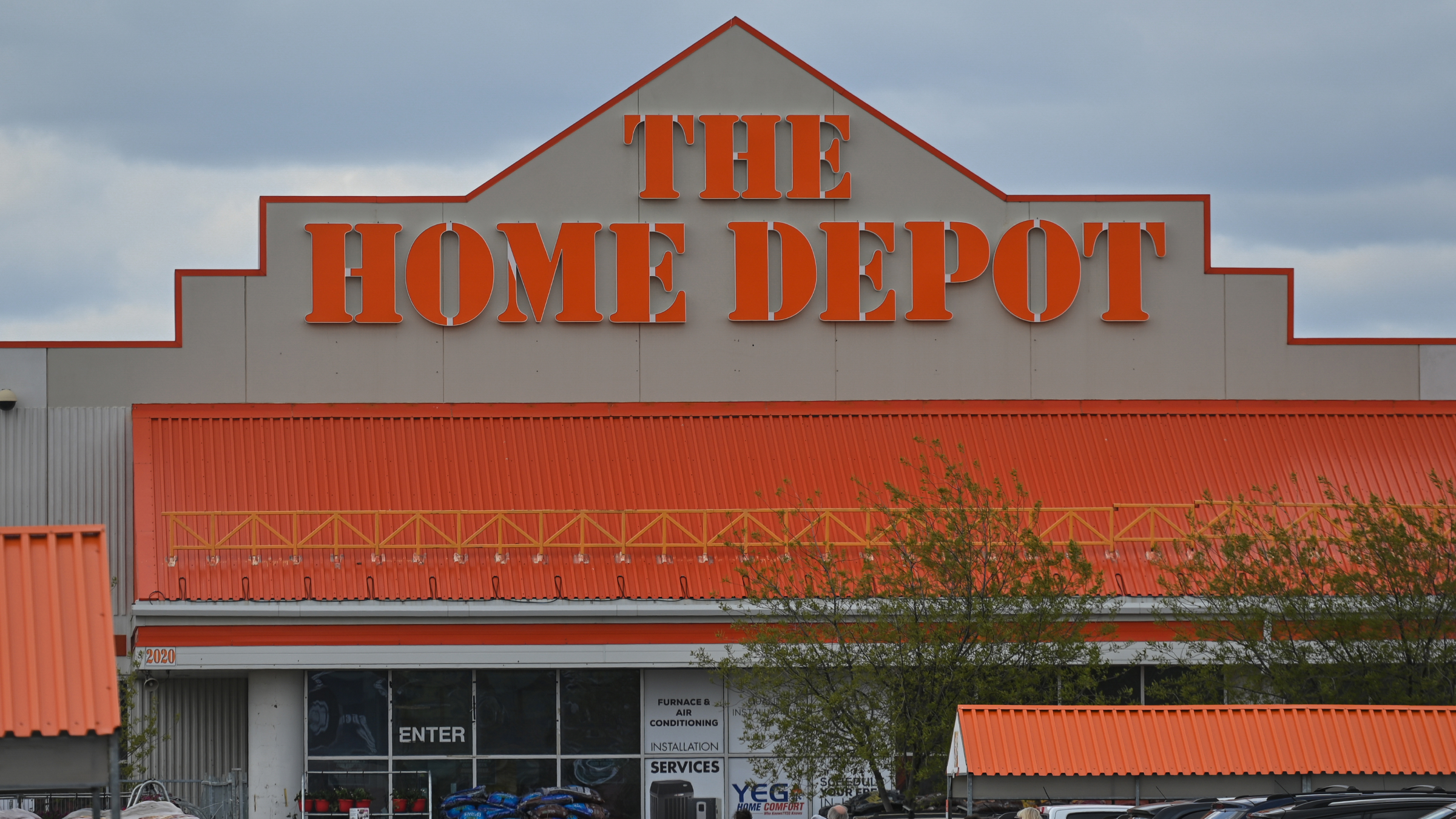
Home Depot released its second-quarter earnings report on Aug. 19. Here’s Morningstar’s take on Home Depot’s earnings and stock.
Key Morningstar Metrics for Home Depot
- Fair Value Estimate: $335.00
- Morningstar Rating: ★★
- Economic Moat: Wide
- Morningstar Uncertainty Rating: Medium
What We Thought of Home Depot’s Q2 Earnings
Home Depot’s second-quarter sales rose 4.9% on 1.0% same-store sales growth and the benefit of a full quarter of SRS Distribution sales. Steadily improving demand allowed the firm to maintain its 2025 outlook, including 2.8% sales and 1.0% comparable growth and a 13.4% adjusted operating margin.
Why it matters: A chronically ill housing market persists, with existing-home sales struggling to find growth despite moderating price increases and mortgage rates. Still, helped by product breadth, Home Depot is gaining market share, outpacing the 1% industry decline in the quarter.
- Same-store sales should pick up modestly over the remainder of 2025 and accelerate as rates become more accommodative. Further, the firm is set to benefit from a wider customer base, sales team, and distribution network once the GMS acquisition is completed.
The bottom line: We’ve raised our fair value estimate for wide-moat Home Depot, stemming from time value and the benefit of sales and profit from the GMS acquisition, which was announced June 30 and is set to close by fiscal year-end.
- Even so, we see the shares as rich at 27 times 2025 adjusted earnings per share, above the 23 average over the past decade. To reach today’s price, Home Depot would have to capture same-store sales growth of 5% and operating margins above 15% consistently, which we believe is unlikely, given ongoing investments.
- We’ve also changed our Uncertainty Rating to Medium from Low to account for variability around tariffs and the macroeconomic environment, which could result in a protracted period of consumer hesitancy. This change aligns with our quantitative methodology.
Between the lines: For 2026, we expect to add around $5.5 billion in incremental sales from GMS, which carried an adjusted operating margin below 10% in its most recent year. We also plan to lift long-term comp growth to 4.0% from 3.5% to account for a better opportunity set.
Fair Value Estimate for Home Depot
With its 2-star rating, we believe Home Depot’s stock is overvalued compared with our long-term fair value estimate of $335 per share. We lifted our long-term same-store sales outlook to 4.0% from 3.5% to account for a better opportunity set across the pro segment. For 2025, we made little change to our forecast, as DIY consumers continue to feel pressure from high interest rates and macroeconomic uncertainty. Management maintained its fiscal 2025 guidance of 2.8% total sales growth, with comparable sales growing just 1.0%.
Still, given the maturity of the domestic home improvement industry, we expect total demand to largely depend on changes in the real estate market, driven by prices, interest rates, turnover, and lending standards. We project 4.6% average sales growth over the next decade after housing market stabilization boosts DIY spending back to historical levels, supported by offerings like buy online/pick up in store, better merchandising, and improved delivery options, which will drive market share gains. In the longer term, we forecast gross margins to hold steady over the next decade (ending 2034 at around 33.4%) while the SG&A expense ratio improves incrementally (leveraging 60 basis points over the next decade, to 17.4%) as the firm capitalizes on its scale and supply chain improvement initiatives while investing to protect its market leadership. This leads to a terminal operating margin of 14.5%, in line with its pre-pandemic peak.
Operating margins and ROICs could improve as the firm focuses on continued efficiency of the supply chain and the opportunity to better penetrate the pro business with market delivery centers that leverage its delivery capabilities. Additionally, we think Home Depot still has other opportunities to expand the business. It can capitalize on product lines with weak market share leaders, as it has previously done, for example, in appliances as Sears faltered. Also, having deeper product lines to cross-sell (with brands like Company Store offering exposure to textiles) could add incremental revenue potential. The service business, backed by a major national brand, as well as the commercial business coming from Interline and HD Supply, could build brand loyalty and keep consumers returning to a trusted source, something that could be hard to duplicate for a new entrant.
Read more about Home Depot’s fair value estimate.
Economic Moat Rating
We assign Home Depot a wide economic moat. As the largest global home improvement retailer, Home Depot possesses a competitive edge owing to its brand intangible asset and cost advantage, in our view. Over the past 10 years, Home Depot’s sales growth has outpaced the building materials and garden equipment and supplies dealer industry’s average growth of 5.4% by 150 basis points annually (based on the US Census Bureau data), an indication of the brand’s ongoing relevance. We expect Home Depot’s strong brand equity and extensive scale should enable incremental market share gains in a highly fragmented $1 trillion North American home improvement market, on top of the roughly 17% market share it has amassed thus far (given more than $159 billion in sales in 2024).
In our opinion, it would be difficult for another retailer to enter the market and threaten Home Depot’s position, as smaller retailers would have difficulty building vendor relationships strong enough to undermine the company’s pricing prowess. While the threat of manufacturers creating their own retail network could jeopardize product availability in Home Depot’s retail channel, we doubt such an endeavor would be successful in the longer term. In our opinion, manufacturers would be poised to move more products by maintaining a beneficial relationship with a wholesale network like Home Depot, rather than on their own. Thus, we are confident that Home Depot’s competitive position will continue to benefit the business, indicated by our forward ROIC metrics remaining north of our 7% weighted average cost of capital over the next two decades (with ROICs including goodwill forecast to ultimately reach 23% in 2034 by our calculation), underpinning our wide moat rating.
Read more about Home Depot’s economic moat.
Financial Strength
Home Depot has had no concerns tapping the credit markets to finance the business in recent years. The firm was able to raise $10 billion in debt during the first half of 2024 in order to finance part of the $18.25 billion SRS Distribution acquisition. This left Home Depot with a total debt above $53 billion at the end of 2024. Management has halted share repurchases with higher expected debt service as a result of the SRS acquisition; however, we model share repurchases to resume at the end of 2026, after the GMS transaction has closed and cash flows are more certain. Including the impact of the SRS acquisition, EBIT is forecast to cover the net interest expense 10 times at the end of 2025.
Strong free cash flow to the firm, which has averaged about 10% of sales over the past three years, supports higher leverage, and we expect the company will stay within its targeted adjusted debt/EBITDAR metric of 2 times over the long term. The balance sheet’s $27 billion in net property, plant, and equipment provides an asset base to secure debt if necessary.
Given Home Depot’s ability to generate tremendous free cash flow to the firm (we forecast an average of $19 billion in 2025-34), we expect management will have no problem facilitating dividend payments and remaining above its long-term dividend payout ratio target of 55%.
Read more about Home Depot’s financial strength.
Risk and Uncertainty
We give the company a Medium Morningstar Uncertainty Rating owing to its strong brand recognition, which has helped stabilize sales through the cycle. Home Depot’s sales are largely driven by greater consumer willingness to spend on category goods in both necessary and discriminatory home purchases. Thanks to the MRO and pro business (HD Supply and SRS), revenue could be less cyclical, as the maintenance side of the business can prove more consistent. In uncertain economic times, consumers remain in their homes, embarking on improvement projects, boosting DIY revenue. Alternatively, when home prices rise, the wealth effect generates a psychological boost to consumers, reinvigorating professional sales thanks to a higher willingness to spend on big home improvement projects.
In our opinion, Home Depot has minimal environmental, social, and governance risk. Product sourcing, potential data theft, and consumers’ shift in preferences to sustainable product offerings are relevant, but Home Depot should be able to adapt, and we do not see any material financial impact from these factors.
We believe the most significant near-term risks are a continuation of slow turnover in the real estate market and potential tariff impacts. Low home inventories for sale remain problematic, aggravated by still-high mortgage rates (a 30-year loan remained near 6.6% in August 2025).
Read more about Home Depot’s risk and uncertainty.
HD Bulls Say
- Home Depot’s continued investments in supply chain and merchandising should improve productivity and support its leadership position in the home improvement market.
- The firm has returned $73 billion to its shareholders through dividends and share buybacks over the past five years, around 20% of its market cap. We forecast Home Depot returning $76 billion to owners over the next five years.
- The addressable MRO market is about $150 billion. As Interline and HD Supply make up a low-double-digit share, SRS reaches a new end user, and GMS joins the mix, there is share up for grabs.
HD Bears Say
- Weak consumer spending, higher interest rates, or an economic downturn could hinder sales for home improvement projects and affect Home Depot’s growth.
- IT and supply chain improvement gains could prove more challenging to achieve, as simpler efforts have already bore fruit. Further productivity efforts could face some implementation risks, creating inconsistent profitability.
- As Home Depot digests more than one sizable acquisition, integration risk remains, and management could be distracted by idiosyncratic issues at larger tie-ups like SRS or GMS
This article was compiled by Isela Meraz.
The author or authors do not own shares in any securities mentioned in this article. Find out about Morningstar’s editorial policies.

 United States