
US Fixed-Income Markets Weathered the Tariff Storm in Q2
Bonds staged a comeback after April’s policy-induced turbulence.


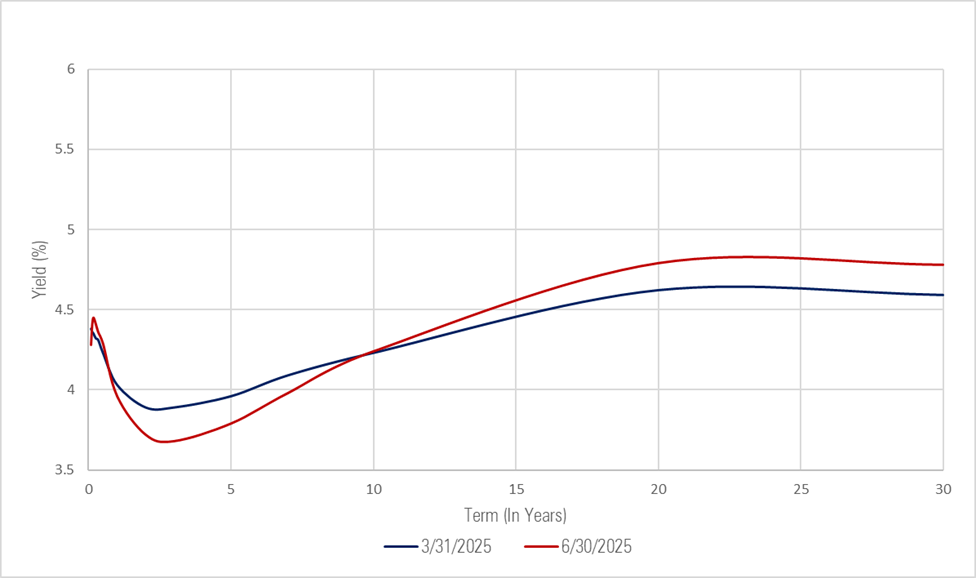
Yet another volatile quarter for the bond market rewarded investors who gathered the courage to take on more credit risk. Those who ventured further out on the yield curve to add more duration risk, or sensitivity to shifting yields, however, were left behind. The Morningstar US Core Bond Index, a proxy for the US-dollar-denominated investment-grade bond market, eked out a 1.17% gain during the quarter.
The quarter started with uncertainty owing to the current presidential administration’s tariff announcements. Long-term Treasury yields rose amid rising inflation expectations and dwindling foreign investor confidence in US markets. While Moody’s May downgrade of its US credit rating continued to push long-term yields higher, and the Federal Reserve held its overnight borrowing rate for banks steady, subsequent tariff policy reversals subdued trade tensions and increased risk appetites. The typical long government Morningstar Category fund, which invests in long-dated Treasury bonds and carries a duration of 16.5 years, plummeted 1.28% during the year’s first three months.
Longer-Term Treasury Yields Rose
Fixed-Income Morningstar Category Average Returns
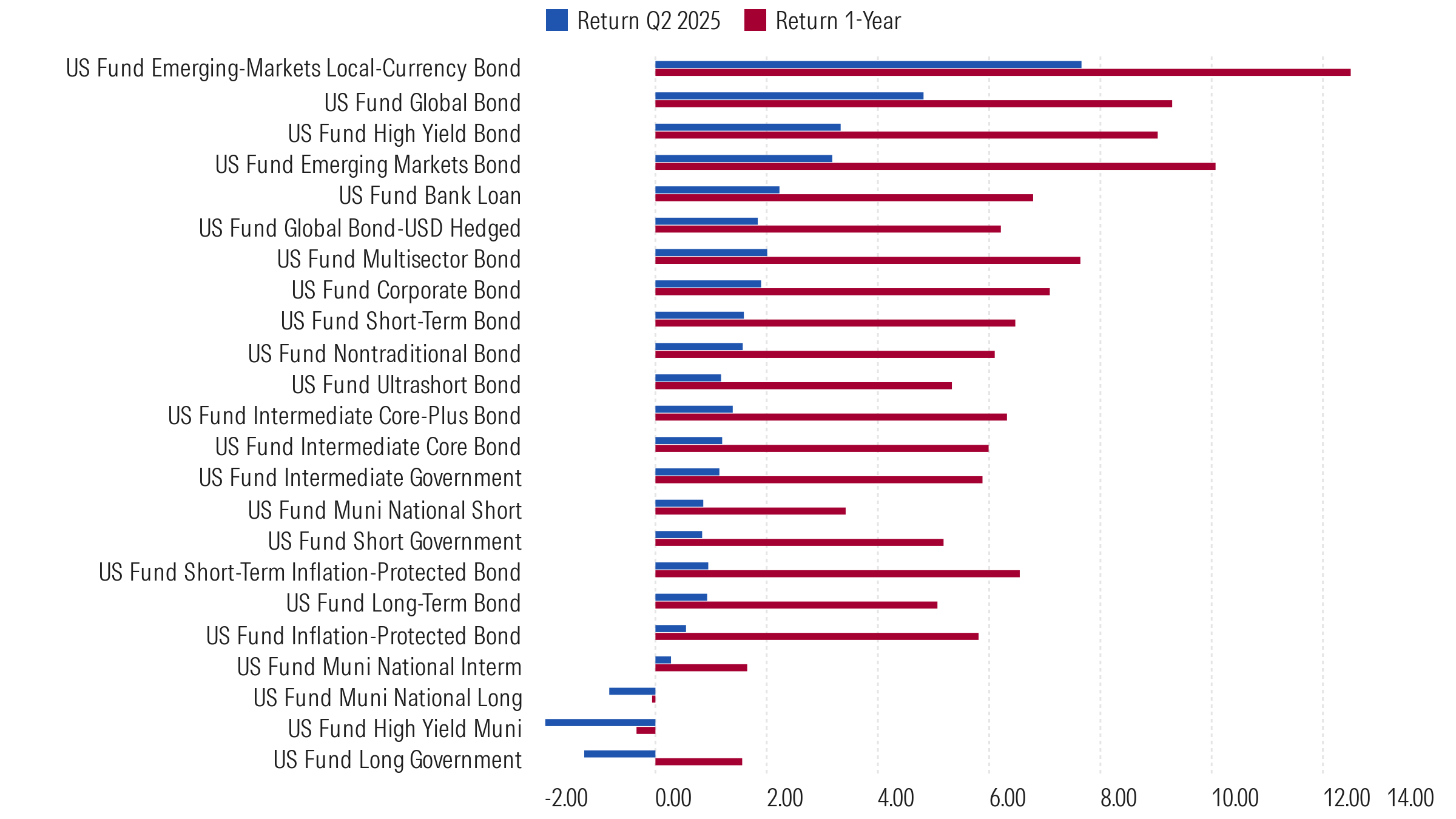
On the other hand, the US emerging-market local-currency bond category led the way with a 7.66% average gain, thanks to a weakening US dollar. A relatively healthy economy also continued to reward those who ventured into credit-sensitive sectors, such as high-yield and global bonds. The median high-yield bond and global bond fund gained 3.33% and 4.82%, respectively, in the quarter.
Corporate Credit Spreads Tighten
US Dollar Weakens
Below, we dig into a few fixed-income categories and highlight how some of our favorite bond managers fared during the quarter.
Municipal Markets Bore the Brunt
Volatility from a turbulent Treasury market spilled over into municipal bonds. Potential changes to the tax-exempt status of municipal bonds, which led to lower demand coupled with elevated new issuances, didn’t help. Tax-exempt yields rose alongside Treasuries. The market regained some of its underperformance later in the quarter, but the median high-yield municipal-bond Morningstar Category fund lost 1.98%.
Despite the challenging environment, some high-yield muni-bond managers rose in the quarter. Lord Abbett Short Duration High Income Muni SDHIX, which has a Morningstar Medalist Rating of Bronze, gained 0.59%, owing to its relatively shorter duration, which shielded it against rate volatility. On the contrary, Silver-rated NYLI MacKay High Yield Muni Bond MMHIX lost 1.42% in the quarter because of its slightly above-average duration.
Investing Outside the US Was Rewarded
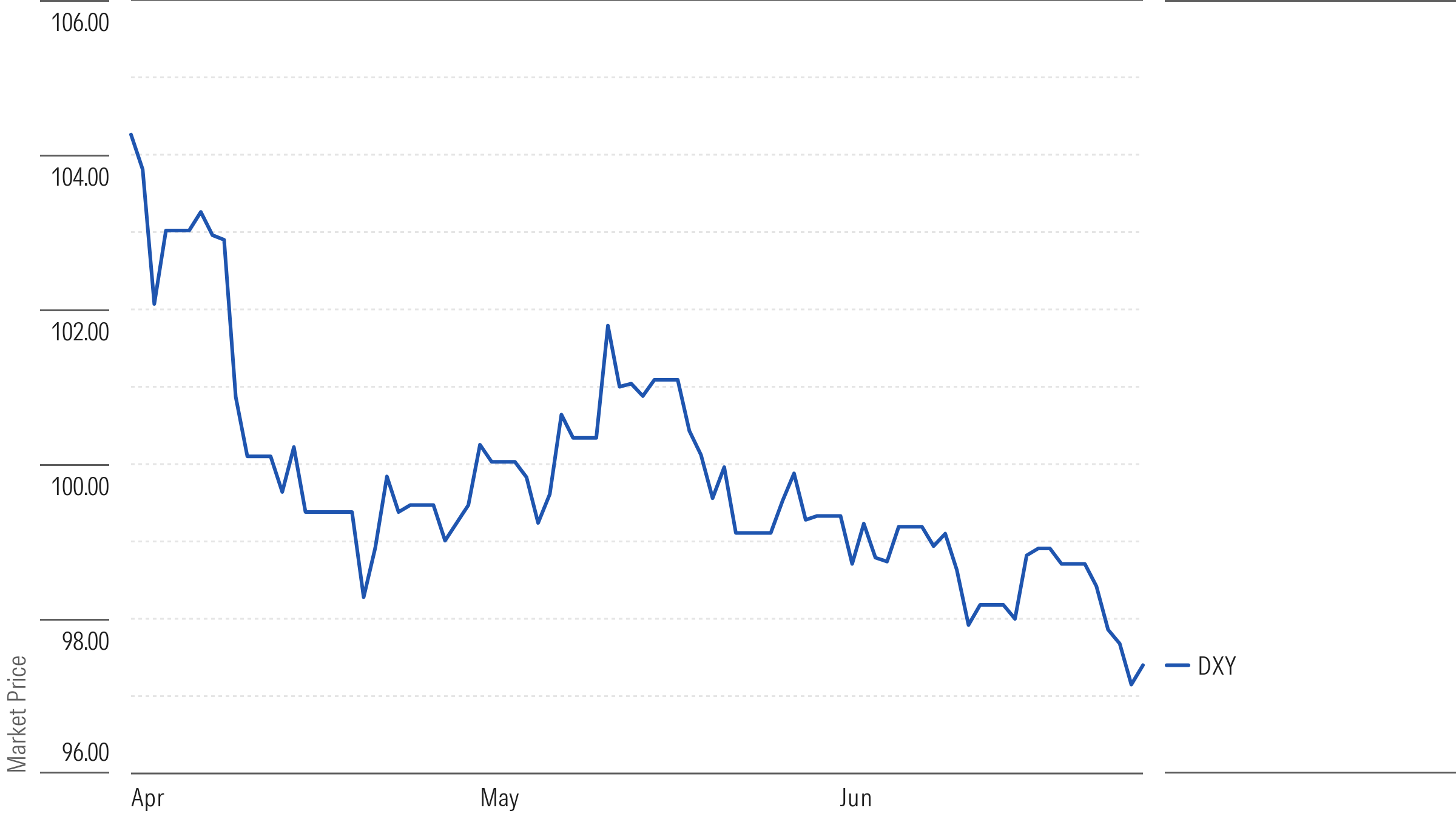
The winning streak continued for investors who invested beyond the US markets. The US dollar showed signs of weakness owing to concerns about higher US debt to gross domestic product ratios and trade policy uncertainty. Emerging-market bond local-currency funds, which invest more than 65% of their assets in foreign-currency bonds from developing countries, gained 7.66% on average, while the norm for emerging-market bond funds that hedge currency exposure back to the US dollar gained 3.18%. Global bond funds that typically invest 40% or more of their assets outside the US also gained 4.82%.
Managers with more appetite for risk and higher foreign-currency exposure fared well. Within the emerging-market bond local-currency funds, Bronze-rated Pimco Emerging Markets Local Currency Bond PELBX gained 8.61% during the quarter, landing among the top 20% of its peers.
Bronze-rated BrandywineGlobal Global Opportunistic Bond GOBIX, which stumbled out of the gates in 2024, gained 13.05% for the year through June 2025, placing it within the global bond fund Morningstar Category’s top decile. The fund’s bias toward certain emerging-market currencies along with its long-standing underweighting to the US dollar paid off. Silver-rated Hardford World Bond Fund HWDVX, a relatively risk-conscious offering, gained 3.89% for the year through June 2025 and lagged its more adventurous peers.
Taking Credit Risk Paid Off
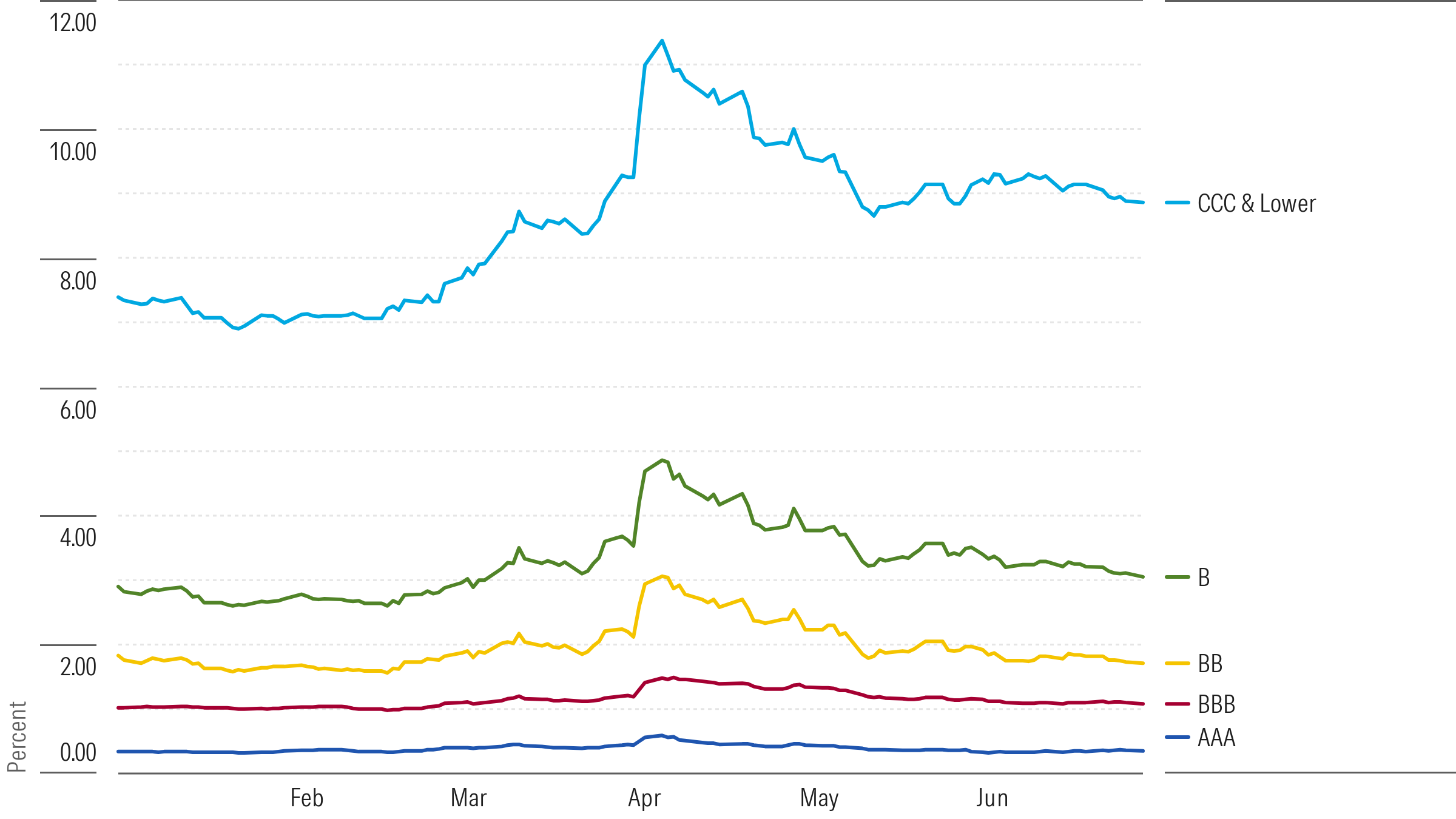
After an underwhelming start to the year, the second quarter was good to investors who took on more credit risk. High-yield bonds had an advantage over their investment-grade counterparts because credit spreads tightened after a brief period of widening earlier in the quarter, and their shorter duration also shielded them from rising yields. Morningstar US High-Yield Bond Index, a proxy for US-dollar-denominated high-yield corporate debt, gained 3.57% during the quarter and outperformed its higher-quality counterpart: The Morningstar US Corporate Bond Index gained just 1.75%. Nearly every high-yield manager enjoyed tailwinds provided by strong fundamentals and investor risk appetites, but some did better than others.
Silver-rated Fidelity Advisor Capital and Income Fund FIQTX, one of the most aggressive funds within the high-yield bond Morningstar Category, gained 6.9%, beating more than 90% of its peers. Bronze-rated Shenkman Capital Short Duration High Income Fund SCFIX, which stands out for its defensive attributes, gained only 2.57%, lagging most of its peers.
The author or authors do not own shares in any securities mentioned in this article. Find out about Morningstar’s editorial policies.

 United States