
Words of Investing Wisdom from Fidelity’s Will Danoff
After 35 years at the helm of Fidelity Contrafund, Danoff explains how caring about the details leads to success.
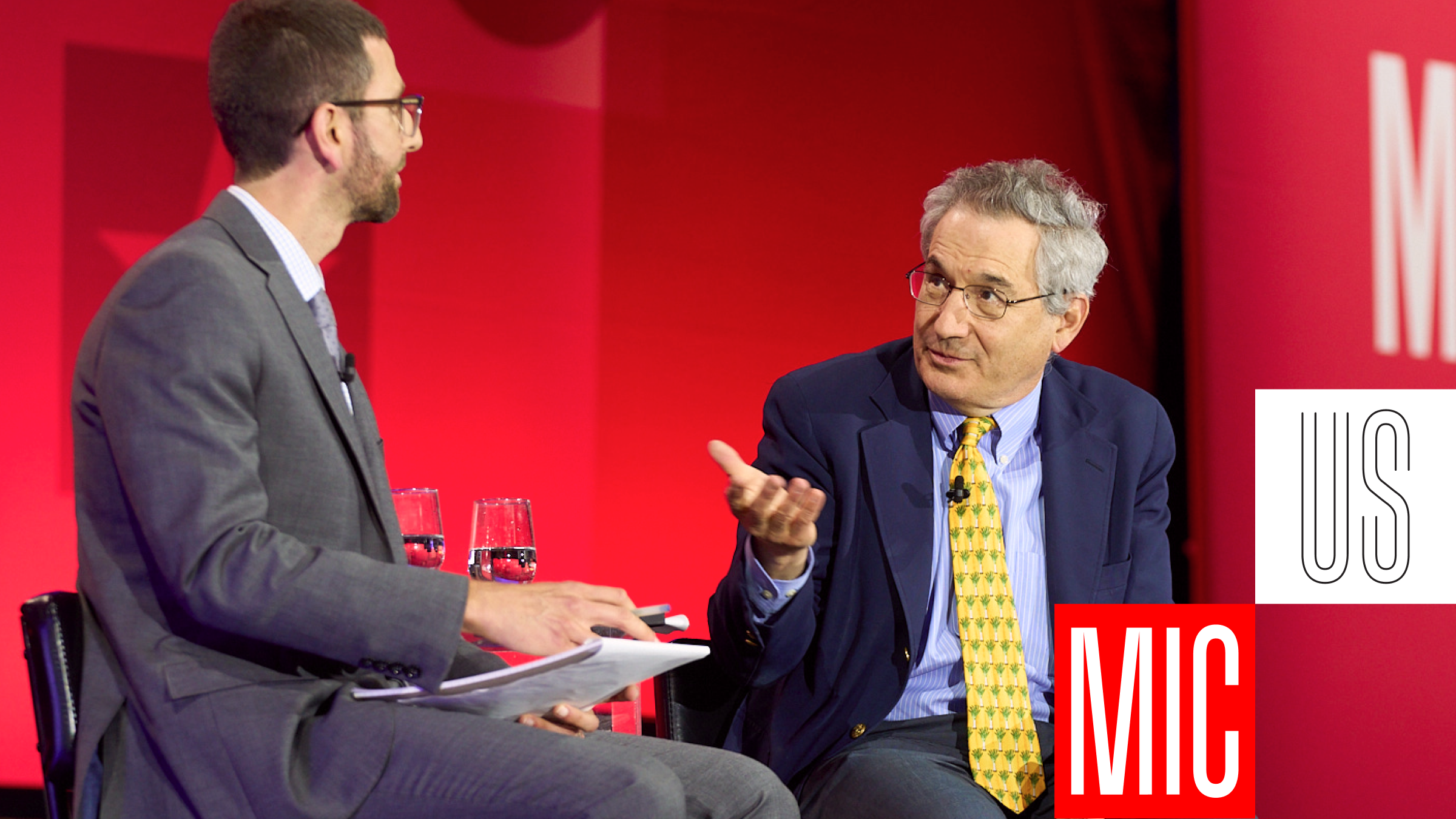
When a manager has chalked up the kind of long-term track record posted by Will Danoff on the nearly $200 billion Fidelity Contrafund FCNTX, the question inevitably arises: How did he do it? Danoff, who is set to retire at the end of this year, sat down with Morningstar principal analyst Robby Greengold at the Morningstar Investment Conference on Wednesday. The pair talked about Danoff’s investment process, lessons he’s learned, and his successful long-term investment in Meta Platforms META.
“Contrafund is truly unique for combining one of the longest portfolio manager tenures with a five-star rating and a fund size north of $200 billion,” Greengold said. “It’s an extremely rare conversation, and that 200 number actually understates it,” since Danoff manages additional money in Canada and Japan. His assets under management rival some of the largest sovereign wealth funds.
Read on for some snippets of investing wisdom Danoff shared during the conversation.
What does the typical day look like for you?
“Hopefully, it’s jam-packed with company meetings where I can be face-to-face with executives who are excited about their business, who know what they’re talking about. I bumped into my friend Bob, who’s the former CFO of Corning. When we used to come around, he knew everything about the technology, fiber optics, glass, solar division … you just learn, and hopefully pick up a tidbit or two about what’s happening in the industry, what’s happening in the company, the economy … The key as a mutual fund analyst is to do that over and over. It’s the rinse and repeat, it’s taking good notes, and saying … ‘Seven years ago, you said this, two years ago, you said that. What’s really happening? What’s new?’
“You’ve got to just keep looking forward. You can’t worry about the stocks going up a lot, or when you owned one, and it went down a lot.
“On average, I take five management meetings a day—about 25 per week. I’m probably seeing a handful of tech companies, a handful of energy companies, a handful of financial companies, a handful of consumer companies. I’m not spending all my time in telecom and media; I’m trying to see it all.”
At one point, you asked Warren Buffett for advice on how to run a huge amount of money. What was his advice?
“He immediately said, ‘I have one good idea every two years, maybe. So when you have a good idea, you have to bet big.’ During that period at Contrafund, I was running 800 names, and he used to bug me: ‘Why do you have so many names?’ And I like having a long tail, so I can interact with the analysts … I don’t forget certain companies. But after he said that, I looked at the long tail and said ‘up’ or ‘out.’ We’re running closer to 350 these days.
“I would urge everyone to listen to Warren Buffett on a YouTube video. One of the advantages we have with Fidelity is that we talk to these managers. But now, everybody in this room can YouTube any of the CEOs you want to talk to—Jensen [Huang], Satya Nadella, Warren Buffett. There’s a lot of wisdom on YouTube. It’s owned by Alphabet.”
On Danoff’s Investment in Meta
“Listen, Mark Zuckerberg is an amazing entrepreneur. When he first came to Fidelity, he might have been 29, and he had about 700 million daily active users. What are my mental models? I think about, ‘What has the company done in the last five years, and do I think it’s going to be able to continue to do that?’ Now, as you know, he’s got three and a half billion daily active users.
“Over time, speaking with other tech companies, as a leader of digital advertising, Alphabet has something like five properties and 3 billion users. The scale is just staggering, but what that gives you is the ability to sell ads. Meta, to its credit, was able to copy the Google ad platform and make it easy to advertise, provide performance marketing … [Zuckerberg] performed really well in Instagram in the early days. He bought WhatsApp; everyone said that was going to be a big mistake. He hasn’t really monetized that yet. But I was trying to channel my inner Warren Buffett. I said, ‘Why sell? I like him, I like the business, I’ll just let him continue to create.’
“He was hit by TikTok competitively, and then Apple decided to tighten up on their privacy policies, and that took a little bit of signal away from him, and he was spending aggressively, so he needed to adjust that. He tweaked the ad algorithms to circumvent the Apple restrictions, and you can see the earnings rallied very quickly. A lot of other portfolio managers in the market were panicked. But again, owner-operators. Maybe if Mark didn’t care as much, he would have said ‘Whatever.’ But he said he needs to run the business for all stakeholders and move forward.
“My Zuckerberg quote is, ‘Why were you so successful, Mark?’ And he said, ‘We care more than anyone else.’ They were some kids in college. Microsoft was there, I think News Corp bought Friendster, and there was Myspace. There were hundreds of tech companies with more resources. Why didn’t they win? At some point, he realized that if he could grow the business and build engagement, he could win. Caring is one of the greatest advantages.”
What’s harder: Buying a great company that has already doubled and you’re just now getting into it, or holding a great company that’s falling 50%?
“I think the challenge for many of us is: What do you do after a stock is doubled? As Peter Lynch said, don’t worry if it’s up a lot; it’s going to continue to do really well. Fidelity has done very well with some of our bigger positions. We’ve been in these companies for many years, compounding growth and better management, so our new opportunities continue to grow and add value. So I would say don’t be afraid of the stock being up.”
When it comes to fund management success, where do you draw the line between art and science?
“If the performance isn’t there, then you have to wonder. I think I’ve done a little better than most because I’ve not been afraid to move in and out of names, depending on the fundamentals. You hold on to certain names longer than others, and the process requires working really hard and seeing lots of opportunities.
“In our case, at Fidelity, it was a very simple realization. When I was a retail analyst, certain fund managers listened to me and tried to leverage my work. And then other managers were like, ‘I want nothing to do with retail, the consumer’s dead, inflation’s coming, don’t bother me’ … So all I’ve done is said, ‘I have 100 analysts, let’s work with them. Team effort is really helping.’”
The author or authors do not own shares in any securities mentioned in this article. Find out about Morningstar’s editorial policies.

 United States