
How Trump’s Trade Policy Turmoil Affects Investing Internationally
A longtime Fidelity portfolio manager breaks down how he dealt with a career of managing ‘rotating crisis sectors and products.’
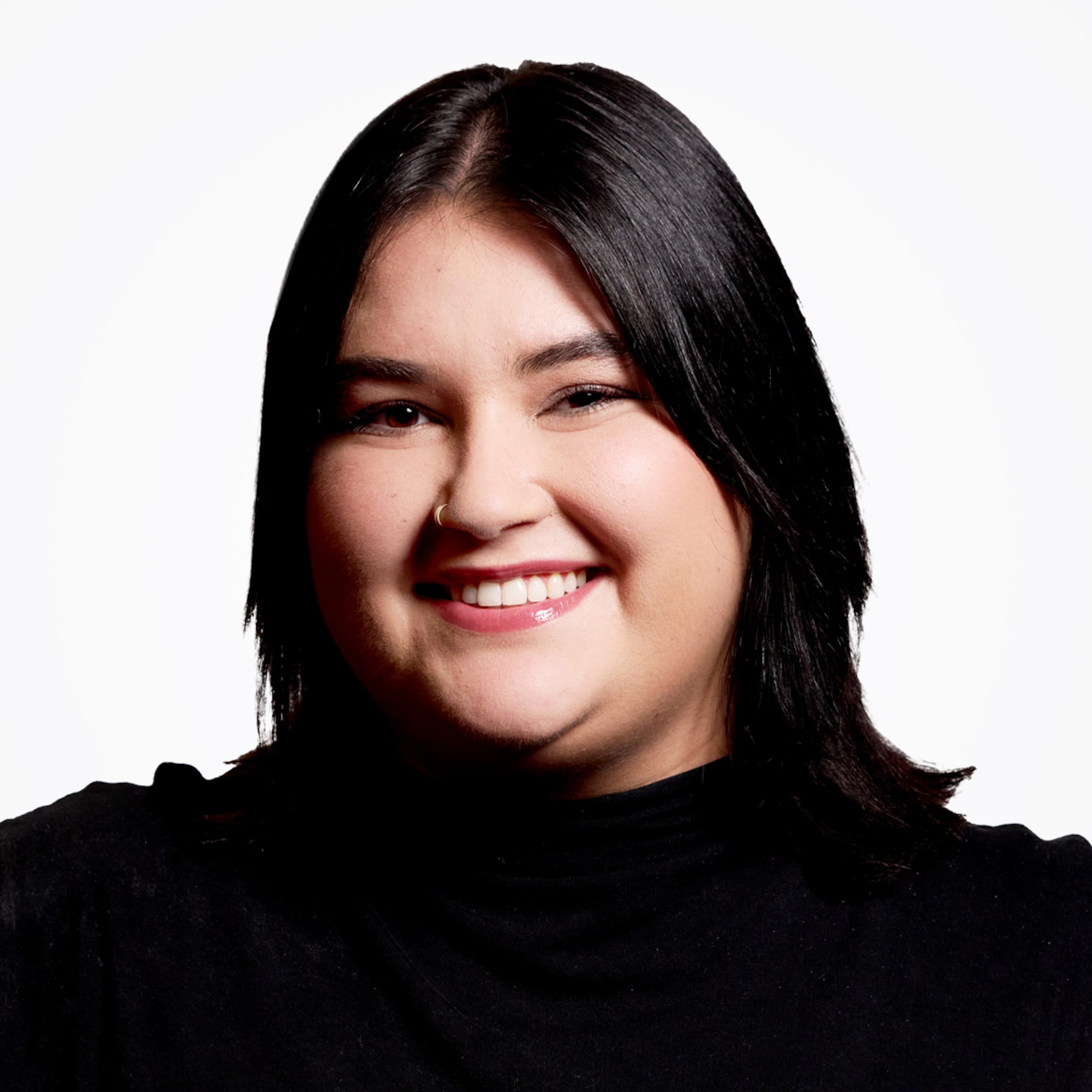

On this episode of The Long View, Vincent Montemaggiore, portfolio manager at Fidelity, where he manages the Overseas Fund, breaks down his thoughts on current market volatility and how economic risks could continue to affect US and global markets.
Here are a few highlights from Montemaggiore’s conversation with Morningstar’s Christine Benz and Dan Lefkovitz.
How Trump’s Trade Policy Turmoil Affects Investing Internationally
Dan Lefkovitz: Absolutely. So we’re recording this interview just a few days after major tariff announcements from the Trump administration, and we’re seeing a lot of market turmoil in response. So given that you run an overseas fund of companies that are domiciled outside of the US and markets that stand to be affected, it’d be interesting to understand how trade policy is affecting your investment thinking and portfolio positioning, if at all.
Vincent Montemaggiore: Yeah, thanks for the question. It’s been a busy week. There’s a lot going on. And just to kind of step back 50,000 feet, because I think this will be helpful context in the answer directly to your question. The Overseas Fund strategy and investment philosophy is to buy high-quality businesses that attract evaluations. And I look across the world and across geographies to find those businesses. No matter where I find them. I’m focused on businesses with a competitive advantage that have high returns on invested capital that are run by capable managers. And I wait for these businesses to get attractively priced. So your question on tariffs is a very good one. The outcome of how this is all going to play out is largely geopolitical, largely macro, and it’s somewhat in the too-hard bucket. So I don’t try to forecast exactly how this is going to play out, where we’re going to settle on tariffs. I just think that is not likely to be a profitable exercise, and I think it’s just very complex.
But what I do is I take that investment philosophy of high-quality businesses, attractive evaluations and I wait for dislocations in the market, like the one we’re currently in, to kind of sharpen our pencils here at Fidelity to have the team do a lot of work and to understand, OK, we don’t know how this is going to play out, but if we overlay several scenarios on tariffs, which companies are most exposed, which are least exposed, which stocks are indiscriminately selling off, even though they’re not, we don’t think they’re going to be very exposed. And to be honest, that’s exactly what we’re doing right now. We have a team of analysts at Fidelity all over the world, who I’m on calls with all day and also getting inundated in my email with scenario analysis on all their names, on all the holdings in the fund, to try to understand where the market may be getting it wrong and where we have a high-quality business that’s now a bargain.
And if I overlay tariffs the way we’re thinking about it, there’s kind of three different bits to the business models. One is obviously the direct tariff hit. We don’t know exactly what the tariffs are going to be, but we can do some scenarios around this. And to be honest, being a high-quality investor, I’m a little less concerned about the direct impact of tariffs. And the reason being is if the two best defense against tariffs are a high-gross profit margin and pricing power. And the reason being is the tariff is going to be applied to your cost of good sold. So obviously if you have a high-gross profit margin, you have a low cost of good sold. So the number that’s getting tariff is quite small in the grand scheme of things. And the amount you need to raise prices to offset it, if you have a, let’s say a 70% gross profit margin, is you still have to hike prices to offset it, but it’s not at such a level that should dramatically alter the demand equation. So then that’s the first step. And we’re going to roll our portfolio companies to understand, OK, can they pass it through? Do they have pricing power? And how much would they have to pass it through?
And again, for that, the fund being in mostly competitively advantaged businesses with high-gross profit margins, we’re weathering that, or we think we’re going to weather that fairly well. The second is where there could be market share shifts. And this would be, I mean, to use a very simplistic example, this would be a duopoly industry, one US player and one player in Europe, and the US player has 100% of their capacity in the US and the European player has 100% of their capacity in Europe. So even if you have a good business and it’s in Europe, and it has historically had pricing power, what the tariff has just done is essentially altered the cost curve within the industry and the US player is now going to have an advantage. So the European player will find it very difficult to pass on that price and not lose market share to the US player.
Now, again, that’s a very simplistic example. The reality is these supply chains are very complex and there’s a mix of all of this amongst the companies we own. But that’s the second one. And we’re going through name by name and trying to figure that out as we speak. And then the third one, and this is, to be honest, this is the biggest impact. And the most uncertain is just the second order effect to confidence, the second order effect to investment levels, both at the consumer level and the corporate level. We just think that it’s almost inevitable that this is going to freeze investment globally until there’s clarity. And this is the recession impact. Are we going to have a recession? Has the probability gone up? How bad is it going to be? And we don’t try to forecast with precision how this is going to play out, but we do stress, we’re stressing all of our businesses for how sensitive is the earnings to a global recession.
And what we’re finding is some of the selling is somewhat indiscriminate. So we’re finding good, resilient, high-quality businesses that we think earnings wouldn’t even be down in a recession are down 25%, 30%. And we’re adding some to those. And we’re also finding some of our portfolio that is cyclical is down that much, if not more, and maybe the market could have it right, depending how bad the recession is. So this is kind of all real time. That’s how we’re thinking about tariffs. But again, it’s always with that high-quality overlay and is the market allowing us to buy good businesses when they’re on sale?
Why This Fund Doesn’t Rely on Macroeconomic Forecasts
Christine Benz: Does Fidelity have an in-house economic team that you can lean on in times like this to handicap the odds of a recession? What are your resources from that standpoint?
Montemaggiore: We do. We have a team that thinks about the macro every day and asset-allocates around a view. The individual portfolio manager at Fidelity can use that information. But to be perfectly honest, it’s informative as it relates to where are we today? So what’s happening with credit spreads? What’s happening with fiscal expansion or austerity? What’s happening with rates? It’s very informative for a bottom-up stock-picker just to understand where are we in the cycle? Are we high in the cycle? Are we low in the cycle? Are rates high or rates low? Is there risk appetite or is there risk aversion? Are credit spreads starting to blow out or are they benign? So I use those indicators more to tell me where we are today and to overlay an informed base case on the securities in the portfolio. And I use it less as a forecast of where we’re going because this is not a macro fund. It’s not constructed on a view of where the macro is going. There’s always a healthy balance of stability and cyclicality within the fund without trying to be too tilted one way or the other.
My job is to find attractively placed securities that I think have something unique about them, about the business model, about the industry, about the competitive advantage that will allow them to compound value intrinsically at a double-digit rate over time. And I use these dislocations to step in to these businesses when others are fleeing them and when liquidity is available. But I don’t heavily rely on macro forecasts even though we do have those experts here at Fidelity. But I do real time use them as a gauge for what’s going on and how that may change some of my scenario analysis in the fund.
How Fund Managers Can Handle Periods of Financial Crisis
Lefkovitz: Interesting. Well, this is not your first crisis. You managed the banking fund during 2008 period. Curious if you learned anything from that experience that guides you during these big periods of market turbulence?
Montemaggiore: So I joke that I’ve kind of been on rotating crisis sectors and products my entire career. I covered industrials at the peak of ’06-’07 right before things started to turn. Then picked up the banks, which I’ll get to, which was an incredible learning experience, but a stressful one through the crisis here covering large banks for Fidelity and trying to navigate that crisis. And then the overseas fund obviously in January 2012 when we were worried about the euro and then Brexit. So there’s always something to be worried about and there have been several in my career, where I’ve had to manage through. The bank one was the most acute, probably the scariest, because the things we were dealing with were unprecedented. And it was very hard to look back in history and say, well, we’ve seen this before. This is how it may play out. Let’s overlay this scenario. So the banks, the lessons were numerous, but there’s a couple that I think have kind of shaped the type of investor I am today.
Again, if you hear what I’ll say over and over again during the podcast, I do gravitate very heavily to high-quality businesses, good balance sheets, cash-generative businesses, businesses with a competitive advantage. And businesses that are run by managers and run like owners. And many times a lot of the managers are significant owners in the stock. They invest for the long term. So if you go back to the financial crisis, a lot of what I learned kind of shaped a little bit of that philosophy. So we were covering the US banks, and we were trying to understand where the bodies were buried, who had the bad stuff on the balance sheet. And what we were doing as a team was, we were running stress tests on all the balance sheets. We were basically trying to understand what the embedded loss was in each of the loan books and the portfolios. And we were trying to burn these books, we would call them or burn down the losses to understand real time what does the earnings profile on the capital level look like in a significantly stressed scenario.
And ironically, the Fed actually in a way copied what we’re doing. And we still have stress tests today, but this was not a part of the banking regulatory system back then. And this is what we were doing stock by stock to try to understand—because at the end of the day, what we soon and very quickly realized was if you realize a bank needs capital, if it’s deficient of capital or if it’s too levered, it’s uninvestable. Stay away. And we learned that in some cases the hard way, because what happens when a bank is short of capital, and the market sniffs it out and knows it, is the shorts can actually make the whole thing self-fulfilling, and they can drive the stock lower because once the market knows you need capital, and you can put your arms around how big the capital hole is, the dilution becomes much more significant the lower the stock goes. So you have this circularity. And what I like, I like situations where the lower the stock goes, the cheaper it is.
And the more I like it. But with heavily levered institutions, such as banks, you can be in a scenario where the lower it goes, the less it’s actually work on a per share basis because of the dilution. And that was an important lesson to learn. And I think to this day, it’s kept me away from very highly levered stocks, both banks, but also just regular industrial businesses that are cyclical. If you have a lot of operating leverage inherent in your business, there really is no need for that financial leverage, where you have even a remote risk of diluting the equityholders significantly at the bottom. So that was probably the appreciation for downside risk, and the appreciation for leverage, not giving you that margin of safety you need to add on weakness are probably two of the most important lessons we’ve learned.
And also navigating a crisis where we don’t have historical precedent creates a lot of innovative and creative analysis in thinking and being plugged in with key decision-makers and understanding how they’re thinking of solving something that we haven’t had to solve before. So, establishing that network was super important than just sitting in your office and running scenario analysis. So probably the combination of all things—building a robust rolodex, and then appreciating downside risk and dilution at the bottom were big lessons that I think have shaped a little bit of that quality bent that I have today.
The author or authors do not own shares in any securities mentioned in this article. Find out about Morningstar’s editorial policies.

 United States