
Why Are Some of the Strongest Stocks Struggling This Year?
Plus, other highlights from the latest issue of Morningstar magazine.
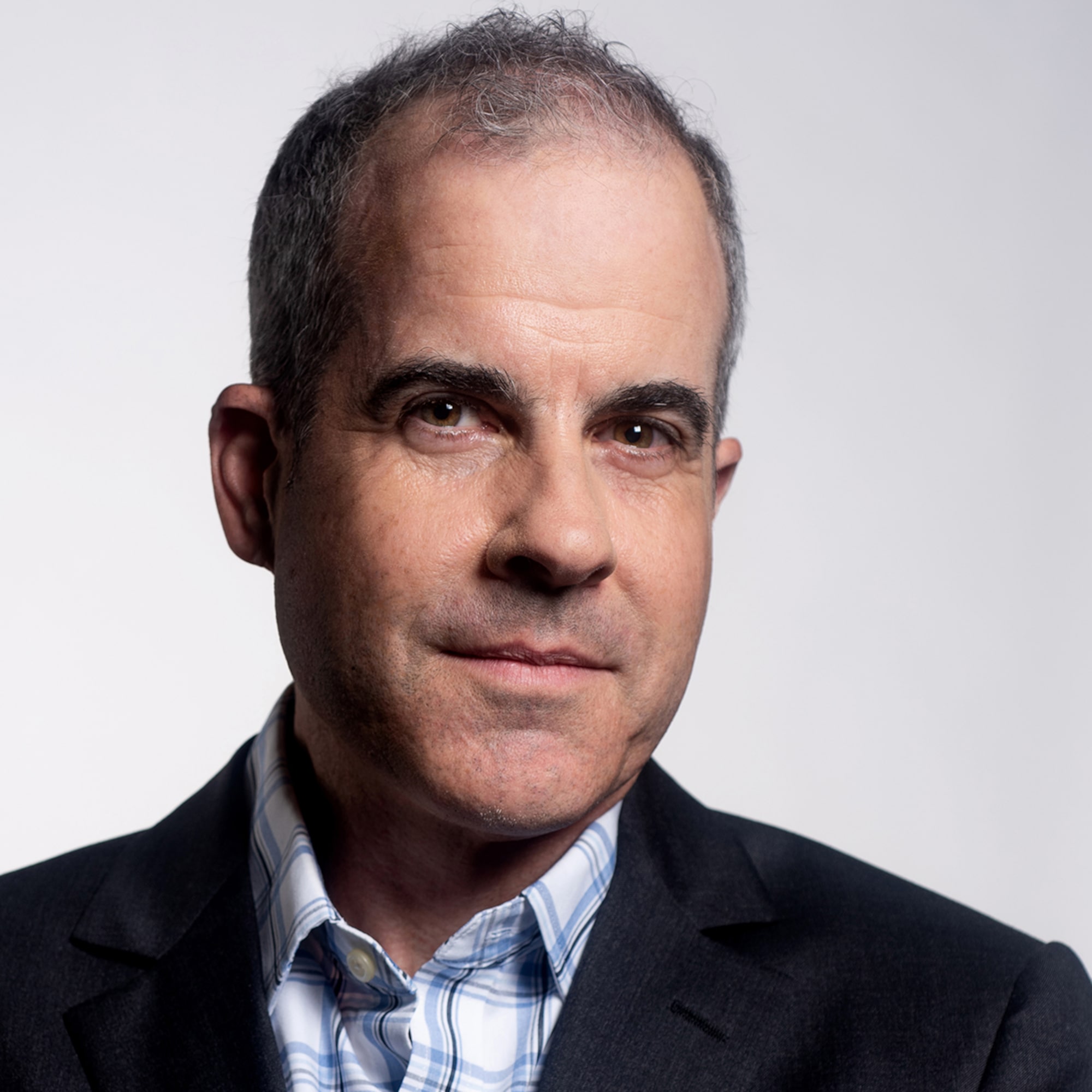

Ivanna Hampton: Welcome to Investing Insights. I’m your host, Ivanna Hampton. Are wide-moat stocks’ struggles a sign of their protection diminishing? That’s the big question from the Q3 issue of Morningstar magazine. Key market moments this year heavily weighed on some stocks with competitive advantages. Why did they stumble? Morningstar magazine Editor-in-Chief Jerry Kerns is returning to Investing Insights to discuss this issue’s cover story.
Welcome back, Jerry.
Jerry Kerns: Thank you. It’s great to be back.
Hampton: Let’s start with an explainer. What is a moat, and can you describe the five sources of moat?
Kerns: An
So, you ask about the sources of moat. Where do companies get these competitive advantages? And there are five. The first is a network effect, which is the more people use a service, the more valuable that service becomes for its users. Visa V, Mastercard MA, Amazon.com AMZN, and Alphabet GOOGL are good examples of those companies.
Then you have intangible assets, which are like patents, brands, regulatory licenses that companies own that give them a competitive advantage. Apple AAPL and Coca-Cola KO are two examples of companies with intangible assets.
The third is cost advantage; companies that can undercut their competitors for various reasons. Walmart WMT, Costco COST, Grainger GWW all have cheap prices, and they can be competitive with those prices.
Then we have switching costs, which is when it’s too expensive or troublesome for users to change products and move to a competitor. They are kind of stuck with your product. JPMorgan Chase JPM is an example. Microsoft MSFT, Salesforce CRM, these are all companies that kind of have their customers.
Efficient scale is the fifth and final one, and this is when a niche market is served by one company or maybe a handful of companies. It’s not a big market, but they dominate the market. Union Pacific UNP, Dominion Energy D, and American Tower AMT are all examples of that. So, those are the five sources.
Hampton: I love that you included examples with each moat sort.
Kerns: The interesting thing, too, is companies can have more than one moat source. So, the very highest-quality companies could have two or three.
Hampton: Got it. Why examine wide-moat stock performance now?
Kerns: It started in the first quarter of this year. You may remember way back then, the market was actually in decline, had a negative return due to the Iran war and concerns over AI. So, stocks tanked a little bit. And usually during these times of trouble, investors have a flight to quality. They go to high-quality investments. So, we would expect companies with moats, high-quality companies, would benefit from this, but that did not happen. Wide-moat companies actually underperformed the market during that time.
Hampton: Speaking of moats, the Morningstar Wide Moat Focus Index has been going through a rough stretch. Why is that?
Kerns: The Morningstar Wide Moat Focus Index is interesting because it takes the companies with the widest moats, but there’s also a valuation layer to it. These are the most undervalued wide-moat stocks. That valuation component is a key part of that index. And like all wide-moat stocks in the first quarter of 2026, the index underperformed, which we would expect with other wide-moat stocks. The thing that didn’t happen was that even though wide-moat stocks eventually rebounded, the index did not. And why is that? It’s because the valuation component kind of made it a contrarian play, and we’re in this winner-takes-all market. So, being a contrarian now is not necessarily a good place to be. But overall, as we point out in the magazine, the market or the index has performed very well over the long term.
Hampton: I feel like since you brought up the magazine, I should hold it up for everyone right now.
Kerns: Thank you. You can see the moat on our cover.
Hampton: Yes. What other periods pressure-tested these stocks that have competitive advantages?
Kerns: That’s the interesting thing. Dan Lefkovitz, a Morningstar strategist, wrote the cover article for us. He looked at other downturns to see what wide-moat stocks did. He looked at the April 2025 tariff panic a year and a half ago, and as you would expect, wide-moat stocks held up better than no-moat stocks. Then he looked at the covid downturn of 2020, and once again, wide-moat stocks outperformed no-moat stocks in the market. And those are kind of anecdotal examples. So, then he also looked at a 10-year trailing period and looked at various volatility measures, and wide-moat stocks were the least volatile of all the stocks during that time. So, it’s pretty clear over the longer term that wide-moat stocks are less volatile than no-moat stocks.
Hampton: Are moats really a sign of quality?
Kerns: In his article, Dan uses a tool called the Morningstar Factor Profile, which analyzes sources of returns. It’s kind of complicated, but we won’t get into it now. But he looked at the sources of returns for the Wide Moat Composite Index, and it scored the highest for quality than the overall market. And by quality here, we mean companies with strong profits and balance sheets. Wide-moat stocks have all those things. So, you would expect wide-moat stocks to be high-quality stocks, and that is true.
Hampton: What would you want investors to remember about wide-moat stocks? What’s the takeaway here?
Kerns: The takeaway is that every market decline is different. You can’t take one market decline and think the same things will work in the next market decline. Different types of stocks behave differently in different downturns, but investing is a long-term game, as we always say. And over the long term, our research has shown that high-quality companies with competitive advantages perform better and are less volatile than companies that don’t have those advantages.
Hampton: And before we wrap up our conversation, we’re going to go into the magazine some more. What are some highlights that you want to share with us?
Kerns: The subject of this issue’s Morningstar conversation is David Booth, who’s a legendary investor. He founded Dimensional Fund Advisors, DFA. They now manage $1 trillion, so they’re big. In his talk, he reflects on his 45-year career. DFA offers investors low-cost funds based on factor investing. We won’t get into that exactly, but it’s basically finding anomalies in the market and exploiting those anomalies. And they’ve done a terrific job of doing that. His money quote, which I’d like to share with you, is “If you have an approach that you can believe in based on data and science, then you’re more likely to be able to stay with it over the long haul. The key is the long haul.”
Hampton: Underline it.
Kerns: Underline it, yes.
Hampton: That was one highlight. Do you have another?
Kerns: So a long-term investing approach is also the virtue of the subject of this issue’s undiscovered manager. Notice a theme here. Managing Editor Laura Lallos for the magazine interviewed the team at Eagle Capital Management, who run an under-the-radar large-blend fund, and they basically search for companies that they think are going to be the best businesses 10 years from now. So, it kind of dovetails with our moat discussion that these investors are looking long term like we do here at Morningstar. So, whether we’re talking about moats, factor investing, or large-blend funds, the best investors are in it for the long term.
Hampton: That’s the final word.
Kerns: Yes.
Hampton: So, everyone listening and watching, sign up for Morningstar magazine. It’s what, Jerry?
Kerns: Free.
Hampton: Free! A link is in the show notes. Jerry, thank you for coming to the table.
Kerns: Thank you. So fun. I’ll see you next quarter.
Hampton: You will. Bring a magazine.
Kerns: I will. Thank you.
Hampton: That wraps up this week’s episode. And here’s something to keep in mind: The editor of the Financial Times financial blog, Alphaville, is coming to The Long View. Robin Wigglesworth will join The Long View’s co-hosts Amy Arnott and Ben Johnson to discuss the bond market and his new book, A Fabulous Debt. You can listen to the new podcast episode on Tuesday.
I appreciate you for checking out this week’s Investing Insights. Thanks to senior video producer Jake VanKersen and associate multimedia editor Jess Bebel. I’m Ivanna Hampton, editorial multimedia manager at Morningstar. Take care.
The author or authors own shares in one or more securities mentioned in this article. Find out about Morningstar’s editorial policies.

 United States