
10 Questions for Berkshire Hathaway’s 2025 Annual Meeting
Here’s what we’d like to hear Warren Buffett and his team discuss this year.

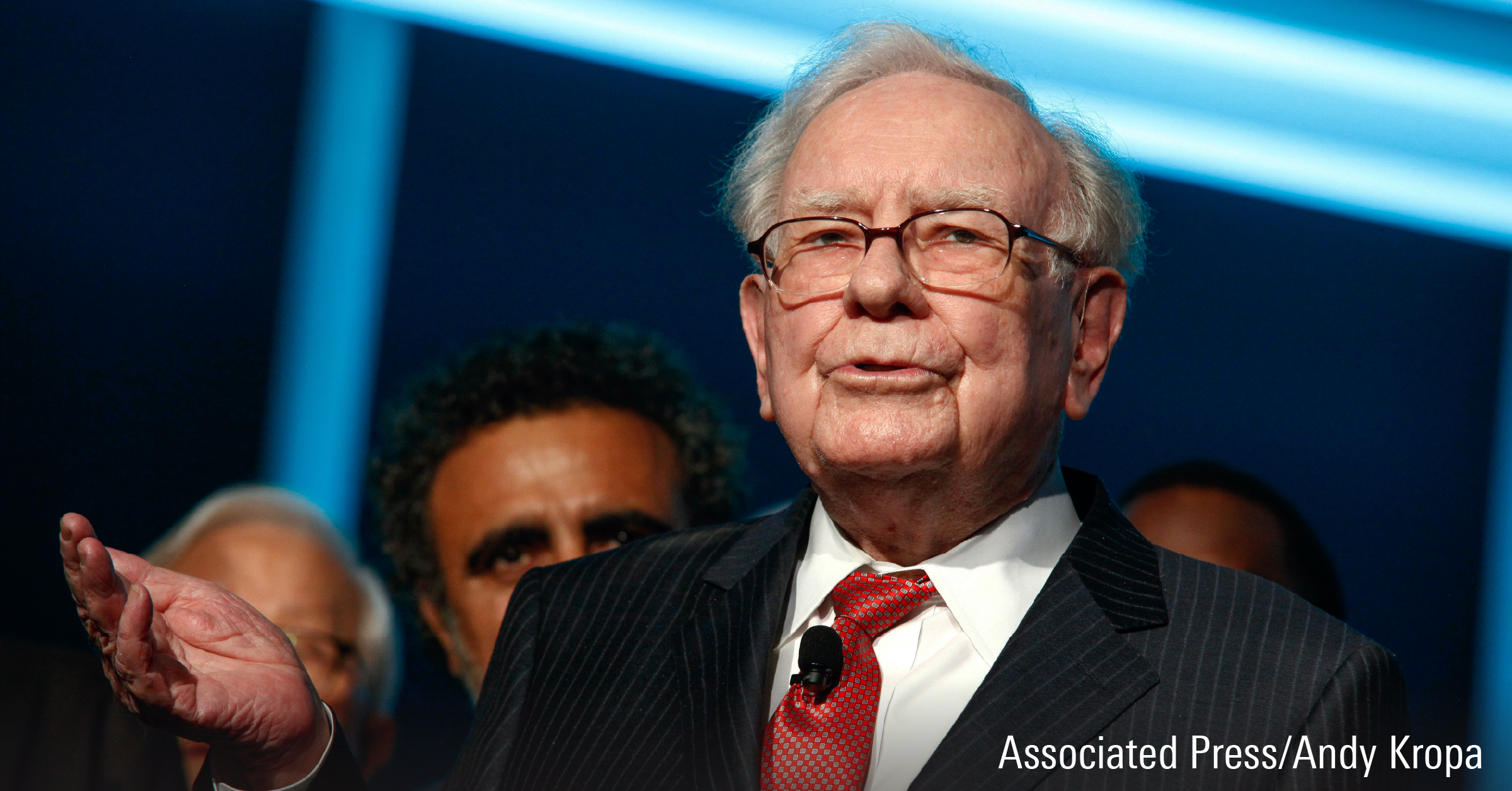
As Berkshire Hathaway’s BRK.A/BRK.B annual meeting approaches, we have 10 questions that we think should be asked of CEO Warren Buffett and the rest of management, with the aim of gaining some valuable insight into the company’s operations and decision-making.
(1) Where is Geico with its telematics offering?
Over the past five years—which has been distorted by inflation in auto parts and replacement vehicles and offsetting price increases—Progressive’s PGR direct business has grown at a 15.7% compound annual rate compared with 3.6% at Geico. Progressive also posted decent underwriting profitability, with a combined ratio averaging 92.6% during 2020-24, on par with Geico’s 92.8%.
So Progressive was growing faster and taking more market share, closing 2024 with 16.7% share compared with Geico’s 11.6%, while posting similar levels of underwriting profitability. This raises the question of whether commitment to its Snapshot telematics offering has given Progressive an edge—allowing it to grow rapidly without affecting profitability too much because it knows it’s pricing its policies to reflect the true risk of the drivers it is underwriting.
It also makes us wonder where Geico is with telematics. Ajit Jain, vice chair of Berkshire’s insurance operations, has said that one of the biggest obstacles to realizing the full benefits of Geico’s telematics system has been a technology bottleneck. He viewed this as a monumental challenge during last year’s annual meeting and said Geico is well behind Progressive on technology that would allow its underwriters to properly set rates based on risk. He also said Geico should be close to done with remedying these issues by the end of 2025.
(2) What are the plans for Todd Combs and Ted Weschler?
When Berkshire hired Combs in 2010 and Weschler in 2011, it was believed that the two men would eventually take over managing the insurance investment portfolio. But Buffett threw a wrench into that thinking at last year’s annual meeting, saying that when Greg Abel, who is currently vice chair of noninsurance operations, became CEO, he would take control of the investing decisions at Berkshire.
Combs was tasked in late 2019 to run day-to-day operations at Geico, which has probably kept him from putting 100% effort behind the part of the investment portfolio he is running for Berkshire. Weschler has a record of hit-and-miss ideas, from big gains on stakes in Apple AAPL and DaVita DVA to devastating losses in holdings like Paramount Global PARA and Liberty Media/SiriusXM. So, investors have been looking for more clarity about what Buffett meant with his statements.
At this point, we have no idea how big the portfolios run by Weschler and Combs are, nor how they have performed, so it’s hard to make any judgments about them. It would be interesting to hear about the size of their investment portfolios and their absolute and relative performance, as well as what the expectations are for both of them.
(3) How should we think about Greg Abel as an investor?
Given Buffett’s comments at last year’s annual meeting about Abel taking control of the investing decisions at Berkshire when the latter becomes CEO, we’re curious to know what investment decisions Abel has been involved in, aside from the capital-allocation decisions he’s made as head of Berkshire Hathaway Energy.
While we are aware that Abel was part of the negotiations with the Japanese trading houses, which allowed Berkshire to acquire nearly 10% stakes in Itochu, Marubeni, Mitsubishi, Mitsui, and Sumitomo, was he also involved in the issuance of yen-denominated debt being used to finance Berkshire’s stock purchases?
Has Abel brought any ideas to Buffett to consider in the past several years, besides those related to Berkshire Hathaway Energy? If so, what areas of the market has he been looking at? What would it take for Buffett to greenlight a stock idea from Abel that would have Berkshire investing substantial amounts of capital?
(4) Who will succeed Ajit Jain?
Jain has sold more than half his Berkshire shares during the past year, which some have taken as a sign that he might be departing soon. Jain, who turns 74 in July, has run Berkshire’s reinsurance business for close to 40 years and took on oversight of the company’s entire insurance operations in early 2018. Buffett has praised Jain for being even more important to Berkshire than he is himself.
In his letter to shareholders in Berkshire’s 2016 annual report, Buffett wrote: “Ajit has created tens of billions of value for Berkshire shareholders. If there were ever to be another Ajit and you could swap me for him, don’t hesitate. Make the trade!” Jain has been the lifeblood of the reinsurance business. He made a big bet last year against a heavy Florida hurricane season, which likely netted Berkshire Hathaway Reinsurance Group several billion dollars.
While Buffett continued to sing Jain’s praises at last year’s annual meeting, noting that “there is no real replacement for what Jain does” and that no one will ever be as good as his current vice chair of insurance, he also said that Berkshire has a succession plan in place for the insurance division.
Our question is who will step into Jain’s role when he does depart. While we know of many qualified people within the reinsurance business who might fit that role, there has never seemed to be a front-runner. With Combs running Geico’s day-to-day operations for more than four years now, is he part of the succession ladder that Berkshire’s board has in mind longer-term?
(5) What is keeping BNSF from adopting precision scheduled railroading?
While BNSF Railway has kept volume and revenue growth close to that produced by its main competitor, Union Pacific UNP, during the past decade, it has trailed on a profitability basis. BNSF’s operating ratio is 520 basis points worse than Union Pacific’s on average in the past five years, as well as 380 basis points poorer than the average of all of the other Class I railroads.
With all of BNSF’s peers having adopted precision scheduled railroading in one form or another, the expectation is that this outperformance on the profitability line could reach 650 basis points on average annually for Union Pacific (and 440 basis points on average for all of the other Class I railroads). This leads to the potential for Union Pacific to get more competitive on pricing, willing to give up some of that margin differential to drive share gains.
BNSF and Berkshire have been in wait-and-see mode regarding PSR for more than five years. There had been some hope that by bringing on Ed Harris, a revered operating officer in the industry with a lot of PSR experience, to consult on BNSF’s merchandise network last year, we would see some movement. With the gap in profitability already widening between BNSF and Union Pacific and likely to widen further, what is the company’s current thinking on PSR? What are the opportunities and the drawbacks of BNSF adopting this strategy? Is a tech stack problem keeping BNSF from adopting PSR?
(6) Does Berkshire have a classic conglomerate problem when it comes to capital investment?
One of the perceived advantages of operating under the Berkshire umbrella is that the managers of the subsidiaries would have the resources and capabilities to act in the long-term interests of their businesses. However, we’ve not seen a lot of acquisition activity from Berkshire’s subsidiaries during the past 10 years, with the average annual outlay for acquisitions being $1.6 billion and the average quarterly outlay being around $400 million during 2015-24. In the past five years, Berkshire’s subsidiaries have spent even less, with the average annual outlay being $760 million, or around $190 million on average quarterly. This is for a company that generated $23 billion in free cash flow annually on average during 2020-24.
This on its own would not normally raise any red flags; it could just be a sign of extreme investment discipline. But we’re beginning to wonder if Geico’s lack of technology upgrades and BNSF’s reluctance to adopt precision scheduled railroading are signs of a classic conglomerate problem—that subsidiaries are being starved of resources they might need for projects beyond basic maintenance- or growth-driven capital spending.
Could there be hesitancy on the part of some of Berkshire’s line managers to ask corporate to retain capital (or even loan capital) when they want to pursue deals to invest in these kinds of projects? Is this lack of spending on bolt-on deals and/or special projects something that Abel has been looking at over the past five years as he has met with the heads of Berkshire’s noninsurance businesses?
(7) Do recent changes to major stock holdings open the door for legacy holdings to be sold?
Buffett has the reputation of being a buy-and-hold-forever investor. In Berkshire’s 1988 letter to shareholders, he wrote, “When we own portions of outstanding businesses with outstanding managements, our favorite holding period is forever.” However, he has been a willing seller when he’s believed that more value could be had by reinvesting elsewhere, including times when he’s had to admit that it was a mistake to buy a stock in the first place.
It’s not just recent purchases that have ended up on the block; Berkshire has shown a willingness to sell or swap legacy positions for other assets as well. The best example of this is the sale of 34.7 million shares of Procter & Gamble PG (40% of its stake) during 2010-12 to fund the investment portfolios that Combs and Weschler were going to manage. These were extremely low-cost shares that were initiated in 1989 when Buffett invested $600 million in Gillette (which was acquired in full by P&G in 2005), with the position worth more than $5 billion at the end of 2009. Berkshire swapped another 52.5 million shares for Duracell in a tax-free asset exchange with P&G in 2016.
Since the start of 2020, Berkshire has been a net seller of equities, selling $140 billion in stock holdings. The bulk of that occurred last year through sales of Apple ($118 billion) and Bank of America BAC ($15 billion), which were somewhat longer-dated holdings. Do the recent changes to major stock holdings that were believed to be long-term buy-and-hold positions open the door for Berkshire to eventually sell stakes in American Express AXP, Coca-Cola KO, and Moody’s MCO, or are those sacrosanct?
(8) Will the future managers at Berkshire have the flexibility to off-load holdings to create value?
Having seen James Hanson of Hanson Trust and Henry Singleton of Teledyne build up and then dismantle their conglomerates, is there a compelling case to be made for future managers at Berkshire to follow the same path, with the idea that some subsidiaries within Berkshire could create more value for shareholders if they were stand-alone publicly traded firms?
Are there any impediments that would keep Abel or other future CEOs from breaking Berkshire apart—assuming that its future cash flows cannot be adequately reinvested, that it is already repurchasing shares, and that management has already instituted a dividend? Has this been discussed with board members?
(9) Do the terms of Buffett’s will severely limit the influence of the charitable trust over time?
To Warren Buffett specifically: During the past year, you’ve updated your will to have nearly all of your remaining wealth—totaling more than $160 billion right now (primarily Class A and Class B shares of Berkshire)—transferred to a charitable trust that would be established when you die. Your three children—Susan, Howard, and Peter—will be named executors of the will and trustees of the charitable trust.
As part of this effort, you’ve instructed your children upon your death to cease making donations to the Gates Foundation. You also noted that the entirety of your gift to the trust needs to be disbursed, by unanimous agreement, within a decade of your death. We have questions, especially as to what this means for your wish for Howard to serve as nonexecutive chair of Berkshire’s board of directors and Susan continue as a director to safeguard Berkshire’s culture. We also wonder about the impact that diminishing all of your voting rights in the decade following your death would have on the company longer-term.
Berkshire’s annual proxy statement this year highlighted the board’s decision in 2024 to no longer allow directors to stand for reelection after their 80th birthday. There are exceptions for any director who also serves as CEO or controls a 5% or greater voting interest in the company. This has allowed you to retain your position but did require long-standing director Ronald Olson to step down this year. Would your new will, which requires your children to disburse all your wealth within a decade of your death, potentially make Howard (who is 70) and Susan (who is 71) ineligible to serve as directors in less than a decade?
The new will accelerates the level of giving we’d seen with your 2006 pledge to the Gates Foundation, the Susan Thompson Buffett Foundation, and your three children’s foundations. With your children able to donate as much as they want to whoever they want after your death, as long as it is done by unanimous consent (and no money goes to the Gates Foundation), does this severely limit the influence that the Buffett family will have over Berkshire longer-term?
(10) What is the reasoning behind Berkshire’s growing cash hoard?
Many have waxed poetic about Berkshire being a net seller of stocks during 2023-24 in advance of the market turmoil this year. Rather than ascribe this to prescience, we believe that these moves were dictated by a combination of portfolio diversification, tax planning, and a need to raise capital for Abel and the board to tap into if Buffett departs in the near term. This capital can be used to buy back a ton of stock and also potentially issue a special one-time dividend, as well as a small regular quarterly or annual dividend—all designed to keep the company’s Class A shareholders (who hold almost all of the voting rights) engaged.
Given their relatively thin daily trading volume, Berkshire cannot afford to have a ton of Class A shares hitting the market in a short time. We think this, as well as the transaction efficiency of a direct purchase, is one of the main reasons Berkshire worked with Ruth Gottesman last year when she was looking to sell $1 billion worth of Class A shares to fund her gift to the Albert Einstein College of Medicine. Are we right to think about the cash hoard this way?
The author or authors do not own shares in any securities mentioned in this article. Find out about Morningstar’s editorial policies.

 United States