
3 New Warren Buffett Stocks to Buy From Berkshire Hathaway’s 13F Filing
Plus the full list of stocks that Berkshire bought and sold last quarter.

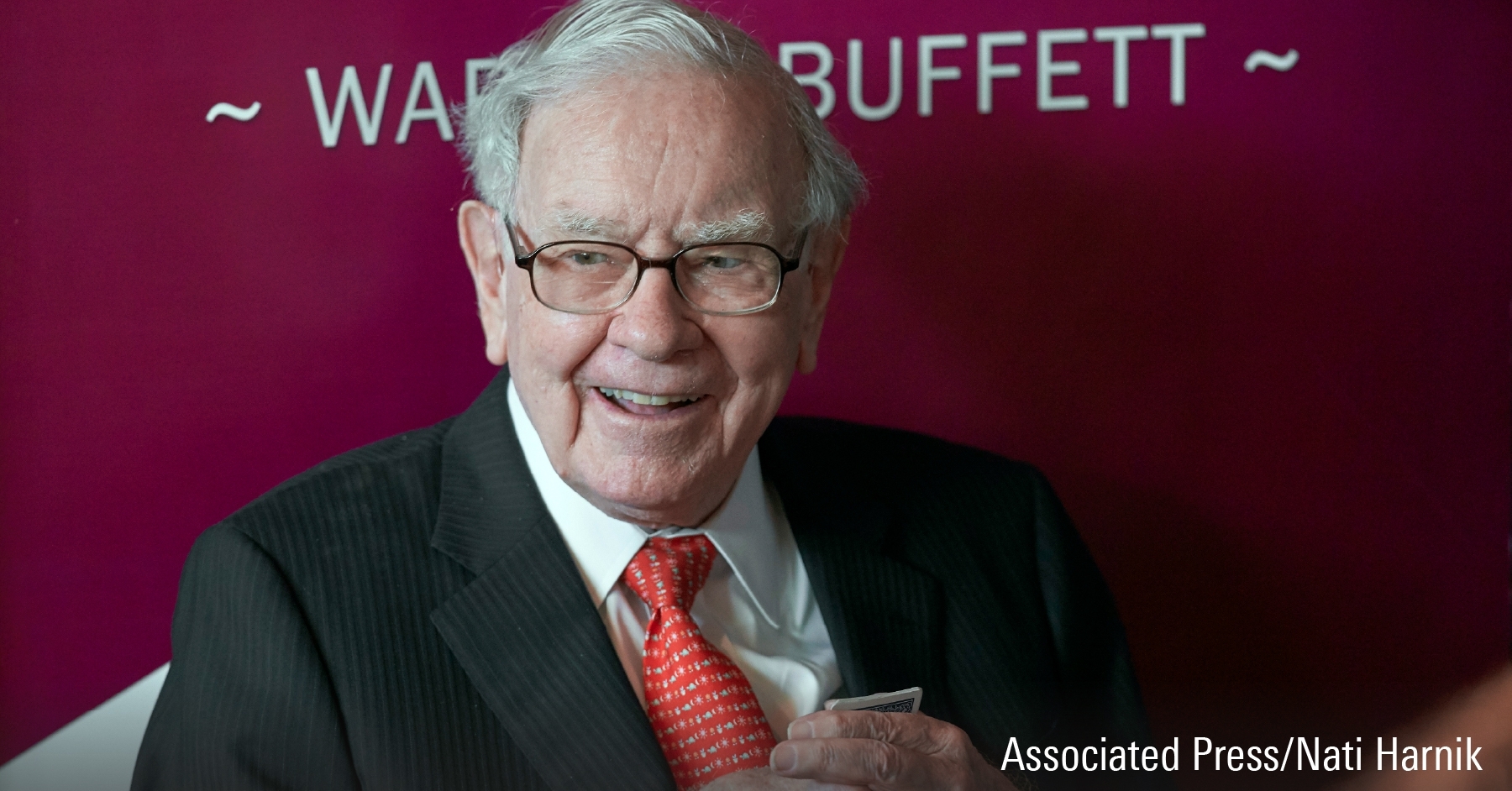
Warren Buffett’s Berkshire Hathaway BRK.A BRK.B recently released its 13F for the second quarter of 2025.
Key insights from the report include Buffett scaling back further in Apple APPL and Bank of America BAC, taking a new position in beaten-down UnitedHealth Group UNH, and revealing a trio of “mystery stocks” that the firm has been accumulating positions in this year.
Here’s a list of all of the stocks that the team bought and sold according to the new 13F, along with three recent Buffett buys that look attractive to Morningstar’s analysts today.
Which Stocks Did Berkshire Hathaway Sell?
| Stock/Ticker | Sold Entirely or Trimmed? | Morningstar Rating for Stocks (as of Aug. 18, 2025) |
|---|---|---|
| Apple AAPL | Trimmed | 3 stars |
| Bank of America BAC | Trimmed | 3 stars |
| Charter Communications CHTR | Trimmed | 5 stars |
| DaVita DVA | Trimmed | 3 stars |
| Liberty Media Series C Formula One FWONK | Trimmed | 3 stars (quantitative rating) |
| T-Mobile US TMUS | Sold Entirely | 3 stars |
Berkshire continued to peel back its stakes in top holdings Apple and Bank of America last quarter. “Berkshire has been selling Apple since the start of September 2023, and Bank of America since the beginning of July 2024,” observes Morningstar senior analyst Gregg Warren. “At this point, the company has reduced its Apple stake by 69%, locking in an estimated gain of $99.6 billion. It has reduced its Bank of America stake by 41%, booking an estimated realized gain of $12.1 billion.”
Buffett continued to trim Berkshire’s positions in a few other stocks last quarter as well, and sold the firm’s entire stake in T-Mobile US TMUS.
2 Warren Buffett Stocks to Consider With Big Yields
Which Stocks Did Berkshire Hathaway Buy?
| Stock/Ticker | New Position or Add to Existing? | Morningstar Rating for Stocks (as of Aug. 18, 2025) |
|---|---|---|
| Allegion ALLE | New Position | 3 stars |
| Chevron CVX | Add to Existing | 3 stars |
| Constellation Brands STZ | Add to Existing | 5 stars |
| Domino’s Pizza DPZ | Add to Existing | 3 stars |
| D.R. Horton DHI | New Position | 3 stars |
| Heico HEI | Add to Existing | 2 stars |
| Lamar Advertising LAMR | New Position | 4 stars (quantitative rating) |
| Lennar LEN | Add to Existing | 4 stars |
| Nucor NUE | New Position | 3 stars (quantitative rating) |
| Pool Corp POOL | Add to Existing | 2 stars (quantitative rating) |
| UnitedHealth Group UNH | New Position | 4 stars |
Berkshire initiated new positions in UnitedHealth Group, Lamar Advertising LAMR, and Allegion ALLE. The UnitedHealth pickup is particularly notable, given the size of the investment—$2 billion—and the company’s challenges this year with rising medical costs, weak earnings, and investigations into its billing practices. Buffett continued to add to several existing positions last quarter, too.
Berkshire also revealed three “mystery stocks” in which it had been building positions in 2025: D.R. Horton DHI, Lennar LEN, and Nucor NUE. “Berkshire received permission from the SEC to keep these purchases hidden while it built up its stakes,” adds Morningstar’s Warren.
The Top New Warren Buffett Stocks to Buy
Most of Buffett’s recent purchases look fairly valued or overvalued according to Morningstar’s analysts today. (Note that Lamar Advertising, Nucor, and Pool aren’t covered by Morningstar’s analysts and their ratings are therefore quantitatively generated.) However, three of the stocks that Buffett picked up last quarter still look attractive. They are:
- Constellation Brands
- Lennar
- UnitedHealth Group
Here’s a little bit about each of these stocks along with commentary from the Morningstar analyst who covers the company.
Constellation Brands
Constellation Brands has struggled: The stock is down about 30% during the past year. Weak demand during the past few quarters has weighed on the stock. We think the company has carved out a wide economic moat thanks to the strong brand equity and tight distributor relations that the company’s top-selling Mexican beer portfolio enjoys, says Morningstar analyst Dan Su. We think shares are a bargain as they trade well below our fair value estimate. Here’s what Su had to say after the company reported earnings in early July.
Constellation posted a 4% decline in organic sales in the first quarter of fiscal 2026, with sales in beer and in wine and spirits down 2% and 21%, respectively. Adjusted operating profits fell 11% as margins contracted 250 basis points to 32.2%.
Why it matters: Despite weak demand amid the economic backdrop, we think the brewer remains poised to outpace peers thanks to stepped-up product releases and marketing that should reinforce its brand standing.
- New products, including Corona Sunbrew (flavored beer) and Modelo Oro (premium light beer), resonated with consumers, helping to boost shelf space gains and distributor support. We expect innovation in flavors, ingredients, and packaging to remain priorities.
- Despite a doubling of the import tariff on aluminum to 50% effective in June, we expect the firm to offset the cost increase with tighter expense control and productivity initiatives. We view the unchanged 39%-40% beer operating margin guidance for the year as achievable.
The bottom line: We plan to maintain our $247 fair value estimate for wide-moat Constellation. Shares rose 4% on July 2 after the report but remain undervalued as investors underestimate the long-term sales growth potential of its premium beer portfolio.
- We maintain our fiscal 2026 estimate for a 1% overall sales decline mainly due to a wine brand divestiture. We model beer sales to grow 3% on a 2% volume increase, as a stressed Hispanic consumer weighs on volume growth over the next few years.
- In the remainder of our 10-year forecast, we expect beer sales should rebound to a mid-single-digit growth trajectory thanks to a strong innovation pipeline and distribution gains beyond its strongholds of Texas and California.
Key stats: The firm raised share repurchases by 50% to $306 million in the first quarter, and we project buybacks to exceed $1 billion for the full year. We view this as prudent, given shares look cheap and capital spending was slashed by 60% for 2026-28.
Dan Su, Morningstar analyst
Read Morningstar’s full report on Constellation Brands.
Lennar
The second-largest homebuilder in the US (behind another recent Buffett stock buy, D.R. Horton), Lennar has struggled as potential homebuyers wait things out in the current economic and interest rate climate, which has dampened stock returns. Yet there’s plenty to like with Lennar. “Over the last few years, Lennar has focused on becoming a more capital-efficient homebuilder by increasing the amount of land it controls via option agreements or other off-balance-sheet arrangements rather than owning land,” says Morningstar director Brian Bernard. “We believe Lennar’s land-light strategy will result in stronger cash flow conversion and returns on invested capital throughout the housing cycle.” The stock trades below our current $159 fair value estimate. Here’s what Bernard had to say about Lennar’s latest results in mid-June.
In Lennar’s fiscal second quarter (ended May 31), new orders increased 6% year over year to 22,601, but heavy sales incentives were needed to entice buyers. The average selling price of new orders declined 12% to $379,400, and home sales gross profit margin narrowed 480 basis points to 17.8%.
Why it matters: Poor housing affordability and concerns about the US economy have kept more prospective homebuyers on the sidelines.
- Even so, Lennar’s management remains determined to grow home deliveries even if the firm must further increase sales incentives. Management believes scale efficiencies gained from maintaining production volume will expand margins over time.
- Lennar is investing in technology to improve operating efficiency and reduce costs. We believe the homebuilder is on a path to optimize its cost structure to deliver more affordable homes while still earning good profit margins.
The bottom line: We expect to lower our $160 fair value estimate for no-moat Lennar by a low-single-digit percentage.
- We now expect lower near-term average selling prices as Lennar remains aggressive with sales incentives, along with higher selling, general, and administrative expenses primarily due to technology investments, lower ASPs, and elevated marketing and selling expenses.
- Even so, we still think the shares are undervalued. In our view, the market is not giving Lennar enough credit for its transformation into an asset-light homebuilder. We expect this strategic shift will yield stronger cash flow conversion and returns on invested capital over the economic cycle.
Big picture: The homebuilding industry has seen little innovation over the years, but Lennar’s vision of leveraging asset-light scale and technology-enhanced efficiencies to profitably deliver more affordable homes could lay a blueprint for the industry to tackle housing affordability over the longer term.
Brian Bernard, Morningstar director
Read Morningstar’s full report on Lennar.
UnitedHealth Group
Berkshire’s investment in UnitedHealth Group during the second quarter was a classic example of Buffett buying a stock when others were fearful. Plagued by elevated medical utilization trends and rising scrutiny of its Medicare Advantage business, UnitedHealth’s stock slid 40% in the second quarter. But Morningstar senior analyst Julie Utterback expects UnitedHealth to remain a top-tier managed care organization on an economic profitability basis—and shares still look undervalued after Buffett’s pickup. Here’s what Utterback had to say after Berkshire revealed it had take a position in the stock.
After hours on Aug. 14, Berkshire Hathaway revealed that it had accumulated a 5 million share position in UnitedHealth worth about $1.6 billion. Shares in UnitedHealth soared over 10% in after-hours trading, and the other managed care organizations we cover also rose.
Why it matters: Investors appeared to appreciate the vote of confidence from Berkshire Hathaway—Warren Buffett’s investment firm with a penchant for owning competitively advantaged, attractively valued firms—at a time of significant uncertainty for both UnitedHealth and the MCO industry.
- Most MCOs’ shares, including UnitedHealth, have floundered in 2025 on deflated profits and weaker market sentiment due to uncertainty surrounding the long-term earnings power of these organizations. This has created an opportunity for long-term investors like Berkshire Hathaway.
- Although we see elevated uncertainty at UnitedHealth and the other MCOs, right now, due to a combination of mismatched rates and utilization, along with intense regulatory scrutiny, we also still view UnitedHealth as a top-tier MCO with the capacity to handle the problems that it is facing.
The bottom line: While Berkshire’s vote of confidence does not change our $400 fair value estimate or any of our ratings on narrow-moat UnitedHealth, we appreciate that one of the most admired investment firms also sees value in its shares, despite ongoing challenges.
- Even after the rise in shares following this disclosure, we still believe UnitedHealth is trading at a roughly 25% discount to fair value.
- After a decline in profits in 2025 on surging medical utilization in its key at-risk business, we expect UnitedHealth’s adjusted earnings per share could surge over 20% compounded annually through 2030, as the firm pulls levers to improve margins in its MA and provider units, particularly.
Julie Utterback, Morningstar senior analyst
The author or authors do not own shares in any securities mentioned in this article. Find out about Morningstar’s editorial policies.

 United States