
It’s Not Too Late for Tax-Loss Harvesting
Despite a generally bullish market in 2023 and 2024, investors can still find stocks and funds with unrealized losses.

This article mentions funds that have an issuer-initiated rating and/or track a Morningstar Index. For full disclosure information, please refer to the specific funds, which are demarcated with a * symbol, listed below.
The markets have been kind to investors nearly across the board in 2024. The Morningstar US Market Index has gained nearly 28% for the year to date through Nov. 29, 2024, and broad bond market indexes have also generated positive returns. Most other major asset classes have also been in positive territory: Only three out of the 113 US fund Morningstar Categories (Latin America stock, long government, and emerging-markets local currency) have landed in the red for the year to date in 2024. As a result, there aren’t as many opportunities for tax-loss harvesting as there were in 2022 when both stocks and bonds suffered double-digit losses.
But investors who haven’t already harvested previous losses can still find some opportunities, particularly in areas like long-term bonds and non-US stock funds focusing on China and Brazil. Individual stocks can be another good hunting ground for tax-loss harvesting.
In this article, I’ll highlight some of the most widely held stocks and funds that have declined in price over the past couple of years. I’ll also give some practical guidance for selling securities to realize losses.
Is Tax-Loss Harvesting Really Worth It?
Admittedly, the benefits of tax-loss selling can be overhyped. As Michael Kitces points out, an investor who sells a security in a taxable account and replaces it with another one is simply trading in current taxes for future taxes, because the cost basis on the new holding is lower. But there can be some value in deferring taxes in certain situations. For example, some investors might qualify for the 0% capital gains tax bracket in the period after retirement but before required minimum distributions kick in, making that a more opportune time to realize gains on the replacement holdings.
Stock Ideas for Tax-Loss Harvesting
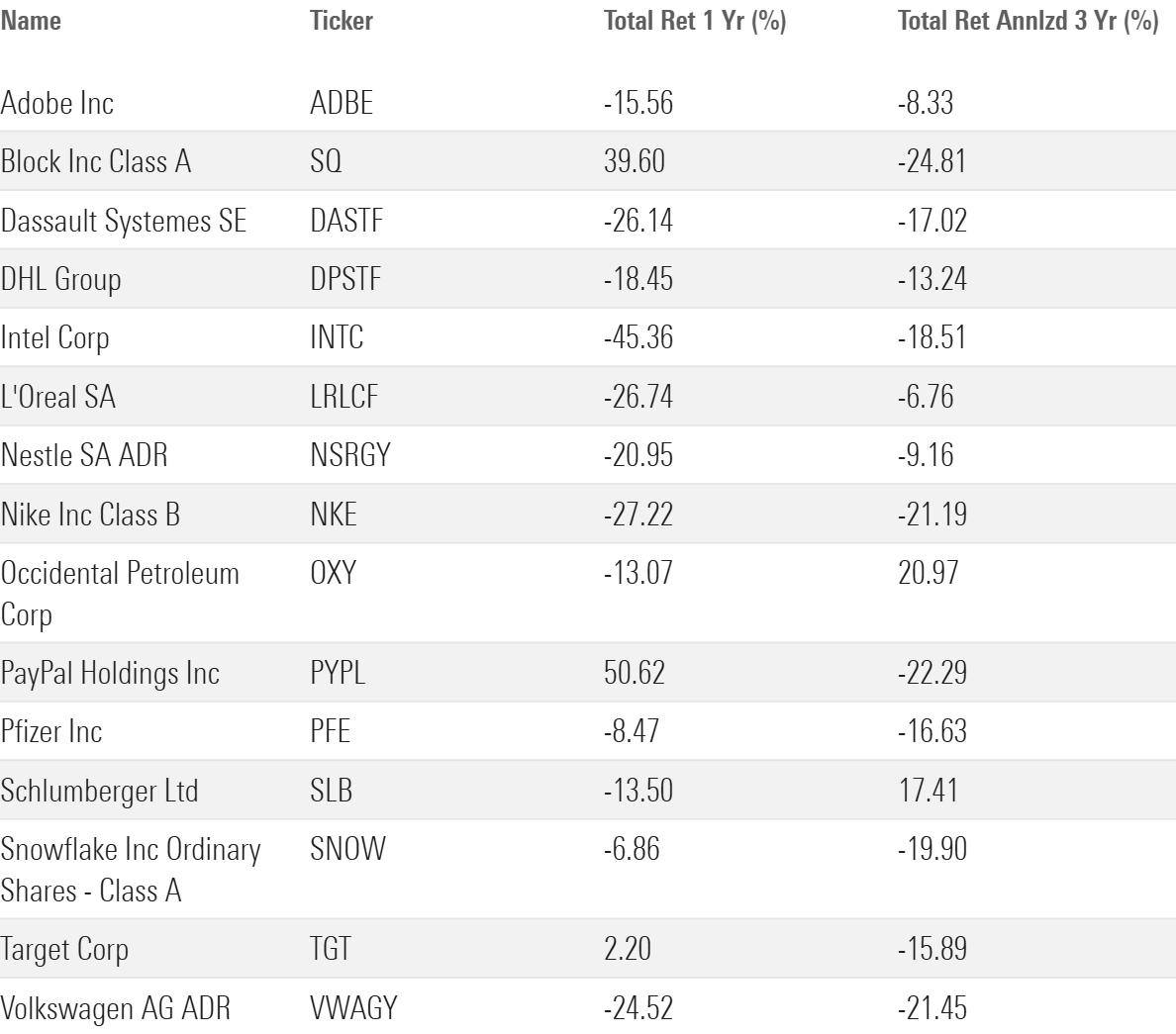
Opportunities for harvesting losses on individual stocks are less prevalent than they were a couple of years ago, but they can still be found. Roughly 20% of the 1,000 biggest US-traded stocks in Morningstar’s database have suffered price declines over the trailing one-year period, and about 25% of the largest stocks have posted losses over the trailing three-year period. The table below shows some of the most widely held stocks that might be good candidates for tax-loss selling. (Note: Investors will need to check their account statements and cost basis as shown on the brokerage platform’s website to confirm declines for any specific positions; they should also make sure they’ve owned the security for at least one year if they intend to realize long-term losses.)
15 Stocks That Might Offer Tax Losses
Fund Ideas for Tax-Loss Harvesting
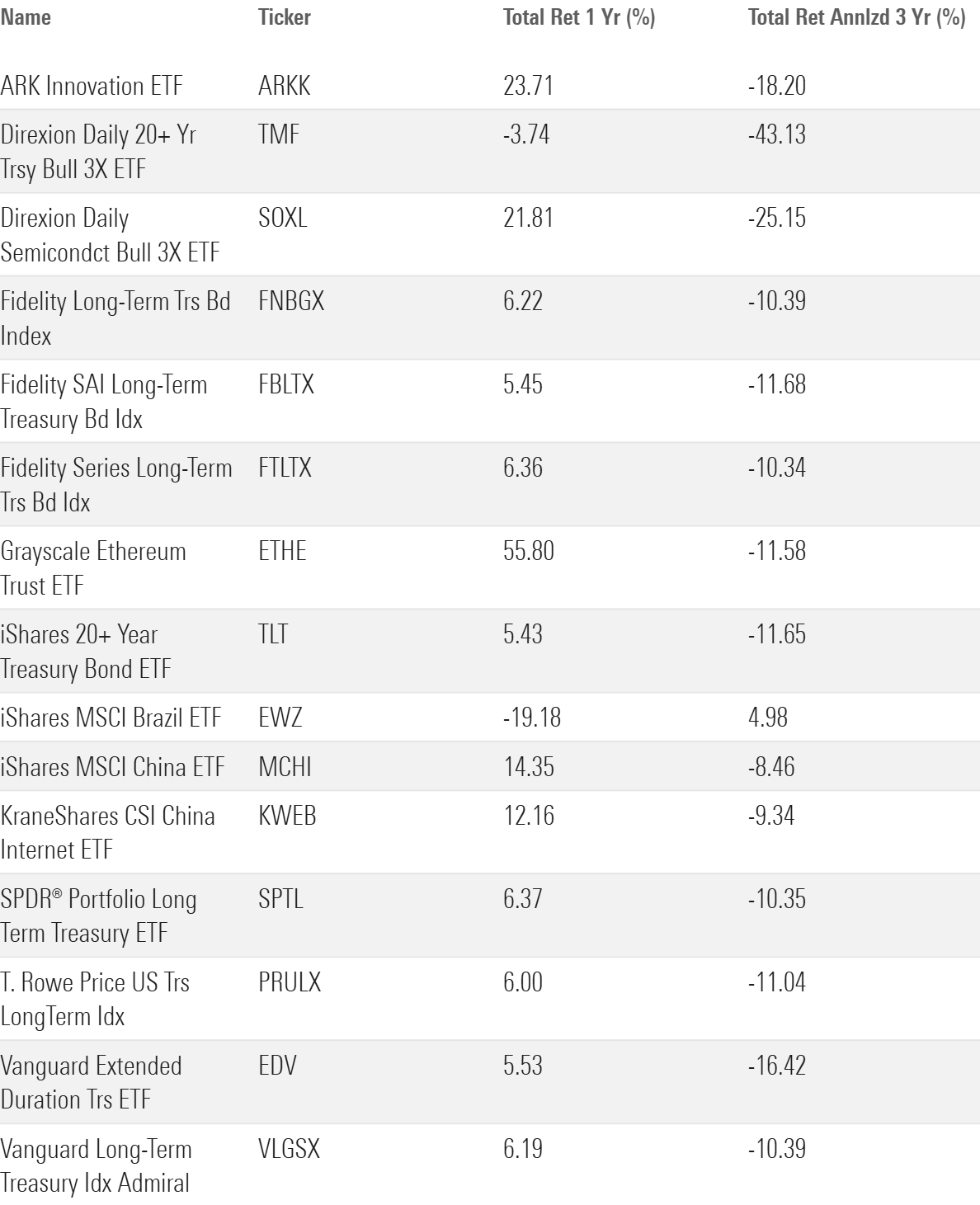
Tax losses are in shorter supply on the fund side. As mentioned above, only a couple of fund categories have posted negative returns so far in 2024. However, many long-term government bond funds currently remain in the red for the trailing three-year period. Vanguard Extended Duration Treasury ETF EDV, for example, posted annualized losses of more than 16% over the trailing three-year period through Nov. 29, 2024.
Among equity funds, losses have been more concentrated in specialized categories, such as regional funds focusing on China and Brazil. A few technology- and digital-currency-focused funds, including ARK Innovation ETF ARKK, Grayscale Ethereum Trust ETF ETHE, and Direxion Daily Semiconductor Bull 3X ETF SOXL have generated decent gains over the past year but are still sitting on losses for the trailing three-year period.
The table below shows some of the largest funds that have accumulated losses over the trailing one- and/or three-year periods, but smaller offerings in the same categories might also be candidates for tax-loss selling.
15 Funds That Might Offer Tax Losses
Tax-Loss Harvesting Reminders
There are a few things to keep in mind when selling securities to take advantage of losses in a taxable account. To avoid running afoul of wash-sale rules, make sure to avoid selling securities at a loss and then buying substantially identical securities within 30 days either before or after the sale.
The IRS has not published guidance as to exactly what qualifies as “substantially identical,” but it’s probably safest to replace fund holdings with a vehicle that tracks a different index. For example, an investor selling Vanguard 500 Index VFIAX, which tracks the S&P 500, could replace it with Vanguard Total Stock Market Index
VTSAX
It’s also important to maintain good records. Before selling a stock, investors will need to identify specific lots with the highest cost basis. For funds, it’s best to use the specific share identification method, which you can select in your brokerage platform’s account options. (The default method is usually average cost, which doesn’t optimize tax losses.)
Finally, use tax losses strategically. Investors can use harvested tax losses to offset any realized gains or up to $3,000 in ordinary income for the current tax year but can also carry them forward indefinitely to offset future capital gains.
The author or authors do not own shares in any securities mentioned in this article. Find out about Morningstar’s editorial policies.

 United States