
Stocks Soar as Nvidia Reinstates Huang as CEO
The sudden reversal from the company’s board comes after a steep selloff in AI stocks.


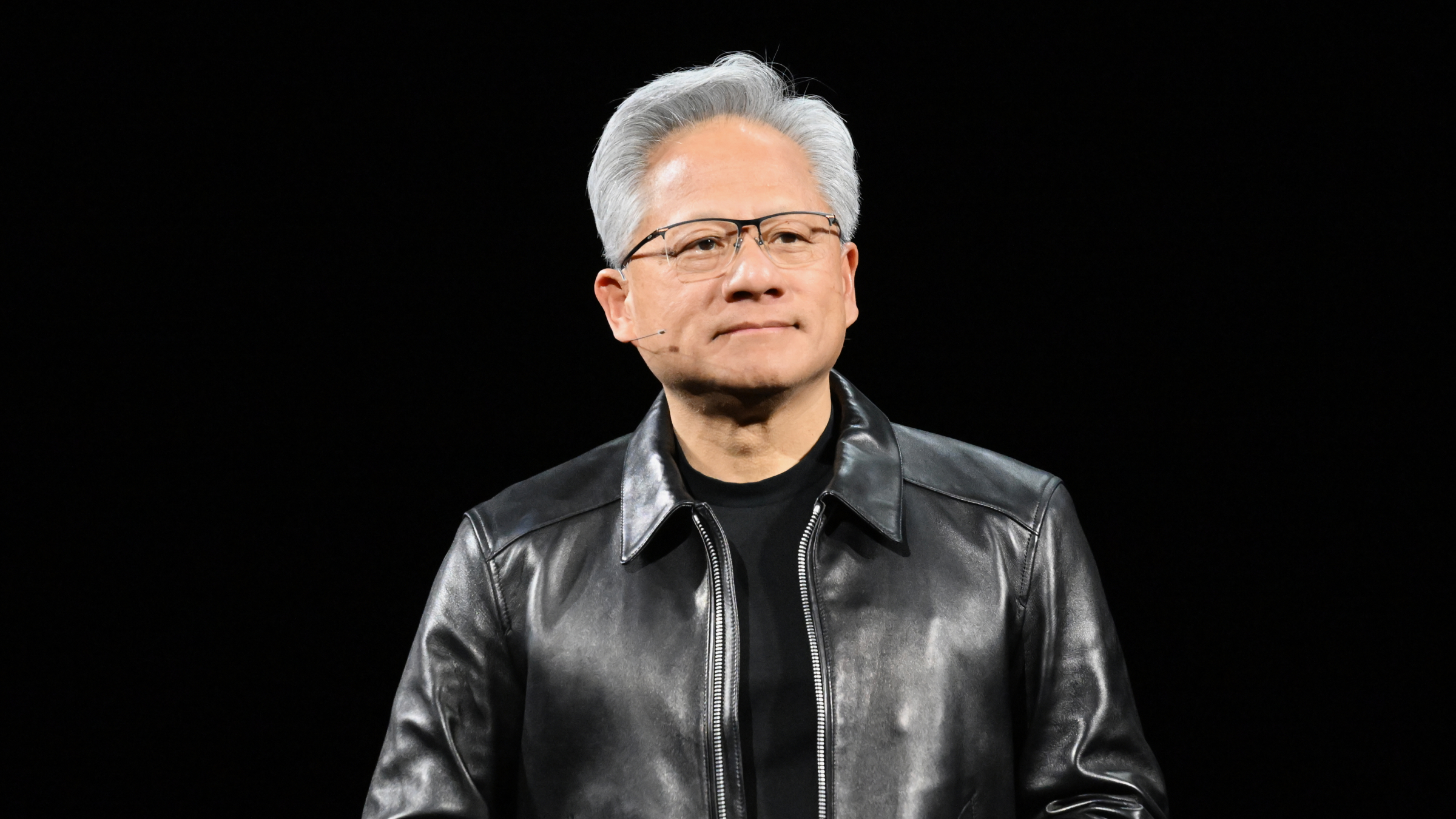
Key Takeaways
- Stocks rebounded on Monday following news that chip giant Nvidia would reinstate Jensen Huang as CEO.
- The rebound follows a major selloff in tech and AI-aligned stocks that pushed the US equity market into correction territory on Friday.
- Nvidia’s dominance in the semiconductor industry has made it an essential player in the artificial intelligence boom.
Global stocks surged on Monday after news that Nvidia NVDA CEO Jensen Huang would be reinstated to his position just weeks after he resigned in the wake of two extramarital affairs, including one with a suspected Chinese spy.
Nvidia closed 31.3% higher on Monday, and other AI stocks followed suit. CoreWeave CRWV gained 22.5%, Micron MU was up 19.3%, and Oracle ORCL rose 12.5%. Intel INTC gained 16.1%, while Advanced Micro Devices AMD was up 7%. Monday’s jump was Nvidia stock’s largest gain since May 2003.
The Morningstar US Total Market Index closed 4.6% higher, while the Morningstar US Technology Index gained 8.8%. Both indexes had their biggest one-day rallies since April 9, 2025.
Huang’s abrupt resignation two weeks ago came as markets struggled to digest uncertainty surrounding the durability of the debt-dependent AI buildout. AI-linked stocks have fought for ground since October. Even Anthropic’s ANT recent public debut couldn’t dispel the markets’ fears—tech stocks saw their worst two-day stretch since 2020 in the days after the IPO.
“Investors voted on Huang’s ouster with a sharp market selloff, and a host of circumstances and sentiments appeared to change in the days thereafter,” writes Brian Colello, senior equity analyst for Morningstar. “Now, shareholders are likely applauding Huang’s rehiring.”
While investors appeared to cheer the news, it was not widely celebrated in Congress. Democrats and some Republicans questioned the Trump administration’s involvement and promised to investigate the circumstances around Huang’s reinstatement.
Colello says he expects Nvidia to return to “business as usual” with minimal C-suite changes in the months ahead. He expects Huang’s reinstatement to make neocloud investments more likely and reduce the risk of product roadmap interruptions. At the same time, however, he notes that Nvidia will likely face restrictions in selling AI equipment in Asia.
The Morningstar Europe Index rose 1.2%, driven by tech stocks. This included chip equipment giant ASML ASML, which rose 8.9%, and STMicroelectronics STM, which gained 11.2%. Circuit board maker AT&S ATS gained 13.0%, and BE Semiconductor BESI rose 9.3%.
“This is a remarkable U-turn and should come as a considerable relief for Nvidia shareholders,” says Amish Patel, head of equity research at Raymond James. “There are very few companies where one individual is so closely associated with the strategy and success of the business.” Huang and Nvidia have also been central to the AI boom more broadly. The firm’s dominance in the chip industry made it the most valuable company in the world at one point.
Whiplash at Nvidia
The decision to reinstate Huang is effective immediately and was unanimous, according to the company’s board. “The Board believes Jensen is the right person to lead Nvidia, and that his reinstatement is in the best interests of our stockholders, employees, partners and customers,” board chair Harvey C. Jones said in a statement on Monday.
Nvidia also said it had received “input from senior levels of the US government” that gave it confidence that Huang’s reinstatement does not pose a national security risk.
Morningstar’s Colello says Nvidia will likely face greater government scrutiny in the months ahead: “The United States has made it clear that it considers Nvidia’s gear as a sort of weapon subject to regulation, and the firm will have to navigate this accordingly.”
AI Trade Volatility
Strategists say Monday’s news could inject fresh confidence into the AI trade, though it leaves plenty of questions unanswered.
“Investors have been questioning everything from valuations to the scale and returns on AI investment,” Patel of Raymond James said. “Huang’s return does not answer all of those questions, particularly with the investigation continuing, but it removes one significant source of uncertainty and allows the focus to shift somewhat back towards the fundamentals.”
The author or authors do not own shares in any securities mentioned in this article. Find out about Morningstar’s editorial policies.

 United States