
How to Build a Core Portfolio You Can Add Stocks To Over Time
Make low-cost index funds and managed products your engine and only then layer in individual stock picks.
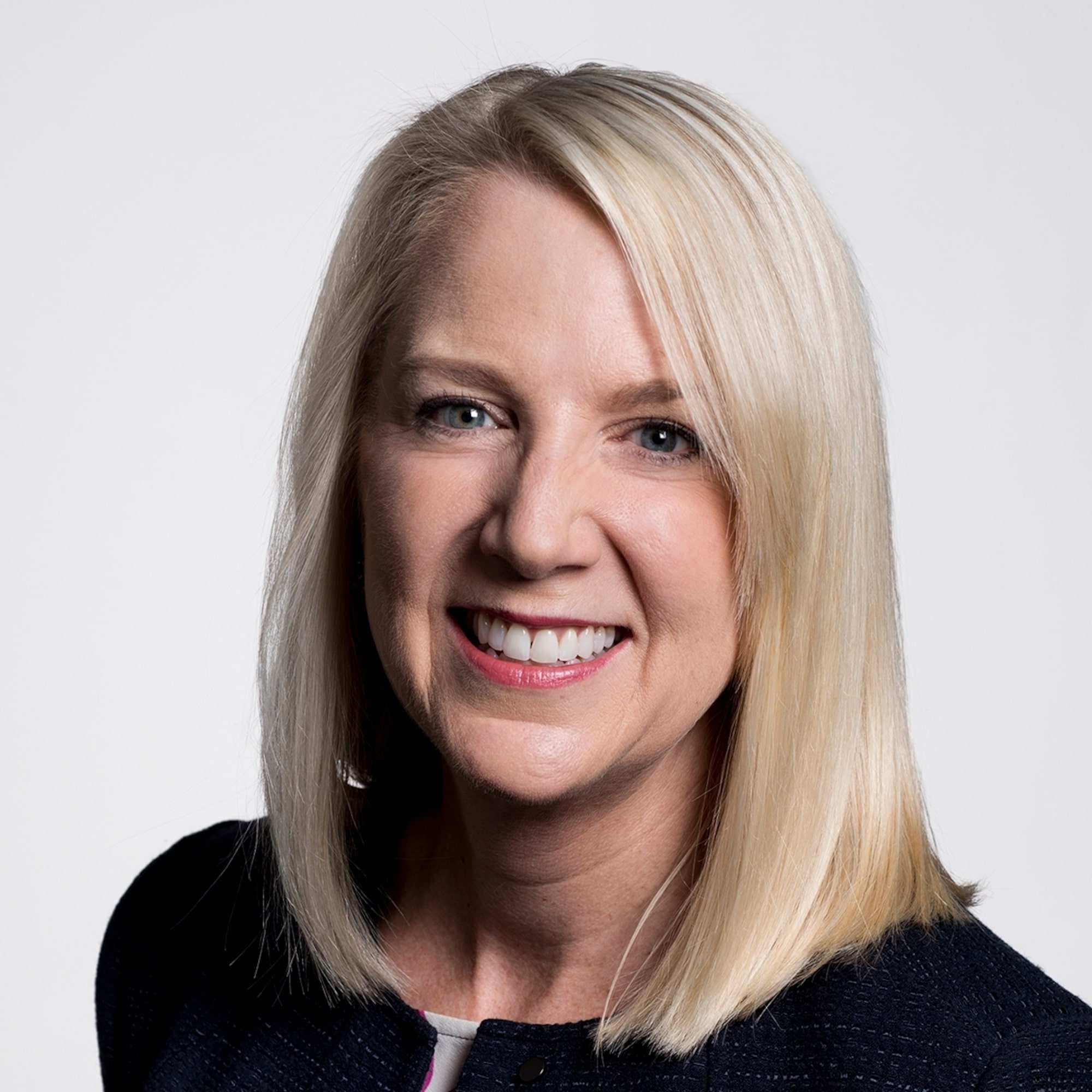

Hi I’m Susan Dziubinski, co-host of The Morning Filter podcast. On a recent episode, I sat down with Morningstar’s director of personal finance and retirement planning Christine Benz to talk about portfolio planning, international stock investing, bonds, and more. Our conversation took place on April 8. Here’s an excerpt.
What Investments Belong at the Core of a Portfolio?
Susan Dziubinski: We’re going to talk a little bit about portfolio construction. That’s a great segue to this topic. Now, The Morning Filter’s audience is primarily comprised of people who are investing in individual stocks. But Dave Sekera, my co-host, even though he’s a stock guy, he does always say that when he’s talking about stocks to consider buying or selling, it’s always within the context of “This is not the core of your portfolio, though.” The core of your portfolio should be in some sort of managed products that match your goals and your risk tolerance. I know after years of talking with you, that’s your preference too. Talk a little bit about why the core of a portfolio is very well served, in general, by managed products.
Christine Benz: I would take Dave’s advice even a step further and say, not only should the core of your portfolio be managed products, but the core of your portfolio should be index products, which people don’t naturally include under the managed umbrella, but they are a managed type of product. The idea there is that you’re gaining market exposure at a very low cost. Potentially, you could augment that with individual stocks, with actively managed funds. In fact, even in my model portfolios that are composed mainly of actively managed funds, I always include that backbone of total market index products, because in an environment like we’ve just come through with large growth dominating at the expense of everything else, you need to make sure that you have at least some exposure to other sectors in that portfolio. I’m with Dave on that idea of using the individual stock portfolio as kind of a completer portfolio.
There, you’re really leaning into what your self-identified strengths as an investor are. Maybe it’s being willing to have a really long time horizon with those positions. Maybe it’s having very low trading costs, so you’re not making many trades, and you’re maybe able to outperform actively managed investments in that way. I also think the idea of having more diffuse risks throughout the portfolio is a great way to express humility because when we look at the data, even on actively managed funds, with professionally paid money managers, it’s not that great, especially in the realm of large-cap stocks. As investors, I think it’s helpful to express humility in that same way by diversifying our exposures.
Model Portfolios for Accumulators
Dziubinski: Especially with the majority of your assets. You mentioned your model portfolios. We call them sample portfolios on Morningstar.com, and we’re going to provide a link to them in the show notes. You have two main portfolio structures. You have portfolios you’ve developed for savers, and you have portfolio structures for people who are nearing retirement or in retirement. Talk a little bit about why you designed these portfolios. There are dozens of them, and we can’t talk about all of them today, but what was the impetus for this? What was the investor challenge you were trying to solve?
Benz: People are great investment collectors. I’ve found that they do a terrific job selecting investments. We have so many tools for them on Morningstar; so many data points that they can look at. That challenge is largely solved with all of the great data and analyses that we have. The idea of how to put together a portfolio, and how to change that portfolio as my proximity to my goals changes, is a harder lift for many people. The goal behind these portfolios was to do some illustrations of, here’s what a sane portfolio looks like in this situation for that person who is already in retirement or for that mid-career accumulator who wants to own mainly index funds. That was really the idea to showcase sensible portfolio structures and take something that is oftentimes kind of “black box,” which asset allocation is, and make it a little bit more tangible and easy to identify with.
Dziubinski: There are these two main buckets, for lack of a better word: the saver portfolios and the Bucket portfolios for retirees. Let’s talk a little bit first about the saver portfolios, who you really designed these for, and who they’re not for.
Benz: These are for people who are saving for retirement, still accumulating and adding assets. They range from aggressive versions, which are geared toward people in their 20s and 30s, 90% plus equity allocations. They’re intermediate or moderate portfolios that are geared toward kind of midcareer savers. The more conservative versions are geared toward people who are getting quite close to retirement. The baseline asset allocations are built on what are called Morningstar’s Lifetime Allocation Indexes, which are a product of our index group here at Morningstar. They’re meant to be kind of target-date equivalent indexes. I use those to help guide the asset allocations. I do make some editorial decisions about categories to exclude, and I know we’re going to talk about that, but I don’t want these portfolios to have dozens of holdings. There are some assets that I just don’t include in the interest of not having so many funds, but I use those Lifetime Allocation Indexes to guide the asset allocations.
I lean into our analyst’s output in terms of what their highest conviction mutual funds and exchange-traded funds are. I use their Medalist funds, the highly rated funds, to populate the portfolios and confer with the analysts a little bit to get their input on what they think are the best active funds in Fidelity’s lineup, or whatever the case might be.
Model Portfolios for Retirees
Dziubinski: Talk a little bit about the difference between those saver portfolios for investors who are in the accumulation phase versus your retirement Bucket portfolios, which follow quite a different structure than those saver portfolios.
Benz: The Bucket approach is often called a time segmentation approach, but basically, you’re looking at your spending horizon and using that to determine how much risk to take with that segment of the portfolio. For my first couple of years of retirement, I would have a couple of years’ worth of cash set aside. I don’t want to have to change around my quality of life if the performance in the equity or bond markets isn’t great, so I have the cash holdings that I can draw upon, and then I’m stepping out a little bit on the risk spectrum from there. I’ve got the two years in cash holdings, maybe another five to eight years in high-quality fixed-income holdings, perhaps even a dash of dividend-paying stock exposure with that portion of the portfolio. It’s not a guaranteed return over that time horizon, but if you have a time horizon of say seven to 10 years, high-quality fixed income is a pretty good bet. With the remainder of the portfolio, that’s my risk portfolio. That’s where I will hold mainly globally diversified equities. If I have any high-risk other assets, whether precious metals, commodities, or junk bonds, I would hold them in that bucket with a nice long time horizon. All of these Bucket portfolios are built on that same basic system. The reason I like it, which I should have said at the beginning, is that I think it works behaviorally. I’ve heard from so many older adults who say that they’ve used this general framework to guide how they’ve allocated their portfolios, and it gives them a lot of peace of mind.
Say you’re a new retiree here in 2026, with some volatility going on in the market. If you know that you have your living expenses set aside in truly safe investments that are yielding 4.0% or 4.5% today, that gives you peace of mind with those long-term portfolio constituents. I think it makes sense from an investment standpoint, and I think it works behaviorally.
Dziubinski: It’s just very logical, this concept of three buckets aligning with short-term goals, intermediate-term goals, which would be funding the seven to 10 year range, and then those longer-term goals that are going to be for later in your retirement or leaving an inheritance or legacy behind.
Benz: Exactly. I should point out, Susan, that in not every environment would you spend from that cash bucket necessarily. You might have some environments where maybe fixed income yields are really good, and those deliver all of your income needs, and you don’t need to touch that cash. Maybe equities have been great, and so you can reduce that equity exposure, bring the proceeds over to your living-expense bucket, and use that to fund your cash flows. You’re going to revisit where you’re going for cash on a year-to-year basis, but I think the Bucket system can be elegant in terms of providing a structure to carry you through your whole retirement.
How to Build Tax-Efficient Investment Portfolios
Dziubinski: Sensible framework that you can tweak. Outside of those two main strategies, you’ve literally created dozens of substrategies. We can’t go through all of them, but can you talk about a few of them and why you created them?
Benz: The key fork in the road there is tax-deferred or tax-sheltered in some fashion, whether Roth or traditional IRAs, 401(k)s, those are managed without regard to tax efficiency on an ongoing basis. Then we have some tax-efficient portfolios as well that are meant to address investors’ taxable assets. As you might expect, they use municipal bonds for their fixed income exposures. They generally use broad-market index-tracking ETFs to reduce the tax drag on that portion of the portfolio. There are a lot of variations that address the different tax needs of investors depending on where they’re investing. There are also fund-family-specific portfolios. Some people might be exclusively Vanguard investors and want to use the house brand of funds, or Fidelity, whatever the case might be. There are some house-brand types of portfolios. And, there are these minimalist portfolios, which I know you want to talk about, but those are skinnied-down versions of the asset-class exposures that are in the other portfolios.
Minimalist Portfolios
Dziubinski: Let’s talk a little bit about those minimalist portfolios. One of the reasons that I like them, and then I want to talk about them specifically for The Morning Filter, is that they’re very simple and they’re very straightforward. They include the basics. If you want to add on top of the basics, you can, which maybe The Morning Filter’s audience would want to, but this is the brass tacks of what you need. Talk a little bit about what those minimalist portfolios include and look like.
Benz: Yes. Hat tip, I should say, to Taylor Larimore, who was one of the founders of the Bogleheads group. Bogleheads often talk about this three-fund portfolio, and Taylor wrote a book about the three-fund portfolio, but it’s simply: total US market, total international stock, and total bond market index. With those three holdings, which are the underpinnings of my minimalist portfolios, you really do have a lot of diversification. You have the fixed income there, enlarged as you get closer to retirement. In my bucket minimalist portfolios, I’ve got a dash of cash exposure, but they really get you through a lot of different market environments, these three-fund holdings—or four funds if you bolt on some sort of money market fund. There are many different market environments that may come about, whether you’re saving for retirement or already retired, but the three or four-fund portfolio nicely addresses all of them.
Yes, there are a few asset classes that are on the cutting room floor. For retirement, especially, I would like people to make room for Treasury Inflation-Protected Securities, which you’re not going to find in a total bond market index. I also like them to hold a little bit of short-term bonds because in a year like 2022, you can’t say, “Hey, I need to sell a piece of you, but just give me my short-term bonds because they’ve done better.” It doesn’t work that way. If people want to augment, I would probably focus on those couple of additional asset classes, the inflation-protected bond and the short-term bond.
Dziubinski: Now, one thing that’s interesting about these minimalist portfolios is that, again, these are just the essentials. I guess what you’re kind of saying then, from an essential standpoint, you don’t necessarily need a distinct value fund or a distinct growth fund or a distinct small-cap fund or a distinct mid-cap fund. Talk a little bit about why you think that the three-fund minimalist approach gets you close enough, and that maybe it’s not worth it to sort of dabble in those other fund types.
Benz: It’s a great question, Susan. The key reason is that those different categories are reflected in your total market index. Are they there in exactly the proportion that you’d like to see? That’s an open question. I think there was a lot of good discussion around whether the US market, for example, had gotten a little bit too heavily influenced by those large growth stocks, but the smaller-cap and value stocks are there in your total market index. In some of the other portfolio model portfolios, there are discrete value and growth holdings for people who want to do a little bit more of that active type rebalancing. If you have those total market indexes, you are obtaining exposure to all of those other subcategories.
The Investments Your Core Doesn’t Need
Dziubinski: You said a little earlier in our conversation that there are asset classes that get left intentionally on the cutting room floor that others would include in a model portfolio situation. Talk a little bit about some of those and why you think they aren’t necessary for everyone.
Benz: I mentioned commodities and gold or precious metals. Those categories actually look pretty good from the standpoint of diversifying a stock/bond portfolio. We work on this diversification landscape paper every year, and we’re in the midst of working on the 2026 release. Those categories look decent in terms of bringing something to the party. I was interested in, “Well, could we not have everything but the kitchen sink in the portfolio? Can we try to have fewer moving parts?” Those were a couple that I left out, even though they look pretty good from the standpoint of adding diversification. Real estate is another one that sometimes comes up. Maybe 15 or 20 years ago, having a discreet allocation to real estate was a must-have. But when we look at its correlation to the US market, what we see is that it doesn’t bring a lot.
The R-squared, or correlation with the US market, is quite high today. If you own a total market index, you’re getting at least some exposure to real estate securities. That’s one that I don’t feel compelled to add, and I don’t feel particularly bad about having left out. Those are some of the key ones that people sometimes think about needing in a portfolio.
Watch Christine’s full appearance on The Morning Filter podcast.
The author or authors do not own shares in any securities mentioned in this article. Find out about Morningstar’s editorial policies.

 United States