
US Fund Investors Pull Back in March Amid Market Volatility
Nontraditional-equity funds set a fresh record in Q1, and other takeaways from March fund flows.



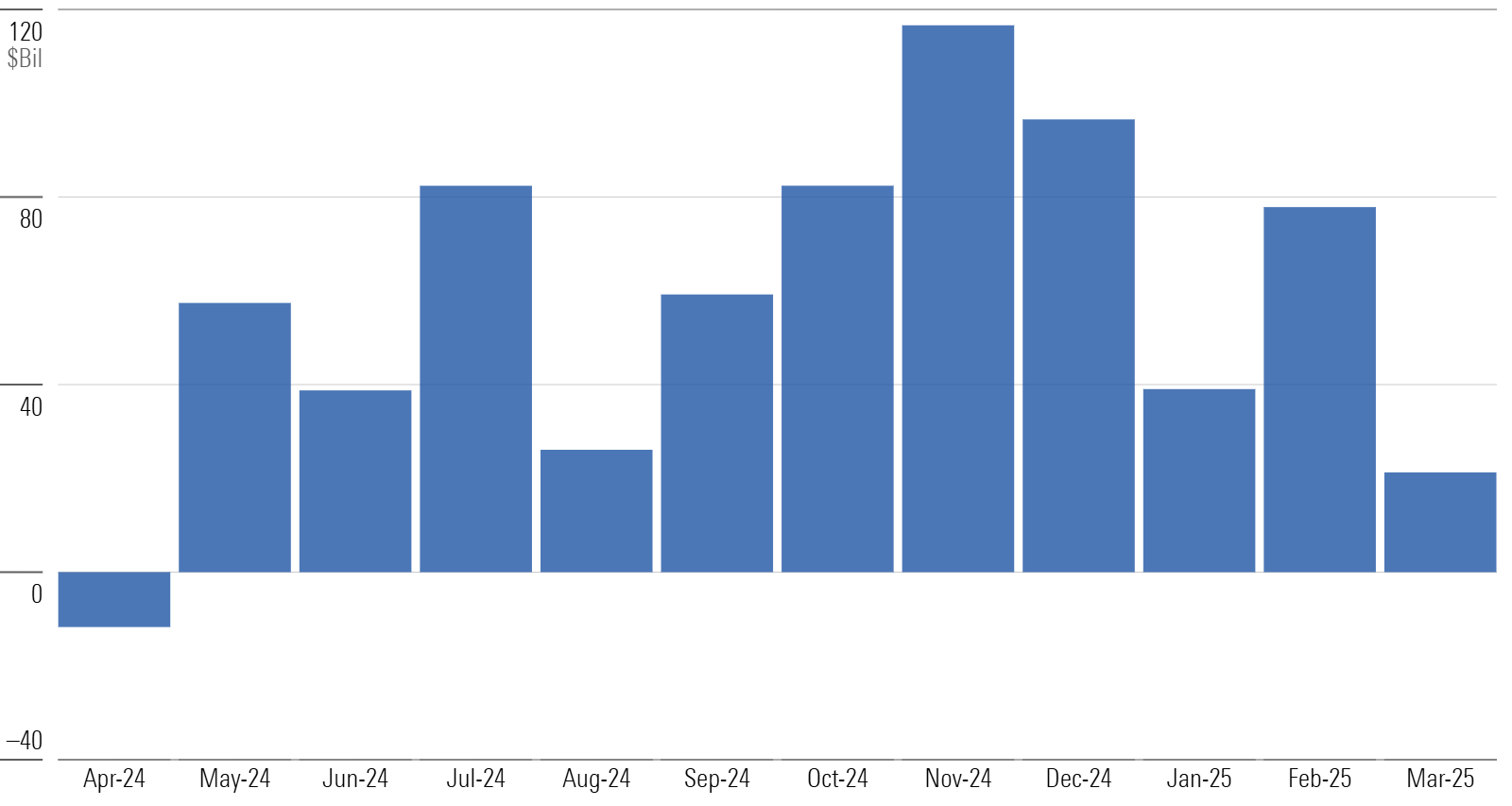
Amid growing uncertainty around the trajectory of the US and global economies, investors pulled back on purchases of long-term US open-end funds and exchange-traded funds. Just $24 billion made its way into these vehicles in March 2025, the lowest total since April 2024. Five of the 10 category groups suffered outflows.
Long-Term US Flows
ETFs Expand Their Share of the Taxable-Bond Market
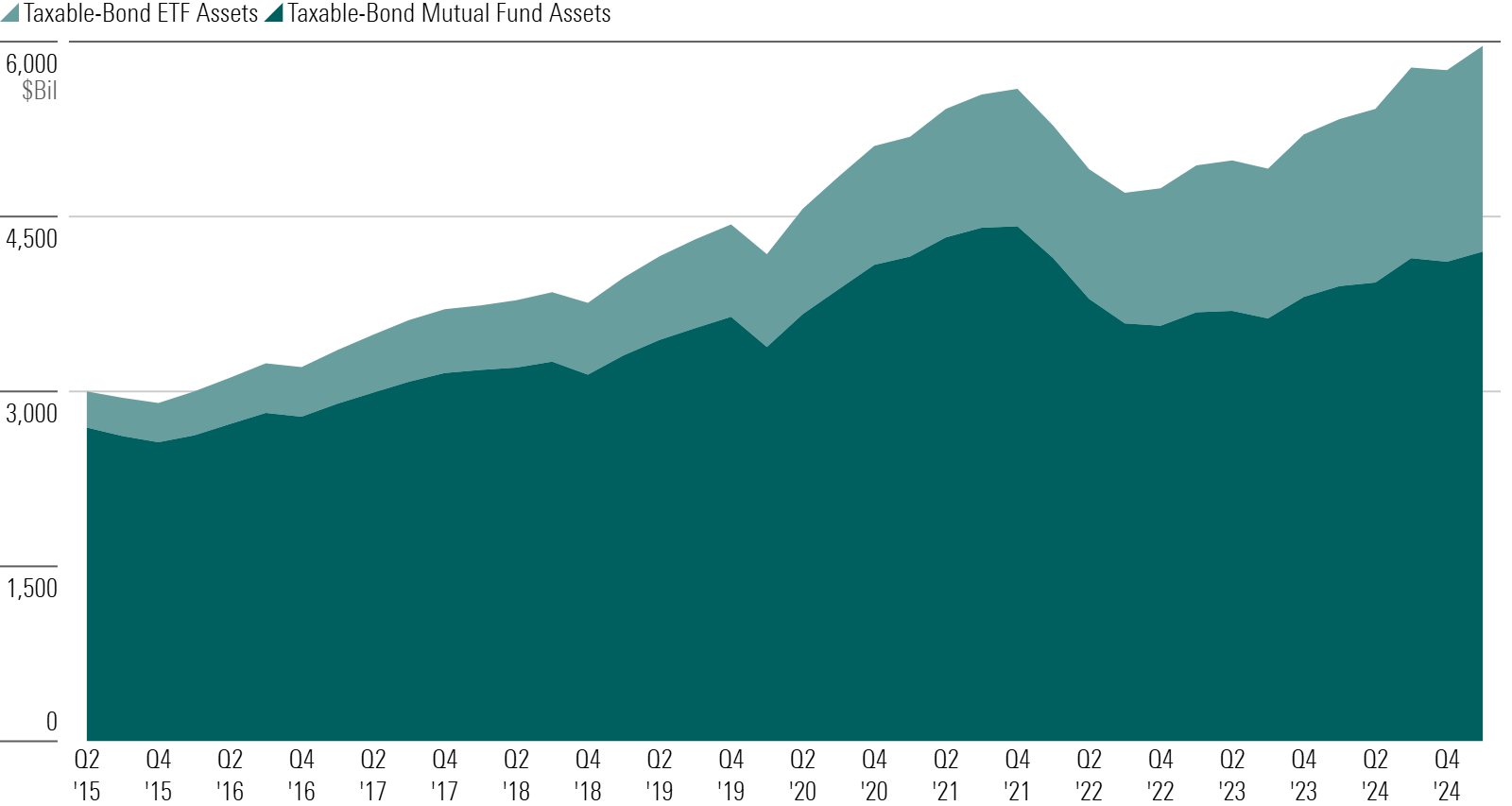
Taxable-bond ETFs raked in nearly $100 billion in the first quarter compared with $20 billion into taxable-bond mutual funds. That pushed ETFs’ share of the taxable-bond fund market to 30%, triple its share from 10 years earlier. ETFs have especially taken root in the government-bond Morningstar Categories, where their combined $362 billion base represents about two thirds of all the assets.
Taxable-Bond Flows
Most US Equity Categories Suffer Outflows in March
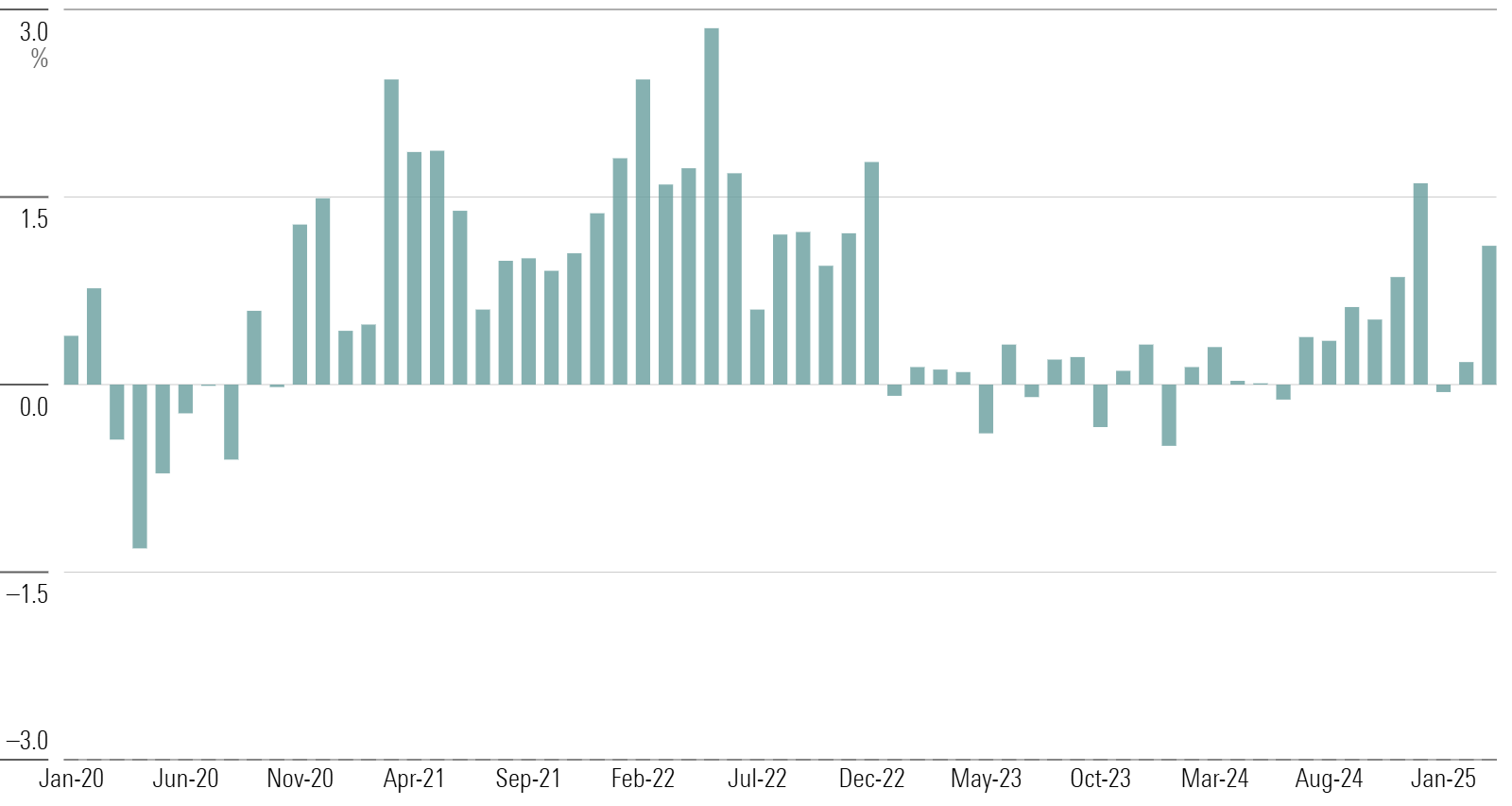
US equity funds took in a paltry $5.7 billion in March. Outflows from six of the nine Morningstar Style Box categories nearly outweighed the usual flows into passive large-blend funds and notable flows into large-value funds. Dividend-oriented funds such as Schwab U.S. Dividend Equity ETF SCHD gave the large-value category a boost. The broader dividend-fund basket, which includes dividend-growth funds, took in $5.6 billion in March, a strong relative showing more reminiscent of 2022’s environment.
Dividend-Oriented Flows
Bond Funds See Narrower Demand in March
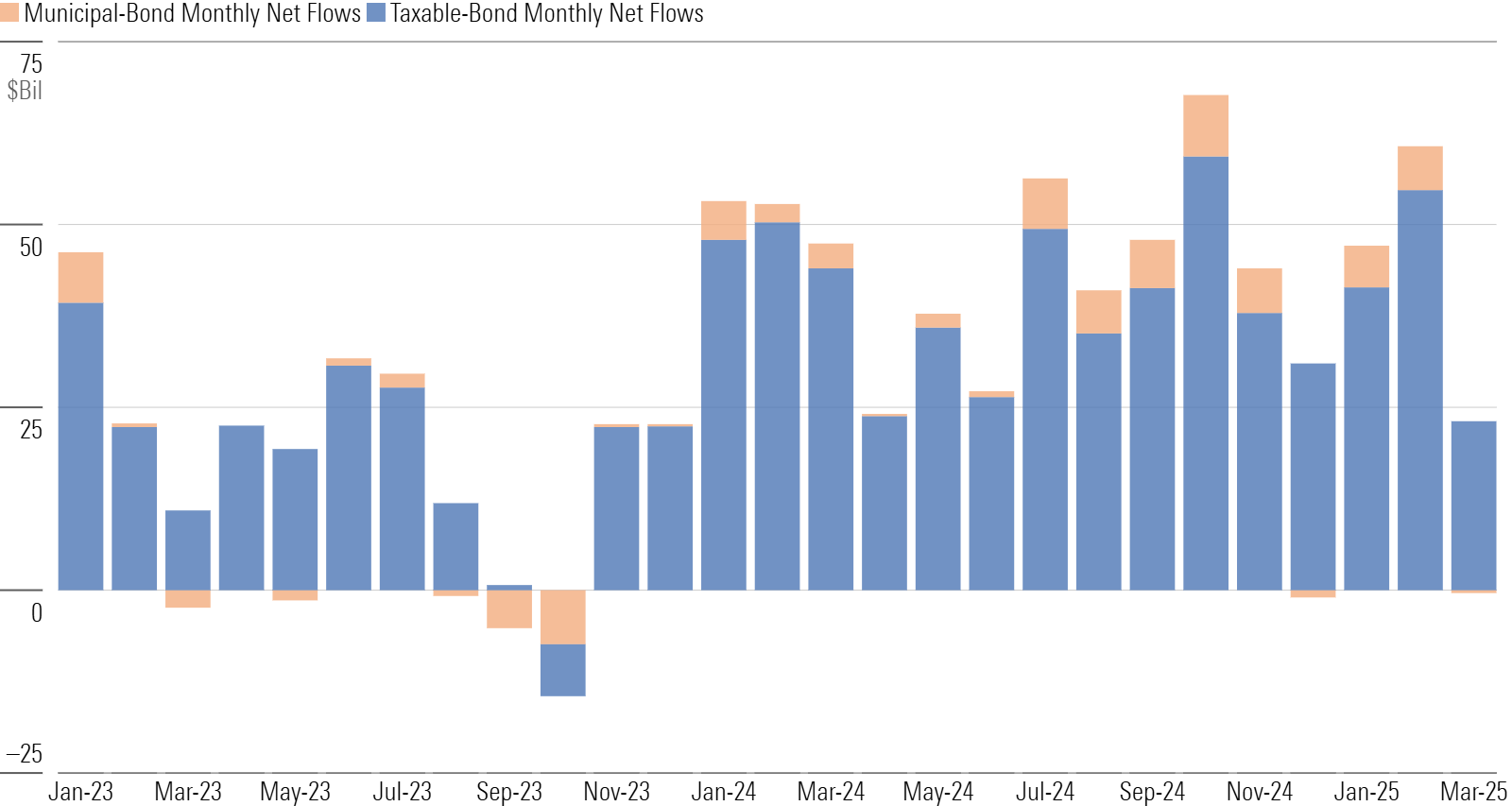
Investors sank $23 billion into taxable-bond funds in March, their quietest month since December 2023. Ultrashort-bond funds claimed $15 billion of that sum, heavy lifting that concealed weaker demand across the bond space. Ten of the 23 taxable-bond categories endured outflows. Bank-loan and intermediate-government funds each bled more than $5 billion, weighing on the broader group. Municipal-bond funds saw money leave as well.
Fixed-Income Flows
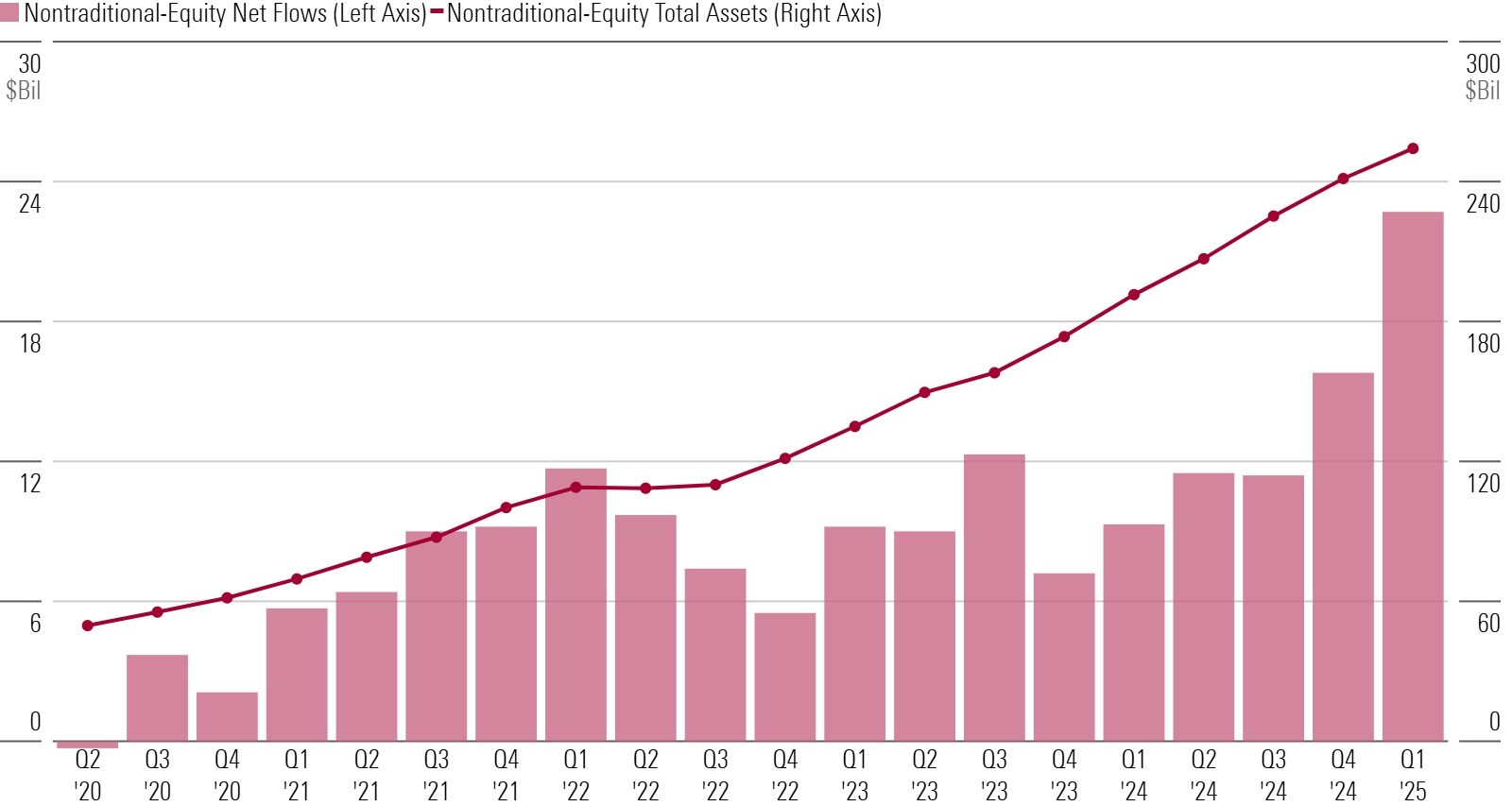
Nontraditional-Equity Funds Set Fresh Record in First Quarter
Nontraditional-equity funds absorbed a record $23 billion in the first quarter. The derivative-income category, home to covered-call strategies like JPMorgan Nasdaq Equity Premium Income ETF JEPQ, led the way with a record $16 billion haul. Defined-outcome funds’ $4.3 billion inflow was a record, too. Most products in the nontraditional space offer some degree of protection from market losses, a proposition that volatile markets made attractive in the first quarter.
Nontraditional-Equity Flows
Commodities Funds Regain Their Luster Thanks to Surging Gold
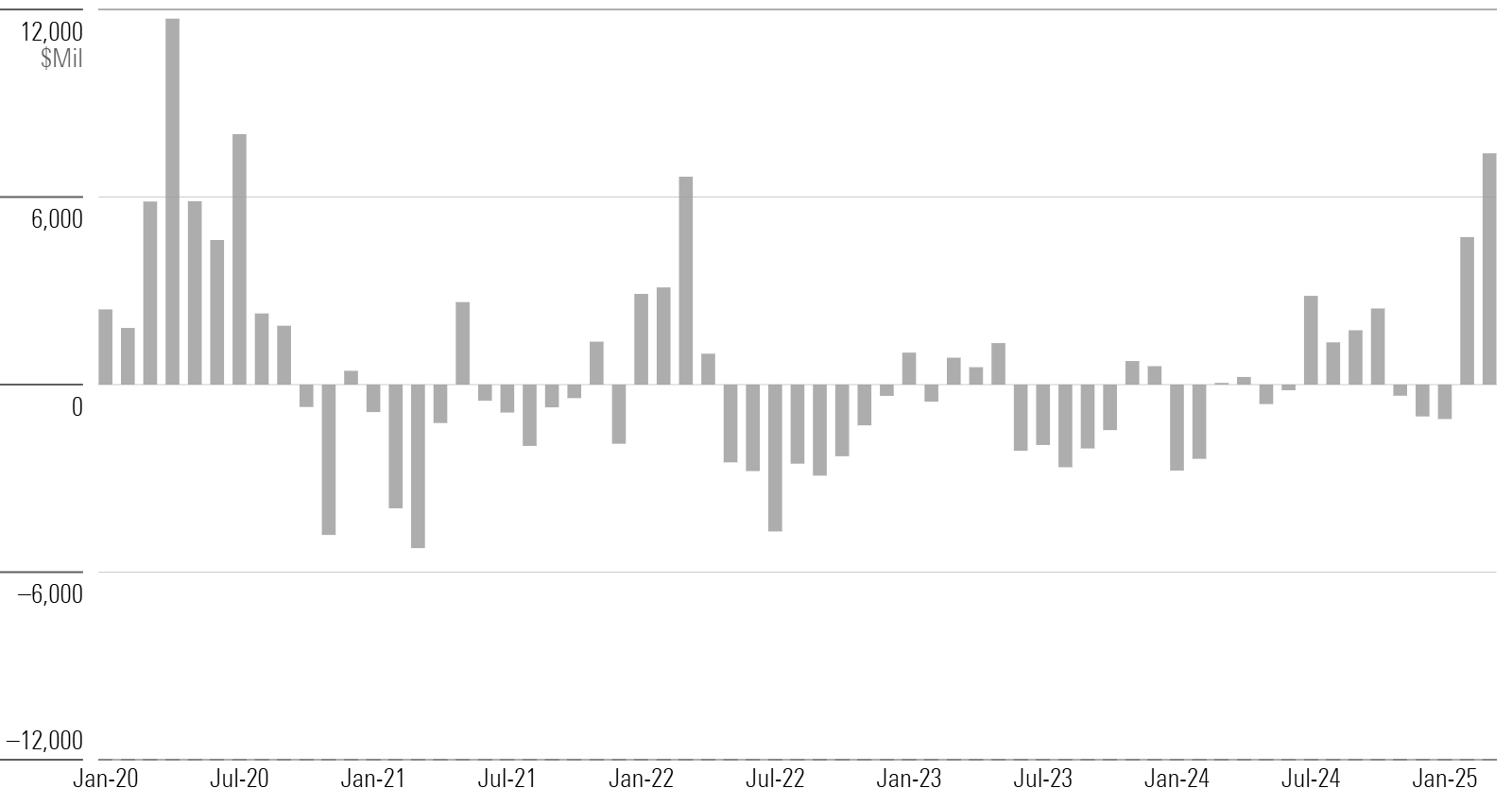
Gold is typically viewed as a safe-haven asset, and prices jumped higher through 2025’s first quarter thanks to a rush to safety spawned by talk of tariffs and a potential recession. In March, flows into commodities-focused funds, which contain mostly gold-tracking offerings, topped $7 billion in a month for the first time since 2020. This comes after a strong February with nearly $5 billion of inflows.
Commodities-Focused Flows
Tactical Investors Weren’t Afraid to Buy the Dip in March
Nearly $8 billion rushed into the trading–leveraged equity category last month. This category includes funds like ProShares UltraPro QQQ TQQQ, which provides triple-leveraged exposure to the Nasdaq-100 Index; it raked in $2.8 billion in March. Traders tend to load up on these products when markets sink, using them as chips to bet on a swift rebound.
Leveraged-Equity Fund Flows
This article is adapted from the Morningstar Direct US Asset Flows Commentary for March 2025. Download the full report here.
The author or authors do not own shares in any securities mentioned in this article. Find out about Morningstar’s editorial policies.

 United States