
Tariffs and Dollar Weakness Tested US Resilience
Six charts on the markets and economy in Q2 2025.


Uncertainty around US tariff policy sent markets on a roller-coaster ride in 2025’s first half.
US stocks eventually regained their footing from the tariff-induced shock, but they remain well behind non-US developed markets on a trailing 12-month basis. A weakening US dollar has also been a tailwind for international stocks.
Those are some of the many takeaways in the Morningstar Markets Observer, a quarterly publication drawing on the research and market insights from Morningstar’s Research and Investments team.
In this edition, we look at the ballooning US fiscal deficit, Nvidia’s NVDA exceptional run, semiliquid fund trends, and more. See some of the report’s key findings below.
Morningstar Direct and Morningstar Office clients can also access the report on Direct Compass.
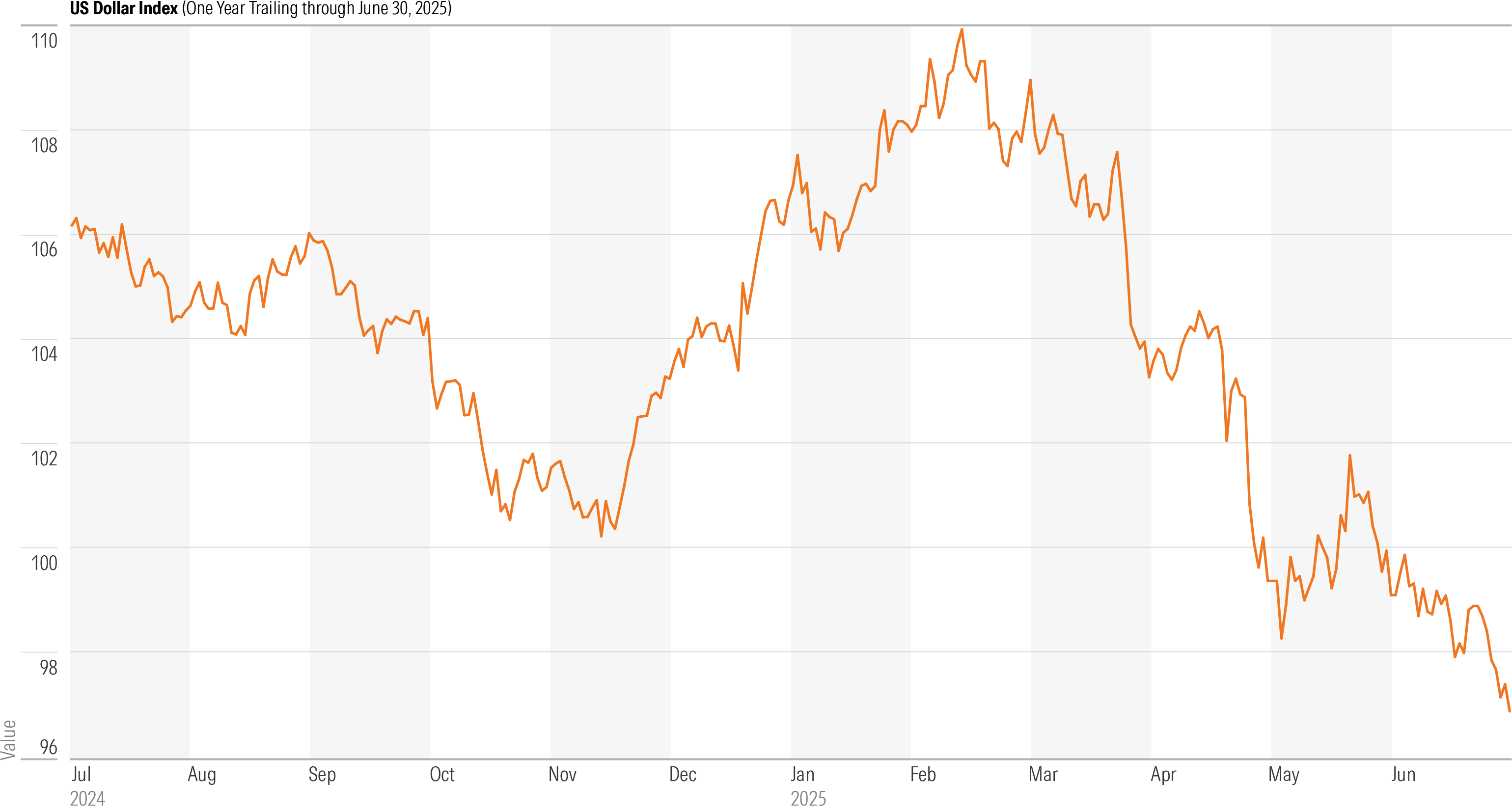
US Policies Have Been a Drag on the US Dollar
Following the 2024 presidential election, the US dollar strengthened as investors were optimistic about the new administration’s tax cuts and anticipated economic growth. But that optimism has faded in 2025’s first half, with the dollar weakening significantly amid economic and fiscal concerns with President Donald Trump’s sweeping tariff plans and a ballooning fiscal deficit.
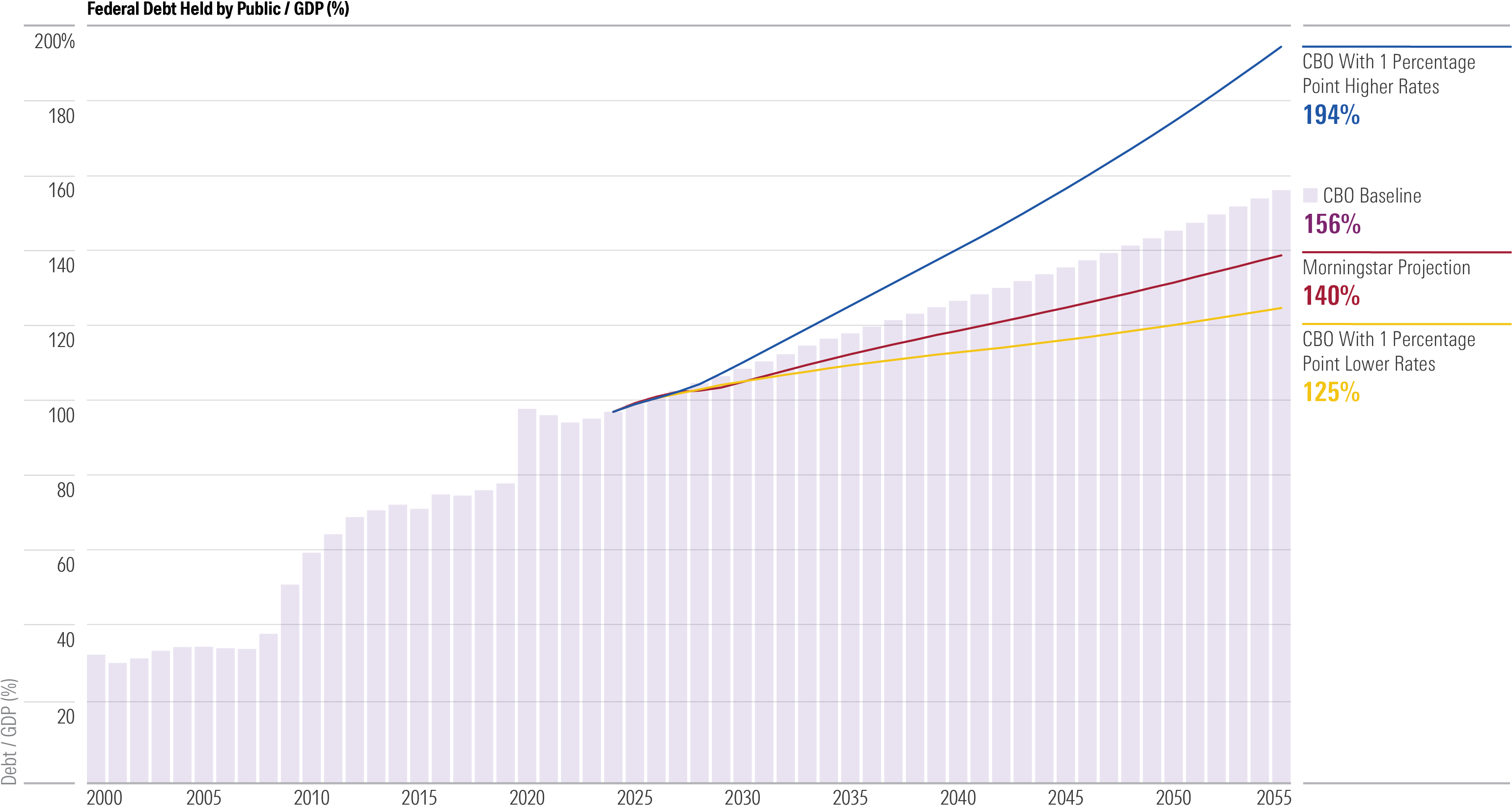
Indeed, the Congressional Budget Office projects federal debt/GDP to hit 156% in 2055, based on current law. Even in Morningstar’s projections using slightly lower interest rates than the CBO, the debt hits 140% in 2055.
Morningstar’s senior US economist, Preston Caldwell, notes that significant policy shifts to cut the deficit will be needed to prevent a climb in leverage. And if interest rates go higher than expected, the rise in debt would be alarming, hitting 194% in 2055. Please see Caldwell’s US Economic Outlook for the latest projections.
The US Dollar Has Weakened Considerably in 2025
Federal Debt/GDP on Concerning Upward Trajectory
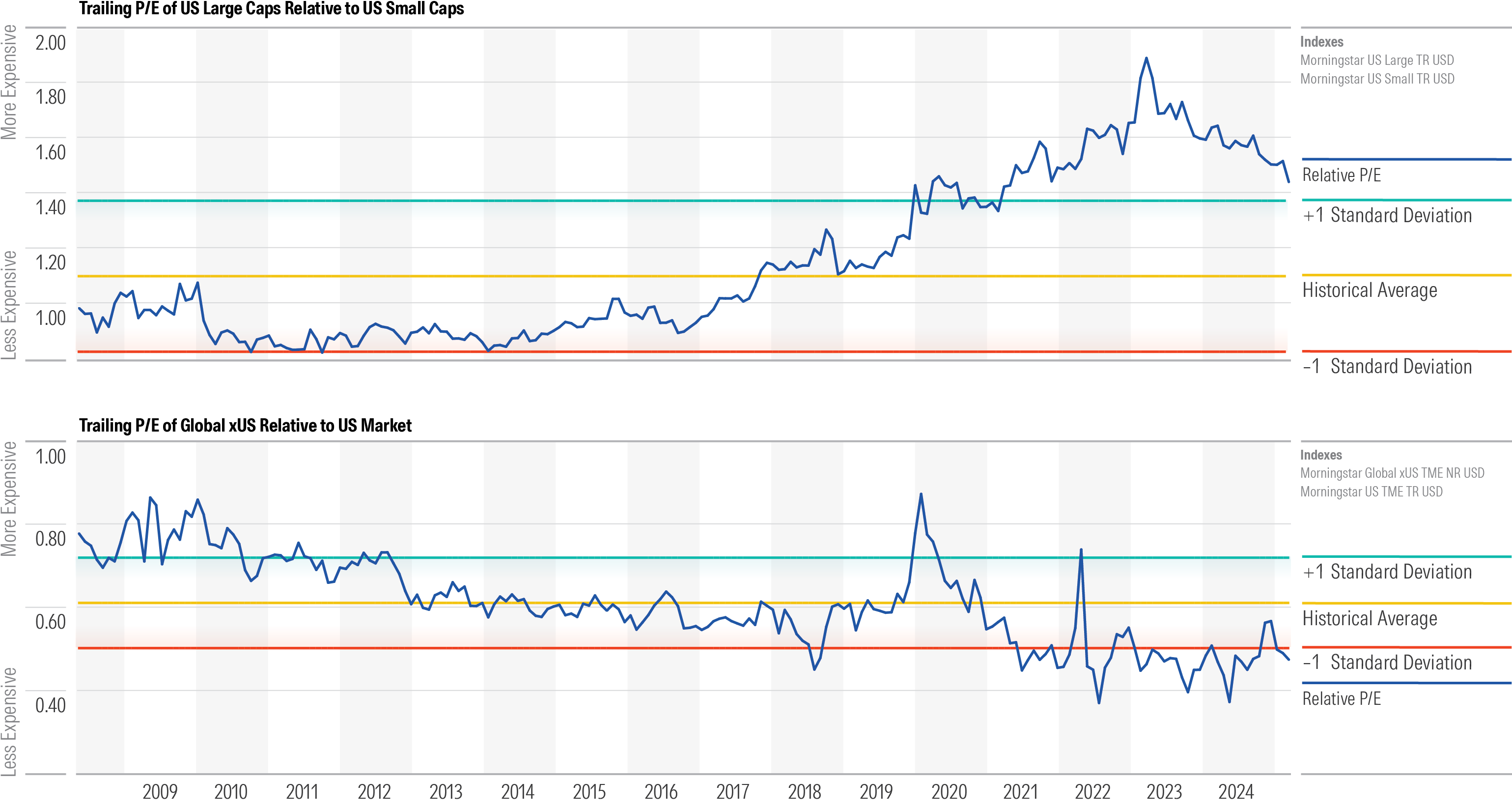
Breaking Down Valuation Disparities in Global Markets
The price/earnings multiples for US large caps have expanded significantly relative to US small caps since 2008. Although the valuation gap has narrowed in the past couple of years, it remained well above historical averages.
The global ex-US market has long traded at a discount to the US market, though the disparity widened considerably since 2008. The outperformance of non-US stocks relative to US stocks in the past year, however, has slightly reduced this gap.
Valuation Disparities
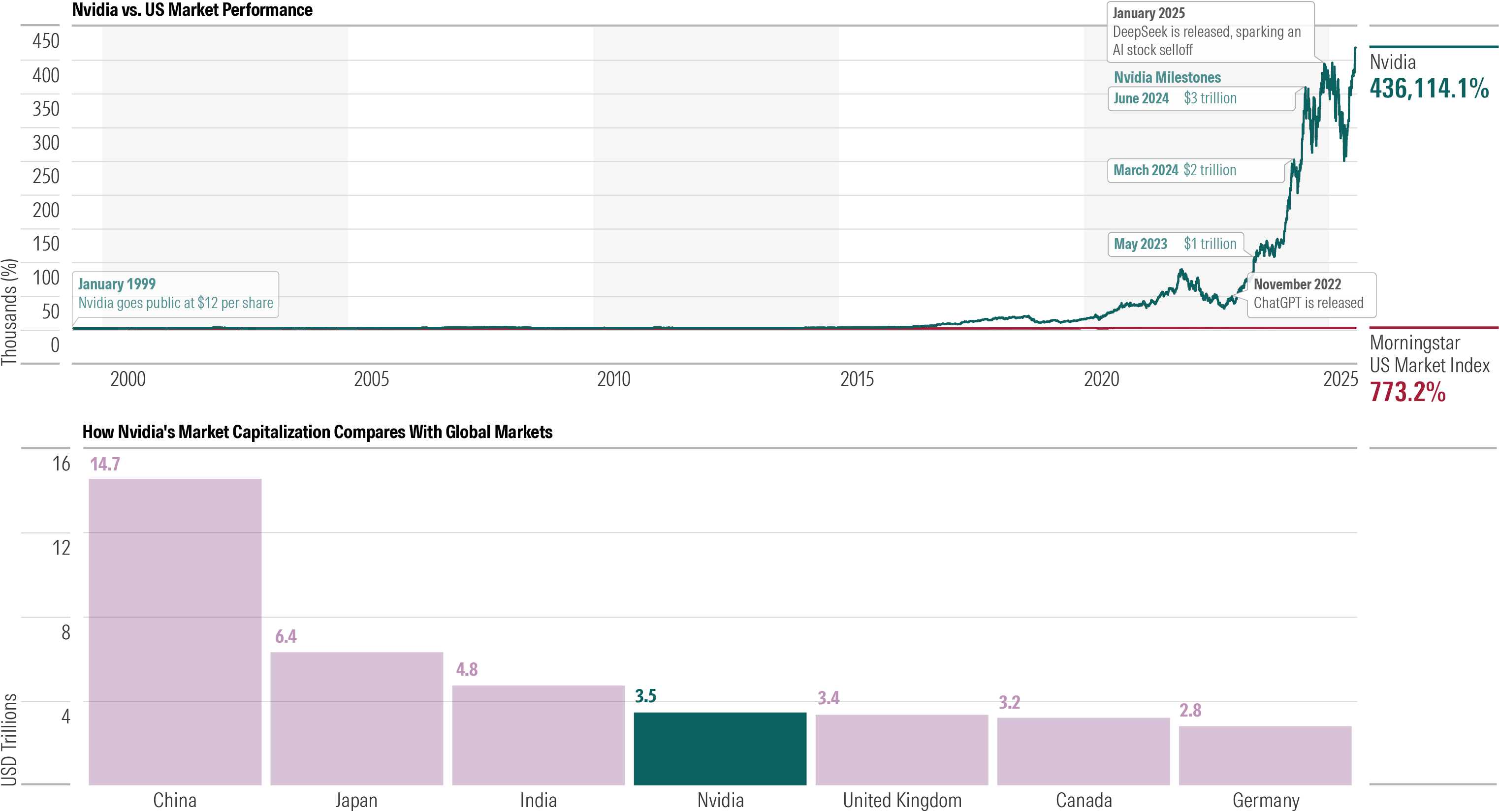
Nvidia’s Exceptional Run
Nvidia’s cumulative return since its January 1999 public listing, through June 2025, was more than 500 times that of the broader US market. This meteoric growth stems from rapid developments in generative artificial intelligence starting in late 2022.
In fact, by June 2025, Nvidia’s market capitalization surpassed that of countries like the United Kingdom, Canada, and Germany.
Riding the AI Wave
A Look at the Semiliquid Fund Landscape
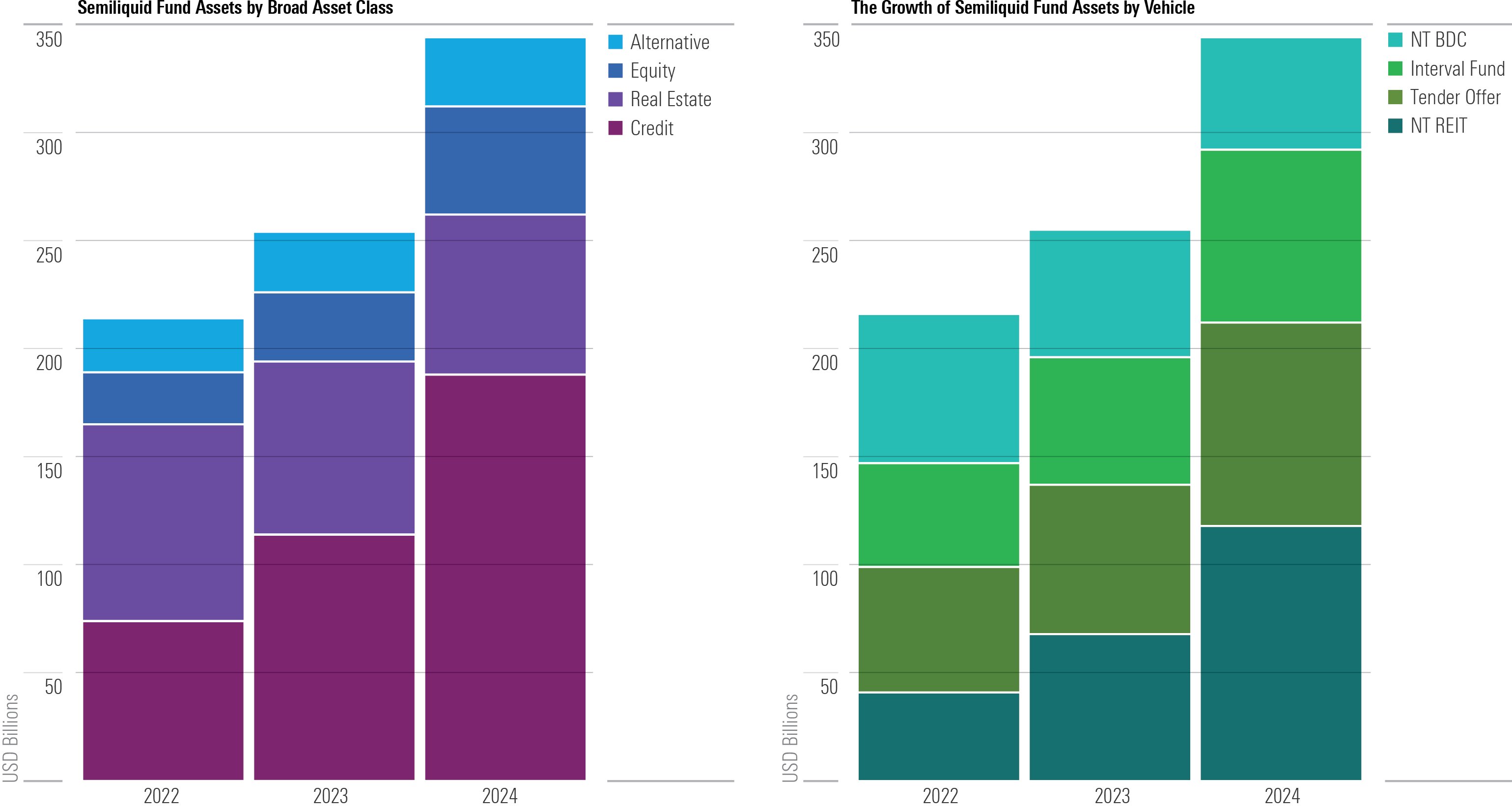
Semiliquid vehicle assets reached $344 billion by the end of 2024, a 60% increase since the end of 2022. Private credit has largely driven this growth, particularly through the rapid expansion of nontraded business development companies and interval funds. Nontraded BDCs typically have higher payout rates because they can use more leverage than interval and tender-offer funds.
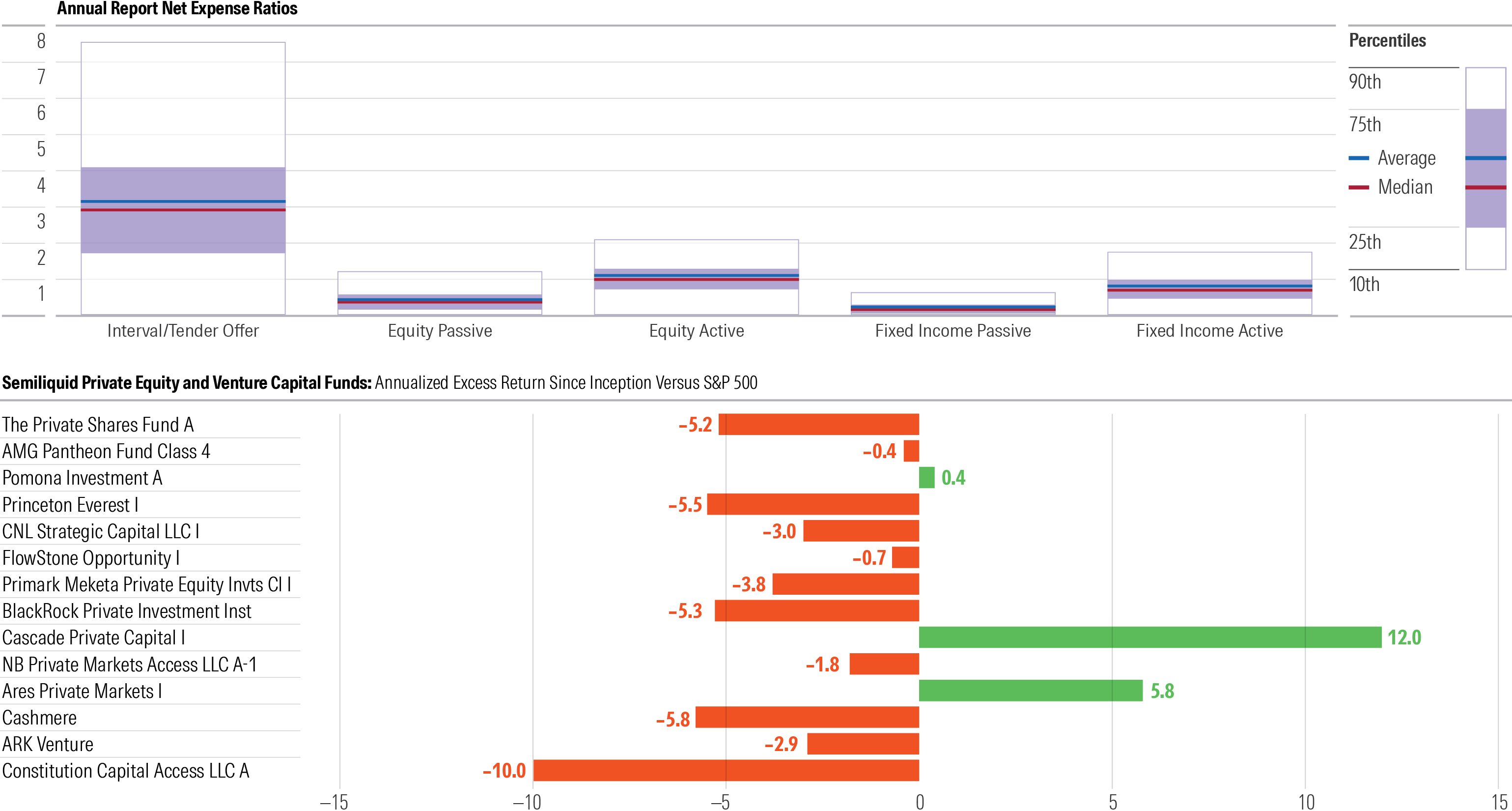
Investors used to mutual funds and exchange-traded funds are in for sticker shock when they look at semiliquid funds. The average annual net expense ratio for semiliquid funds was 3.16% as of their latest disclosed reports. Meanwhile, the average annual net expense ratio for passive mutual funds and ETFs was 0.37%, while active ones charged 0.97% on average. But most semiliquid funds focusing on private equity or venture capital have failed to beat the S&P 500 since their respective inceptions.
How Semiliquid Vehicles and Asset Classes Stack Up
Semiliquid Funds Are Expensive, and Early Returns Have Disappointed
Sbidag Demerjian, Sean Murphy, Preston Caldwell, and Nicholas Parekh contributed to this article.
The author or authors do not own shares in any securities mentioned in this article. Find out about Morningstar’s editorial policies.

 United States